


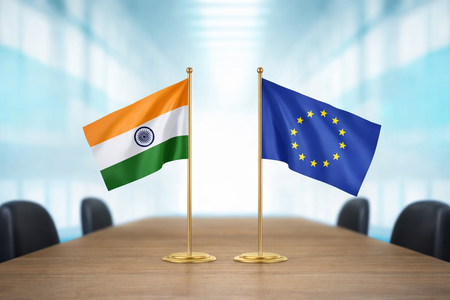
India’s chief negotiator for the free trade agreement with the European Union hailed it as the country’s most ambitious pact, aiming to boost market access and trade rules while aiding labor-intensive industries. Darpan Jain, Chief Negotiator from India’s Department of Commerce, highlighted the broad liberalization commitments across goods and services, safeguarding sectors like agriculture. The comprehensive agreement, involving nearly two billion people and a quarter of global output, covers goods, services, investment, digital trade, and intellectual property.
The agreement is set to benefit Indian exporters, especially in labor-intensive sectors facing tariff disadvantages in the European market. Textiles, apparel, leather, and footwear industries are expected to see growth opportunities. Jain emphasized the significance of services, particularly in digitally delivered services, research, and technology-driven industries. The pact establishes mechanisms to resolve disputes related to technical regulations and non-tariff barriers, ensuring predictability in trade.
Christophe Kiener, the EU’s chief negotiator, highlighted the substantial tariff savings for EU exporters and the strategic partnership encompassing trade, security, and technology. Both negotiators emphasized the long-term strategic interests driving the agreement, beyond short-term geopolitical factors. The pact addresses sensitive issues like the EU’s Carbon Border Adjustment Mechanism, ensuring non-discriminatory application and cooperation on green initiatives and clean technologies.
Implementation-wise, the legal review is nearing completion for the EU’s approval process, with hopes for Prime Minister Narendra Modi’s participation in the signing ceremony. India’s ratification process is expected to be simpler, requiring approval by the Cabinet and the President. The agreement is poised to enter into force by the second quarter of the following year.
