


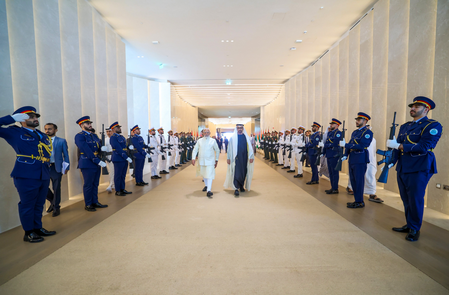
India’s presence in the Gulf, notably through the UAE, is expanding, showcasing a deepening strategic alliance in a region facing challenges. During Prime Minister Narendra Modi’s recent visit to Abu Dhabi, agreements were signed focusing on energy security, economic cooperation, defence, and investments totaling around $5 billion. Bilateral trade has surpassed $101 billion for the second consecutive year, with a target of reaching $200 billion by 2032.
The report highlights India’s increasing involvement in the Gulf, aligning with its strategic relations with Israel, forming an emerging “Indo-Abrahamic alliance” based on shared interests. India’s reliance on the UAE as a key Gulf partner coincides with internal tensions within the Gulf Cooperation Council (GCC), notably seen in Abu Dhabi’s exit from OPEC and growing rifts with Saudi Arabia.
With a diaspora of 4.3 million in the UAE, constituting nearly 38% of the population, India’s expatriate community is viewed as a strategic asset due to its significant economic contributions. However, challenges related to labor conditions and Emiratisation policies pose complexities. India’s pursuit of energy security and strategic diversification in the Gulf aligns with its status as the world’s most populous nation and fifth-largest economy.
