


Japan is set to hold a special parliamentary session on February 18 to select a new prime minister following the recent House of Representatives election. The Japanese Constitution mandates that within 30 days of the election, an extraordinary Diet session must be convened to appoint a prime minister. During this session, the current cabinet will resign, and the newly-elected House of Representatives and the existing House of Councillors will vote separately to designate the new prime minister and form a new cabinet.
In the prime ministerial selection process, a candidate who secures a majority in the initial round of voting in each chamber wins outright. If no candidate achieves a majority, the top two vote-getters will proceed to a runoff, with the winner determined by a simple majority. In case of differing candidates between the two chambers, the decision of the House of Representatives takes precedence as per the Constitution.
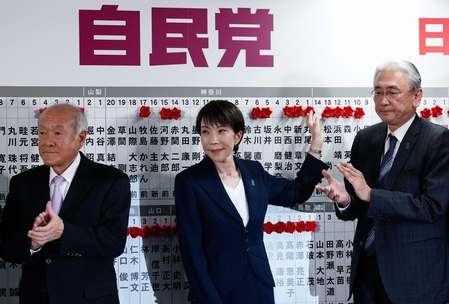
With the Liberal Democratic Party (LDP) holding a significant majority in the lower house, it is widely anticipated that LDP President and Prime Minister Sanae Takaichi will emerge victorious in the designation election. The ruling LDP gained a substantial increase in seats after the House of Representatives election, now holding a two-thirds majority on its own.
Despite the electoral success, concerns persist over the economic and social challenges facing Japan, particularly regarding Takaichi’s political direction. While Takaichi’s swift and entertainment-focused election strategy bolstered her position, the administration faces ongoing tests as critical issues remain unresolved. The ruling coalition, comprising the LDP and the Japan Innovation Party (JIP), now commands a total of 352 seats in the House of Representatives.
