


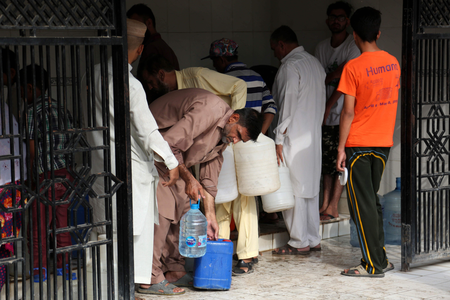
Karachi, Pakistan, is currently grappling with a severe water scarcity issue, where access to this essential resource is increasingly dependent on personal connections or financial capabilities. Affluent individuals often resort to the ‘tanker mafia,’ paying exorbitant prices for extra water supply, while others face challenges in securing the limited government-provided water tankers. In areas fortunate enough to have piped water, residents compete to fill their tanks, leaving the less privileged to queue up at public pumps or resort to illegal means for water.
The situation is expected to worsen significantly with the arrival of summer, prompting city politicians to gear up for the impending crisis. Lawmakers from the Muttahida Qaumi Movement (MQM) recently raised concerns about Karachi’s water shortage in the National Assembly, blaming the delays in the K-IV water supply project on the Pakistan Peoples Party (PPP)-led Sindh government. Despite assurances from the federal minister for water resources regarding the project’s progress, doubts remain about its timely completion.
The lack of concrete solutions or discussions during the parliamentary session reflects a recurring pattern in the political response to Karachi’s challenges. Leaders often make superficial promises without addressing the root issues, leaving the city’s residents in a perpetual state of distress. The deteriorating condition of Karachi, the country’s economic hub, underscores the urgent need for proactive measures to prevent further decline and ensure a sustainable water supply for its populace.
