


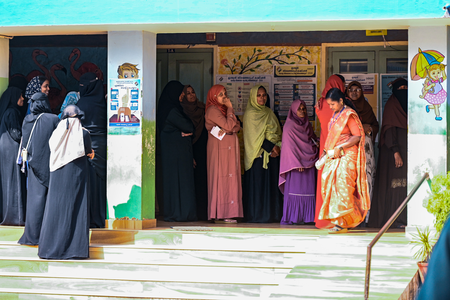
Kerala recently concluded its Assembly elections with a notable voter turnout of 79.7%. Women voters, surpassing men at 80.86%, showcased active participation in evaluating the performance of the Left Democratic Front (LDF) against the United Democratic Front (UDF). The Bharatiya Janata Party (BJP)-led National Democratic Alliance (NDA) also emerged prominently during the election campaign.
As the state awaits the vote count on Monday, it faces a crucial moment with predictions of a closely contested election. Chief Minister Pinarayi Vijayan’s governance model, focusing on welfare expansion and infrastructure projects, stands central to the electoral dynamics. The LDF, aiming for a historic third term, relies on its organizational strength, while the UDF has tapped into anti-incumbency sentiments, especially among younger voters and those facing economic challenges.
Exit polls indicate a potential majority for the UDF, with projections ranging from 75 to 83 seats, reflecting a shift towards economic concerns and job opportunities. The NDA, although trailing, could impact the outcome by securing a few seats, particularly in districts like Thiruvananthapuram and Palakkad. Kerala’s economic ties with the Middle East have also influenced the election narrative, driven by diaspora concerns over regional stability.
The election outcome will not only determine the winner but also provide insights into Kerala’s political landscape, shedding light on whether welfare policies or economic grievances steer voter choices in this closely watched state.
