


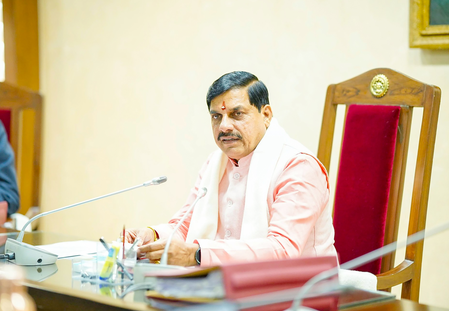
The Madhya Pradesh cabinet, led by Chief Minister Mohan Yadav, has sanctioned the state’s excise policy for the financial year 2026-27. The policy maintains restrictions on liquor sales, including no new liquor shops opening statewide and a ban on expanding or relocating existing shop premises. It also upholds the prohibition of liquor outlets near the Narmada river banks and in holy cities.
The new policy discontinues the automatic renewal of liquor shop licenses. Instead, all 3,553 existing liquor shops will be allocated through e-tendering and e-auction processes to ensure transparency and prevent monopolies. To set a revised baseline for allocations, the reserve price for liquor shops will be determined by increasing the current year’s license fee by 20%.
Liquor shops will be organized into clusters, each containing a maximum of five shops to facilitate streamlined bidding. District administrations will categorize these clusters into groups, and the e-tendering and e-auction process will be conducted accordingly. The policy mandates accepting only electronic invoices and e-bank guarantees as security deposits to enhance financial transparency and prevent irregularities.
The excise policy maintains existing liquor duty rates and license fees for manufacturing units, bars, and related establishments to ensure operational stability. It also allows liquor manufacturers to determine product prices without prior government approval and simplifies fee structures and label registration processes to promote exports. Special provisions are included to support tribal self-help groups engaged in producing tribal Mahua liquor.
The new excise policy, effective from April 1, 2026, aims to enhance regulatory transparency, prevent monopolies, and boost state revenue while upholding regulatory safeguards on liquor availability.
