


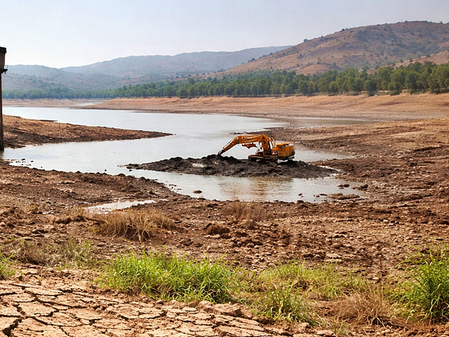
Maharashtra Chief Minister Devendra Fadnavis has instructed all state departments to prioritize disaster mitigation in anticipation of a potential El Nino threat. Emphasizing the need for rigorous water planning, accelerated soil conservation, and the revival of old water resources, Fadnavis stressed the importance of staying “battle-ready” to minimize the impact of an expected rainfall deficit. He specifically highlighted the Jalyukt Shivar and Galmukt Dharan-Galyukt Shivar schemes for immediate focus by the administration.
Repairing existing water bodies has been identified as a cost-effective method to enhance storage capacity. Fadnavis announced the establishment of dedicated task forces in each district, comprising the Collector, irrigation officials, and local body representatives, to oversee water usage and storage monitoring. To address the potential livestock crisis, he called for the effective implementation of the Fodder Development Programme, especially in backwater areas of dams and drought-prone regions like Solapur, Sangli, and Marathwada.
In a bid to prevent any scarcity and ensure transparency in fertiliser supply and distribution, Fadnavis directed the monitoring of the process through the ‘AgriStack’ system, leveraging artificial intelligence. The IMD has forecasted the peak impact of El Nino in August and September, potentially resulting in below-average rainfall. While May is expected to witness slightly lower temperatures, experts anticipate an increase in heatwave frequency. Fadnavis drew parallels with previous years, highlighting the need for disciplined planning and protected irrigation to safeguard crops even during extended dry spells.
Agriculture Minister Dattatray Bharne assured that the department is fully prepared for any contingencies. Stringent measures have been put in place to ensure the timely supply of DAP fertilisers and prevent hoarding. The government is also pushing for the expansion of the farm pond scheme to provide essential materials like plastic lining to farmers. Regional officers have been tasked with maintaining a buffer stock of seeds to accommodate potential “double sowing” requirements due to erratic initial rains.
Fadnavis has instructed the Finance Department to promptly release necessary funds for water conservation projects, aiming to bolster the state’s resilience against the anticipated climatic challenges.
