


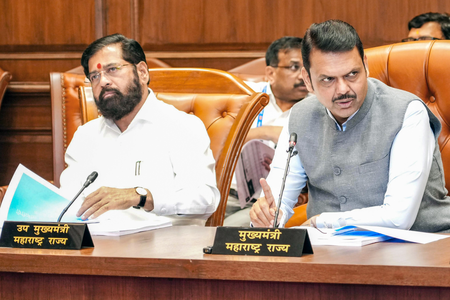
The Maharashtra government has introduced stringent criteria for the Punyashlok Ahilyadevi Holkar farm loan waiver scheme, aimed at benefiting 55.72 lakh farmers in the state. The scheme, totaling Rs 36,585 crore, is designed to provide financial relief to economically distressed agricultural households.
Under the Cabinet decision, individuals such as current or former Ministers, MPs, MLAs, MLCs, and local government leaders are excluded from availing the benefits of the scheme. Additionally, officers and employees of Central and State Government departments with monthly salaries or pensions exceeding Rs 25,000, excluding former military personnel, are ineligible.
Employees of Public Sector Undertakings (PSUs), cooperative banks, and sugar factories receiving monthly payouts exceeding Rs 25,000 are also not covered by the scheme. Furthermore, individuals with non-agricultural income who file regular Income Tax returns are not entitled to benefit from the scheme.
The farm loan waiver scheme is applicable to farmers who took loans between April 1, 2019, and March 31, 2025. Loans that were overdue as of September 30, 2025, and remained unpaid until March 31, 2026, are considered for the scheme. Medium-term restructured crop loans from short-term loans during the 2019–2024 period, with defaults by September 30, 2025, are included in the Rs 2 lakh write-off umbrella.
Farmers with outstanding principal and interest exceeding Rs 2 lakh can opt for a One Time Settlement (OTS) protocol. Those who repay short-term crop loans in two out of three financial years before June 30 of the respective year may receive an incentive bonus of up to Rs 50,000. Regular compliance cases with a loan component less than Rs 50,000 will have the benefit matched to the actual repaid amount, with a minimum of Rs 5,000.
The disbursement process mandates Aadhaar biometric verification and digital registration on the state’s “Agri stack” platform. The scheme applies universally across all institutional lending setups, including Nationalized Banks, Private Sector Banks, Regional Rural Banks, and District Central Cooperative Banks. A high-level committee led by the Additional Chief Secretary (Finance) will negotiate with banking consortiums for Non-Performing Asset crop loan balances.
