


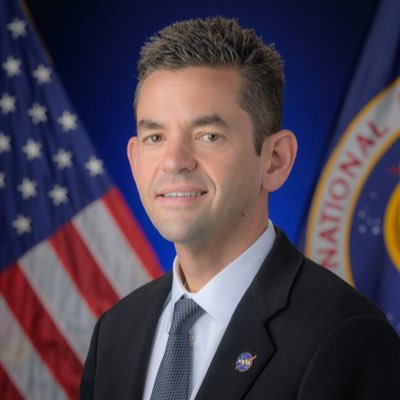
NASA Administrator Jared Isaacman has emphasized that the United States is engaged in a new competition with China to send astronauts back to the Moon. He highlighted the urgency of the situation, stating that the race is now a matter of months, not years, as both countries hasten their efforts to establish a continuous human presence beyond Earth.
Isaacman, speaking on CBS’s Face the Nation during the US Independence Day celebrations, expressed certainty that China aims to land its astronauts on the Moon. He stressed the need for the US to act swiftly to ensure it returns before China accomplishes its lunar mission.
The Trump administration’s significant investment in NASA’s Artemis program has made lunar exploration a top national priority, according to Isaacman. He confirmed plans for Artemis III next year, followed by Artemis IV in 2028, with the goal of astronauts landing on the Moon after testing new landing systems in Earth’s orbit.
Highlighting the strategic challenge posed by China, Isaacman pointed out the differing timelines, with China aiming for a lunar landing before 2030 while the US targets the end of 2028. He underscored that this timeframe difference amounts to a race measured in months rather than years.
NASA’s broader objective beyond lunar missions is to establish a permanent human presence on the Moon, serving as a crucial step for future Mars missions. Isaacman outlined plans for lunar infrastructure to start arriving by 2027, with equipment like a lunar terrain vehicle and initial infrastructure awaiting astronauts by 2028.
Isaacman also praised the increasing involvement of private companies in the US space program, noting their role in transforming the economics of space exploration. He mentioned the potential of commercial launches to extend the lifespan of scientific missions, citing an experimental mission to rescue NASA’s Swift space telescope as an example.
Addressing concerns about delays in Blue Origin’s New Glenn rocket program, Isaacman assured that NASA is supporting the investigation into the recent launch failure while ensuring progress on upcoming lunar missions. He expressed confidence in Blue Origin’s ability to resolve the issues, with NASA’s assistance.
The Artemis program, NASA’s flagship initiative to return humans to the Moon, aims to establish a sustained human presence on the lunar surface through collaborations with international partners and commercial space entities before eventually venturing to Mars.
