

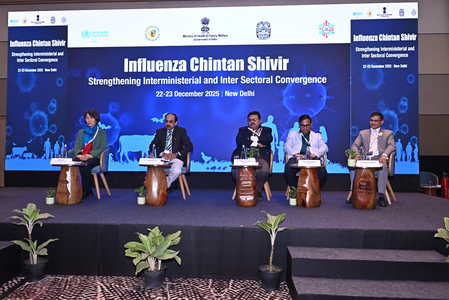
The National Centre for Disease Control (NCDC) and the World Health Organization (WHO) India have initiated a two-day meeting in New Delhi to bolster influenza preparedness in the country. The Chintan Shivir, focusing on “Strengthening Interministerial and Intersectoral Convergence for Influenza Preparedness and Response,” is scheduled from December 22 to 23. This gathering aims to facilitate discussions among key stakeholders to fortify preparedness and response mechanisms ahead of the upcoming influenza season.
Influenza remains a significant public health challenge in India and globally. This respiratory disease, caused by influenza viruses affecting the nose, throat, and lungs, leads to periodic outbreaks, resulting in notable morbidity and mortality, especially among vulnerable groups like young children, older adults, pregnant women, and individuals with chronic illnesses.
Union Health Minister JP Nadda highlighted the importance of the Chintan Shivir in enabling stakeholders to deliberate on various aspects of preparedness against influenza. He stressed the necessity of aligning preparedness and response activities, including surge capacities, for the upcoming influenza season. The Integrated Disease Surveillance Programme (IDSP) was also underscored as crucial, with coordinated efforts between the Centre and States deemed essential for robust surveillance systems nationwide.
The Ministry continues to monitor seasonal influenza trends across States and Union Territories in real time through the IDSP network. Discussions during the meeting emphasized the need for convergence across sectors to support influenza preparedness, covering surveillance, early warning, laboratory readiness, clinical preparedness, and effective risk communication.
With the participation of approximately 110 representatives from various ministries, departments, and institutions, the event aimed to enhance preparedness review by States, Union Territories, and institutions. This involved developing a practical preparedness checklist to assess readiness, identify gaps, and guide follow-up actions within specified timelines. The importance of timely information sharing, clarity in roles and responsibilities, and coordinated efforts across departments was reiterated.
The Chintan Shivir also marked a significant stride in strengthening One Health-based preparedness by linking human, animal, and environmental health systems. By promoting whole-of-government coordination through a One Health approach, the initiative contributes to bolstering India’s pandemic preparedness and response capabilities, thereby advancing national and global health security in alignment with the principle of Vasudhaiva Kutumbakam.
NCDC and WHO India collaborate to enhance influenza preparedness in India


Indian Community Editorial Team
The Indian Community Editorial Team curates, verifies, and publishes stories that matter to Indians worldwide. From culture and community to business and innovation, our mission is to spotlight voices, ideas, and events that bring our global community closer together. Have news or a story to share? Submit it to us at [email protected].
Add A Comment