


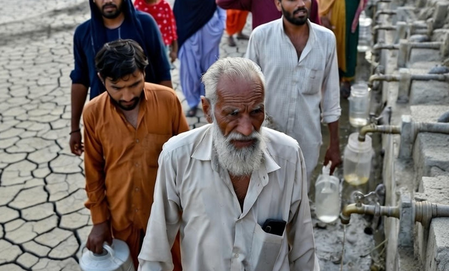
Karachi, a city crucial for Pakistan’s trade, is being overlooked, impacting the country’s economy growth, which has slowed to less than 3 percent. The neglect of Karachi’s infrastructure, especially its acute water shortage, is highlighted as a significant barrier to Pakistan achieving its growth targets. Karachi, contributing significantly to Pakistan’s exports and trade, has been deprived of over Rs 3 trillion since 2010, affecting the country’s economic stability.
The neglect of Karachi has led to Pakistan experiencing a low average growth rate since 2010, falling short of the growth targets set by the Prime Minister’s Economic Transformation Agenda and Implementation Plan. Karachi, responsible for 50 percent of the country’s exports and 76 percent of its trade, requires urgent infrastructure improvements to boost economic growth. The city’s water scarcity issue, with a shortfall of around 650 MGD, is exacerbating the challenges faced by Karachi’s residents and businesses.
Karachi’s water needs, estimated at 1,200-1,300 MGD, are not being adequately met, with the city receiving only a fraction of the required amount from existing water sources. The reliance on water tankers for supply further complicates the situation, highlighting the inefficiencies in the water distribution system. Despite Karachi’s significant contributions to tax revenues, it has not received its due share of resources, impacting its ability to address critical infrastructure deficiencies.
The provincial government’s reluctance to address Karachi’s water scarcity issues and the failure to allocate sufficient water resources from the Indus Water Accord are exacerbating the city’s challenges. Karachi’s importance in Pakistan’s economic landscape necessitates immediate attention to resolve its infrastructure and water supply issues to unlock its full economic potential.
