


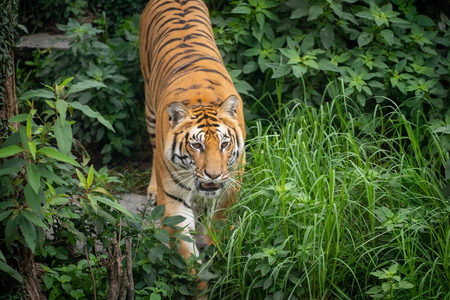
Nepal is progressing with its initiative to establish its inaugural Tiger Sanctuary in Chitwan National Park to offer a natural habitat for rescued and ‘problematic tigers’ while boosting eco-tourism.
The term ‘problematic tigers’ refers to those posing a direct threat to human safety, often older or injured animals incapable of hunting natural prey. Nepal’s tiger population has nearly tripled to 355 individuals in 2022 from 121 in 2009, attributed to sustained conservation efforts.
To tackle the rise in human-tiger conflicts and pressure on tiger rescue centers due to the growing tiger population, the Nepali government aims to create the Tiger Sanctuary. This sanctuary, planned on approximately 52 hectares of land at Devnagar in Chitwan, is designed to accommodate 18 to 20 tigers.
Hari Bhadra Acharya, a senior ecologist at the Department of National Parks and Wildlife Conservation, mentioned that the sanctuary is intended to provide rescued and problematic tigers with a larger enclosed area for more natural roaming, ensuring public safety. The government has allocated NPR 30 million for the project in the upcoming fiscal year 2026-27, starting in mid-July.
The sanctuary will be an expansion of the existing wildlife rescue center at Devnagar, equipped with veterinary facilities and a holding center for rescued animals. It aims to merge wildlife conservation with eco-tourism to generate revenue for long-term operation, covering feeding and maintenance costs.
Visitors will have the opportunity to observe tigers from elevated canopy bridges, observation towers, or specially designed enclosed safari vehicles along designated safari routes, while the tigers move freely within secure compartments. The sanctuary, designed to avoid disrupting wildlife movement, will consist of three main sections with varying capacities for tigers.
