


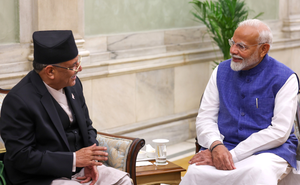
The Nepali Communist Party, led by former Prime Minister Pushpa Kamal Dahal ‘Prachanda’, has committed to addressing the border dispute with India through diplomatic dialogue and international law. The party aims to settle issues concerning Lipulekh, Limpiyadhura, and Kalapani through peaceful talks and in compliance with global legal norms. Tensions between Nepal and India escalated when Nepal incorporated these contested regions into its political map, leading to strained bilateral relations.
The NCP, a result of the merger between the Communist Party of Nepal (Maoist Centre) and the CPN (Unified Socialist), plans to modernize border crossings with neighboring nations. Nepal shares borders with India and China, and the party emphasizes active participation in multilateral platforms like the UN, SAARC, and BIMSTEC. Upholding a non-aligned foreign policy, Nepal’s national interests, sovereignty, and territorial integrity are top priorities for the NCP.
In addition to fostering balanced relationships based on mutual respect and benefit, the NCP advocates for reviewing perceived unequal treaties and forging new agreements for mutual gain. Economic diplomacy is highlighted to boost foreign investment, exports, technology transfer, tourism, and job creation. The party also stresses Nepal’s role in international discussions on climate change, Himalayan conservation, and the interests of landlocked countries.
Domestically, the NCP vows to combat corruption by establishing a robust commission to investigate assets of former public officials and probe corruption cases. A high-level anti-corruption body will be set up to tackle malpractice across state institutions and ensure accountability. The party acknowledges public discontent over corruption as a key factor in the previous government’s downfall.
