


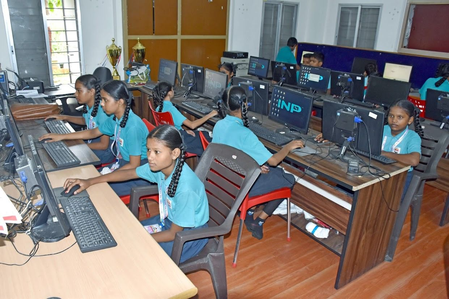
A new initiative named Kidnovation has been introduced in Gujarat to assist children in turning their original ideas into intellectual property rights. The Children’s Research University (CRU) established by the Gujarat government is behind this project, aiming to help school-age students develop up to 30 innovative ideas with provisional patents. The program, aligned with the National Education Policy (NEP) 2020, focuses on fostering creativity, scientific thinking, and experiential learning.
Dr. T.S. Joshi, the Vice-Chancellor of the Children’s Research University, announced the initiative, stating that approximately 100 talented children from Gujarat will be chosen for specialized training in prototyping, design, and innovation. These selected participants will have their creative ideas evaluated for patentability, with 20 to 30 innovative concepts expected to have provisional patents filed with the Indian Patent Office. Notably, the children will retain full ownership of these patents.
The Kidnovation project was launched on the 87th death anniversary of educationist Gijubhai Badheka. It aims to encourage children to go beyond idea generation and gain exposure to the scientific, technical, and legal aspects of innovation. The initiative, conceptualized during Prime Minister Narendra Modi’s tenure as Gujarat chief minister, emphasizes nurturing creativity and promoting innovation through education.
The program is scheduled to run from June 23 to November 15, 2026. Idea-scouting and mentoring activities will be conducted across Gujarat in July and August. In September, shortlisted concepts will undergo scientific evaluation and screening, leading to a two-day residential prototyping boot camp on October 15 and 16 at the Children’s Research University, coinciding with the birth anniversary of former President Dr. A.P.J. Abdul Kalam. The camp will host around 50 children to develop selected ideas into working prototypes.
Nilesh Pandya, the Director of the Training Centre at the Children’s Research University, highlighted that the project will document the innovation journeys of all 100 children, compiling them into a ‘Kidnovation Log’ for permanent digital access. Additionally, a policy-based white paper on intellectual property development in primary education will be prepared and submitted to the Education Department of the state government. Several organizations will provide support for patent drafting, prototyping, innovation screening, teacher coordination, and documentation.
The initiative reflects Gujarat’s commitment to fostering creativity and Indian knowledge traditions in its education system. By connecting student innovations with the patent process, the Kidnovation project aims to offer young innovators formal recognition and ownership of their original ideas.
