


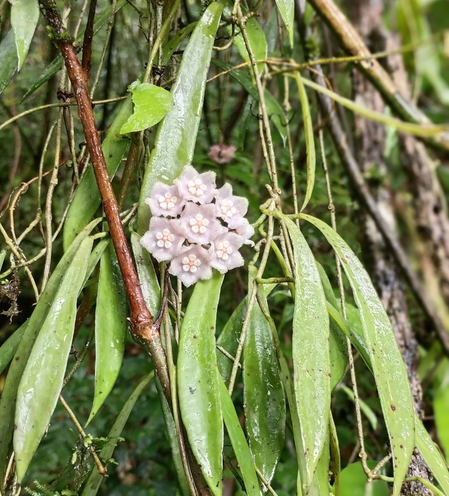
Nagaland University researchers have found a new plant species, ‘Hoya nagaensis,’ in the high-altitude forests of Nagaland. This discovery emphasizes the state’s importance as a biodiversity hotspot in Northeast India. The research highlights the significance of community-led forest conservation efforts in the region.
Large portions of Nagaland’s forests lack scientific documentation, hindering accurate biodiversity assessments and conservation planning. The research team conducted thorough field surveys and taxonomic studies to enhance scientific knowledge of the area’s plant diversity. The study, funded by Nagaland University, was part of the Start-Up Project for Young Faculty.
The findings were published in an international journal focusing on plant and fungal taxonomy, systematics, and global biodiversity. Vice Chancellor Prof Jagadish Kumar Patnaik praised the researchers for uncovering a new plant species, underscoring the remarkable biodiversity of Northeast India. The discovery highlights the crucial role of community-protected forests in preserving rare and endemic plants.
Dr. Gyati Yam, the Principal Investigator, explained that the research aimed to identify unknown plant species, document regional biodiversity, and assess the conservation status of rare plants. The study also emphasized the importance of community-reserved forests in safeguarding delicate ecosystems. Future work will involve monitoring the species in the wild, studying its ecology, and assessing conservation threats.
Researcher Vieneite-o Koza noted the uniqueness of the discovery, ‘Hoya nagaensis,’ previously unknown to science. The plant’s distinct leaf shapes and floral characteristics differentiate it from other species in the Hoya genus. The discovery underscores the critical role of community-protected forests in Nagaland for rare and endemic plant species, contributing valuable data to global plant science.
Researcher Joynath Pegu highlighted that ‘Hoya nagaensis’ is currently found only in the Kavünhou Community Reserved Forest in Phek district. Due to its limited distribution and threats like shifting cultivation, the species is classified as Critically Endangered. The discovery showcases the effectiveness of traditional forest stewardship by local Naga communities in biodiversity conservation.
The discovery sheds light on the rich botanical diversity of the Eastern Himalayas’ temperate forest ecosystems. It offers essential habitat information and comparisons with related taxa, serving as a baseline for future botanical and ecological research in the region. By documenting the plant’s unique traits and ecological context, the researchers have expanded the taxonomic framework for the Hoya genus, opening avenues for further morphological diversity studies.
