


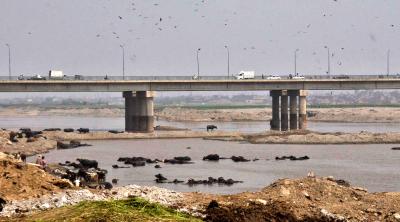
Pakistan is grappling with a growing water crisis, particularly in cities like Lahore and other parts of Punjab province. The country’s inefficient irrigation systems are leading to significant water losses through seepage and leakage, exacerbating the situation. Nearly 95% of Pakistan’s freshwater is utilized for agriculture, but about 60% of irrigation water is wasted due to ineffective canals and field systems.
A recent report highlighted that Pakistan organized an international seminar in Islamabad titled ‘Indus Waters Treaty: An Instrument of Peace and Regional Stability.’ The seminar aimed to position the water issue as a critical regional security concern requiring urgent international intervention. This strategic framing mirrors Pakistan’s approach to presenting Kashmir as a ‘nuclear flashpoint’ tied to peace and security in South Asia.
Despite Pakistan often portraying the Indus Water Treaty (IWT) as a successful model of transboundary river cooperation, the report emphasized that its longevity since 1960 has largely depended on India’s goodwill and generosity as the upper riparian state. The report speculated on how Pakistan might have utilized the treaty differently if it were the upper riparian state, suggesting potential leverage against India from the outset.
The report also pointed out Pakistan’s history of violating the spirit of the IWT through conflicts with India, including wars in 1965, 1971, and the Kargil conflict in 1999. Additionally, Pakistan’s involvement in sponsoring cross-border terrorism, such as the Parliament attack in 2001 and the Mumbai terror attacks in 2008, has strained relations. India has now linked the future of the Indus Waters Treaty to Pakistan’s cessation of cross-border terrorism, making future cooperation contingent on Pakistan’s actions in this regard.
Pakistan received significant international financial aid in 1960, including assistance from India and other donor nations, to develop water infrastructure. However, despite this support, Pakistan failed to construct adequate water storage facilities, leading to ongoing water challenges in the country. The blame game between Pakistan and India continues amid Pakistan’s struggle with water scarcity issues.
