


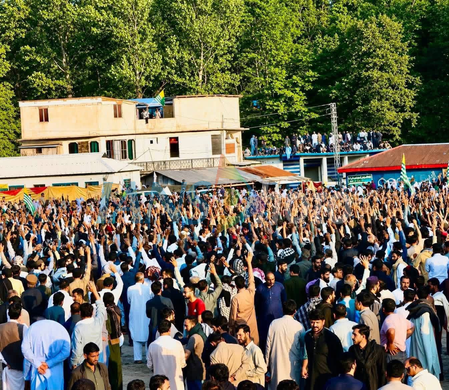
Pakistan, known for representing Kashmiri Muslims internationally, faces challenges as protests erupt in Pakistan-occupied Kashmir (PoK). Demonstrators in PoK, including ordinary residents like traders and students, demand better living conditions and fair treatment from authorities. The protests, triggered by economic grievances, have grown into a broader resistance against Pakistani rule in the region.
Protesters in PoK, chanting slogans against Pakistani forces, have drawn attention to their discontent with the situation. The demonstrations, which began over electricity tariffs and food shortages, are led by a coalition demanding subsidized essentials and electoral reforms. Residents, feeling economic hardships despite their region’s power generation, express frustration over unfair policies and rising prices.
The unrest in PoK has escalated, leading to a crackdown by Pakistani authorities. The banning of the Awami Action Committee, sedition charges against its leaders, and the deployment of paramilitary forces reflect Pakistan’s harsh response. The protests in PoK challenge Pakistan’s narrative of being the protector of Kashmiri Muslims and highlight growing dissent against Pakistani control.
The demonstrations in PoK signify a rejection of Pakistan’s founding ideology and its claims over Kashmir. While Pakistan asserts guardianship over Kashmiris, voices in PoK increasingly reject this narrative, emphasizing that they do not see Pakistan as their savior. The contrast with Muslims in the Indian Union Territory of Jammu and Kashmir, who enjoy more rights and opportunities, underscores the discontent in PoK.
