


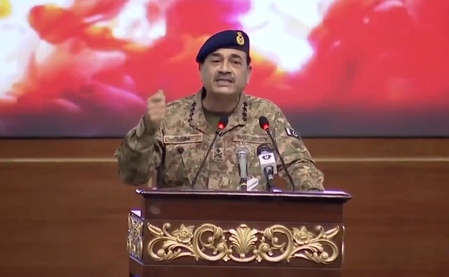
Pakistan’s relationship with Afghanistan has deteriorated significantly, reaching its lowest point in years due to ongoing tensions, border clashes, and strategic frustrations in Islamabad and Rawalpindi. The Pakistan Army Chief, Field Marshal Asim Munir, recently issued a warning to the Taliban, emphasizing that Kabul must choose between its ties with Pakistan and alleged support for the Tehreek-e-Taliban Pakistan (TTP). This warning reflects Islamabad’s faltering Afghan policy, as highlighted in a report.
The warning, delivered at the National Ulema Conference in Islamabad in the presence of religious leaders, underscored Pakistan’s struggle to influence Kabul through various means, including ideological affinity, diplomacy, and military actions. Munir’s message to the Taliban, framed as a matter of national security, emphasized Pakistan’s inability to tolerate the presence of TTP fighters in Afghanistan. However, such ultimatums are often perceived as diplomatic weaknesses rather than strengths, according to the report.
For over three years, Pakistan has attempted to pressure the Afghan leadership to curb TTP activities through talks, intelligence coordination, and military strikes. Despite these efforts, the Afghan Taliban have consistently denied Pakistani claims regarding TTP’s presence, asserting that the issue is Pakistan’s internal concern. Munir’s warning signifies a shift in Pakistan’s approach, moving away from past strategies of influence towards a more assertive stance.
Pakistan’s previous expectations of influencing Afghanistan through support for the Taliban have not materialized as anticipated. The Taliban’s return to power in 2021 marked a significant shift, with the new leadership seeking international legitimacy and regional partnerships, rather than aligning solely with Pakistan. This change has challenged Pakistan’s assumptions and strategic calculations, leading to a reevaluation of its Afghan policy.
