


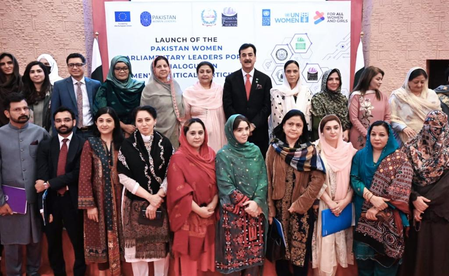
Pakistan’s women parliamentarians are encountering challenges that mirror a broader trend of exclusion in the country’s political setup. Despite the presence of legislative quotas that have boosted numerical representation, they have not significantly changed the power dynamics, as per a recent report. The dominance of men in leadership positions and the limited allocation of general seat tickets to Pakistani women suggest that inclusion has been more about management than expansion.
The report points out that political parties derive benefits from having women in legislative bodies while still controlling the pathways to power. This trend is not limited to individual parties but indicates a systemic issue. The structures shaping political participation in Pakistan prioritize continuity over transformation, reinforcing existing hierarchies.
In Pakistan’s Parliament, women’s representation heavily relies on reserved quotas rather than electoral success in general seats. Only one woman in the current Senate has been elected through a general constituency, with the rest entering through quota-based allocations, according to a recent finding by the ‘Free and Fair Election Network’. The report emphasizes that while quotas offer access, they do not necessarily lead to political autonomy or leadership opportunities, especially evident in the lack of women in key leadership roles.
Women legislators in Pakistan actively participate in parliamentary debates and policy discussions, contributing to national issues. However, they are largely excluded from the structures defining political leadership and electoral competition. This exclusion has practical implications for governance, representation, and democratic institutions, limiting the diversity of perspectives and reinforcing existing power imbalances.
The report highlights that the challenges faced by women lawmakers in Pakistan are not incidental but deeply ingrained in the political framework. Access to power remains mediated by party structures, electoral practices, and institutional norms that show little inclination to evolve.
