


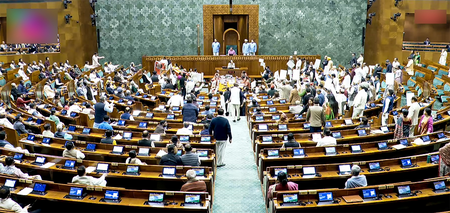
Parliament, a crucial space in Indian democracy, faced a troubling incident on February 4 when the Lok Sabha Speaker advised the Prime Minister to stay away due to security concerns arising from fellow MPs’ conduct.
The events of that day go beyond mere disruption; they signify a breach in democratic norms, prompting reflection, especially from the Congress party. Despite Priyanka Gandhi Vadra dismissing allegations of an assault plot, visuals from the Lok Sabha and the Speaker’s statement paint a concerning picture.
The incident raises questions not just about a protest turning awry but also about the political direction of the Congress leadership. The public’s perception, fueled by videos and the Speaker’s words, has shifted towards viewing the episode as a significant moment in parliamentary history.
The Speaker’s caution to the Prime Minister, citing credible information of a potential incident, underscores the seriousness of the situation. The Congress’s defense, while denying violence, faces scrutiny amid accusations and counterclaims, highlighting the need for upholding democratic values.
Criticism is essential in democracy, but when dissent transforms into intimidation, it challenges the core principles of parliamentary conduct. The incident underscores the importance of upholding rules and traditions in the face of heightened political tensions.
Lawmakers are expected to adhere to established norms, especially in a charged environment like Parliament. The need for responsible conduct and respectful debate is paramount to ensure the sanctity of democratic institutions.
