


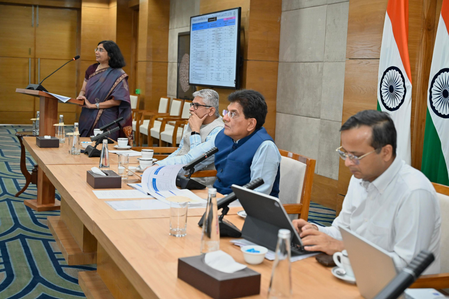
Commerce and Industry Minister Piyush Goyal recently led a meeting with senior officials and industry leaders to strategize on enhancing India’s manufacturing sector. Goyal emphasized the government’s dedication to collaborating with industry for expanding manufacturing capabilities and improving global competitiveness. The aim is to elevate India’s manufacturing share in the GDP to 25% from the current 16-17% to support the country’s economic growth.
The meeting aligns with India’s plan to grow its economy significantly by 2047, with a focus on manufacturing as a key driver. The strategy involves developing integrated manufacturing hubs that provide infrastructure, regulatory support, and connectivity to bolster long-term manufacturing activities. This approach aims to reduce costs, enhance scale, and strengthen India’s position in global production networks.
India’s manufacturing policy has transitioned towards infrastructure-led hub development to ensure scalability, reliability, and competitiveness. The government’s increased capital expenditure on infrastructure signifies a shift towards system-level planning, which streamlines manufacturing hub effectiveness by improving logistics and execution efficiency. These efforts are crucial for India to attract global investments and establish itself as a preferred manufacturing destination.
The evolving landscape of manufacturing in India shows a growing focus on medium- and high-technology activities, indicating a shift towards more advanced industrial structures. Micro, Small, and Medium Enterprises (MSMEs) are pivotal in this transformation, contributing significantly to manufacturing output and job creation. The recent Union Budget has proposed initiatives like chemical parks, MSME clusters, and a Biopharma SHAKTI program to further accelerate industrial development.
