


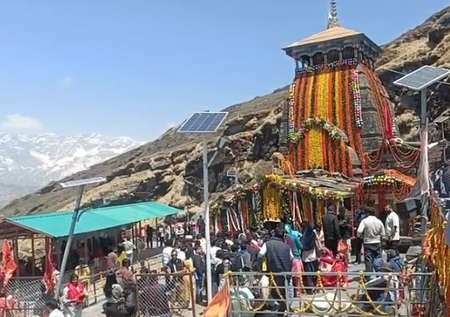
The Tungnath Temple in the Garhwal Himalayas, Uttarakhand, attracts numerous devotees and nature lovers annually. Despite its beauty, the region is now marred by increasing plastic waste, causing concern among locals and environmentalists. The picturesque Tungnath-Chopta trekking route is marred by discarded plastic bottles and wrappers, highlighting a lack of awareness about cleanliness.
The accumulation of garbage in this ecologically sensitive area poses a significant threat to the Himalayan ecosystem. Environmental experts warn of long-term damage if immediate action is not taken to address the issue. Anil Prakash Joshi, a renowned environmentalist, emphasized the need for proactive measures beyond mere bans or restrictions to combat the problem effectively.
Joshi cited Sikkim’s successful plastic ban, achieved through thorough preparation, as a model for addressing the issue. He stressed the importance of reducing plastic dependency by promoting local manufacturing and regional products. By integrating agriculture and horticulture with tourism, Joshi believes that both employment opportunities can be enhanced and plastic usage curtailed.
Regulations alone are insufficient to address the plastic waste problem; fostering a sense of environmental responsibility among tourists is crucial. Joshi emphasized the need for visitors to develop a deeper connection with nature and actively contribute to its preservation. Urgent action is required to instill a mindset focused on reducing plastic use and conserving nature in the Tungnath-Chopta region for the benefit of future generations.
