


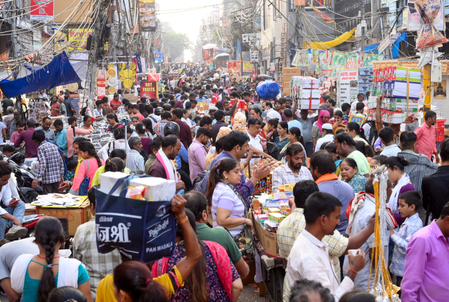
Prime Minister Narendra Modi is leveraging India’s large consumer market to support the economy amidst escalating tariffs from US President Donald Trump. Despite facing tariffs of up to 50 percent from the US, India has managed to maintain its negotiating position, as reported by The Wall Street Journal. Consumer spending in India, particularly in the capital, has responded positively to government initiatives like reduced sales taxes, with individuals like 22-year-old Shrey Dixit expressing satisfaction over purchasing decisions.
India’s economy, driven significantly by consumer spending, offers a level of resilience against US pressures compared to export-oriented economies. The country’s lesser reliance on US goodwill, in contrast to nations like Japan and South Korea, has allowed it to navigate trade tensions effectively. Despite initial tariffs imposed by Trump in August, India has focused on boosting domestic demand, including tax exemptions for lower-income groups and multiple interest rate cuts by the central bank.
In a bid to stimulate local consumption, PM Modi encouraged citizens to buy domestic products during the Diwali festival, contributing to a robust 8.2 percent economic growth in the July–September quarter. While some sectors linked to the US market have experienced setbacks post-tariffs, economist Biswajit Dhar anticipates a relatively stable business environment overall. India’s strategic shifts, such as diversifying export destinations and addressing US concerns through policy reforms, have helped mitigate the impact of tariffs.
Despite concerns of a slowdown in the final quarter of the fiscal year, India’s growth outlook remains positive, with the central bank revising its full-year growth forecast to 7.3 percent. The World Bank projects India to surpass Japan as the fourth-largest global economy, reflecting the country’s economic resilience and strategic responses to external challenges.
