


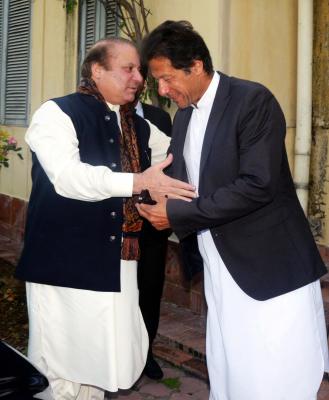
Pakistan’s history reflects a recurring use of political imprisonment by both civilians and dictators, often justified in the name of accountability or national security. The trend of imprisoning leaders dates back to 1948 when Bacha Khan, a prominent Pashtun leader, was arrested for sedition. During Zia-ul-Haq’s military rule from 1977 to 1988, severe political repression was witnessed, leading to the execution of Zulfikar Ali Bhutto and arrests of political workers.
In a recent development, Pakistan’s Supreme Court acknowledged the lack of fair trial and due process in Bhutto’s case. Former Chief Justice Qazi Faez Isa emphasized the importance of self-accountability and ensuring justice with integrity. Notably, former Prime Minister Imran Khan, along with other senior leaders of Pakistan’s Tehreek-e-Insaf (PTI), was arrested in 2023, raising questions about equal application of justice.
Under Imran Khan’s tenure from 2018 to 2022, the machinery of incarceration was reportedly used against political opponents, including leaders of the Pakistan Muslim League-Nawaz (PML-N) and Pakistan Peoples Party (PPP). The treatment of detained leaders like Nawaz Sharif, Shehbaz Sharif, and Maryam Nawaz has been criticized as punitive rather than judicially necessary, with reports of health issues and restricted access to medical care.
The history of political imprisonment in Pakistan underscores a consistent pattern of power play, regardless of the regime in place. From Bacha Khan to Zulfikar Ali Bhutto, and now to leaders like Nawaz Sharif and Imran Khan, the names may change, but the underlying pattern remains the same.
