


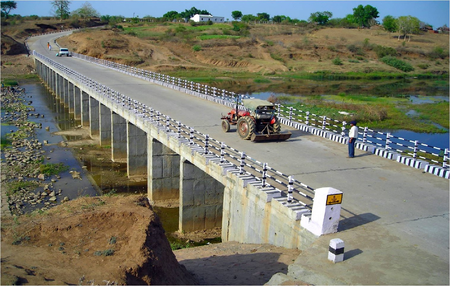
Celebrating its 25th year in 2025, the Pradhan Mantri Gram Sadak Yojana (PMGSY) has been a significant rural infrastructure initiative in India. The program was launched to provide all-weather connectivity to rural areas, leading to agricultural growth, employment opportunities, better access to education and healthcare, and poverty reduction. PMGSY has sanctioned 8,25,114 km of rural roads since its inception, with 7,87,520 km already completed by December 2025, showing nearly 95% physical progress.
A total of 62,500 kilometers of roads are planned for construction between FY 2024–25 and 2028–29 under PMGSY, with a financial outlay of Rs 70,125 crore. The Phase IV of the program aims to connect 25,000 rural habitations with all-weather road infrastructure. Rural road infrastructure plays a crucial role in enhancing economic and social services access, boosting agricultural incomes, creating jobs, and reducing poverty.
PMGSY has become a key driver of socio-economic transformation over time, promoting market integration, improving price realization for farmers, and supporting various livelihoods. The program’s budgetary allocations in recent years, including Rs 19,000 crore for the financial year 2025–26, demonstrate the government’s commitment to enhancing rural infrastructure and economic opportunities in rural areas. The quality, durability, and sustainability of rural roads constructed under PMGSY have significantly improved due to the government’s systematic measures.
The government has implemented advanced digital technologies and online platforms to monitor the progress and performance of PMGSY road projects efficiently. The Online Management, Monitoring, and Accounting System (OMMAS) enable real-time monitoring of all PMGSY works, ensuring alignment with state-assigned targets. OMMAS also enhances quality assurance by capturing assessments from independent quality monitors, promoting transparency in rural infrastructure delivery. The Electronic Maintenance of PMGSY Roads (e-MARG) platform ensures systematic monitoring of road maintenance for five years post-completion, linking contractor payments to road performance and quality outcomes.
