


The recent attacks in Balochistan have brought attention to both security challenges and longstanding political failures in addressing the province’s grievances. These attacks, dating back to Pakistan’s independence, have raised concerns about the roots of escalating violence in the region. Documented human rights issues, such as enforced disappearances and alleged extrajudicial killings, have led to a climate where peaceful dissent is seen as criminalized, pushing some towards armed resistance for change.
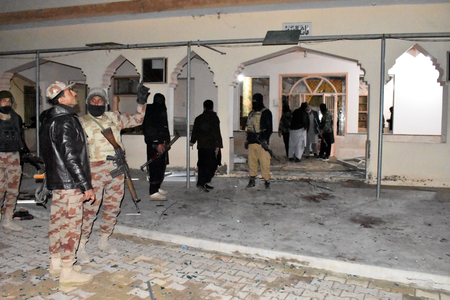
On January 31, the Baloch Liberation Army (BLA) launched ‘Operation Herof 2.0’, conducting coordinated attacks in 12 districts, including Quetta, Gwadar, and Mastung. Official reports indicate that 17 police personnel and 31 civilians lost their lives during the operation. Pakistani forces claimed to have killed 145 insurgents in response, a figure disputed by the BLA. The attacks involved gun assaults, suicide bombings, and the temporary takeover of police stations and government facilities.
Recent reports have emerged of heightened security operations in Balochistan, sparking worries among rights activists about the treatment of local residents. Balochistan, despite constituting 44% of Pakistan’s land area, remains the country’s poorest province, with a significant portion of its population living in poverty and facing unemployment, despite the region’s abundance of natural resources.
The China-Pakistan Economic Corridor (CPEC) and the development of Gwadar port have also raised concerns in Balochistan, with locals expressing fears of displacement and economic marginalization. The region has been plagued by allegations of enforced disappearances and extrajudicial killings, with human rights groups documenting numerous cases. The militarization of Balochistan by Pakistani security forces has been criticized for reinforcing perceptions of occupation rather than integration.
The Baloch insurgency has seen the involvement of female suicide bombers, a symbolic act in a patriarchal society. The ongoing violence underscores a significant failure in political engagement, with demands for autonomy and equitable resource distribution often misconstrued as separatism. The provincial government’s struggles to address local grievances effectively have led to intensified security-focused responses, potentially fueling insurgency among educated urban youth.
