


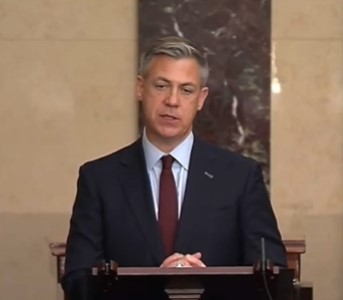
A Republican senator has called on the US Commerce Department to enhance patent protections against Chinese companies utilizing artificial intelligence to extract information from American patent applications. Sen. Jim Banks of Indiana expressed concerns that this practice could jeopardize US innovation, impact pharmaceutical research, and increase reliance on China’s biotechnology sector. He emphasized the need for the US Patent and Trademark Office to implement reforms to safeguard American inventions from what he termed as “AI-enabled duplication.”
Chinese firms are reportedly employing AI to scrutinize US biotechnology patent applications, identify promising discoveries, and file derivative patents before American innovators can introduce their products to the market. Senator Banks highlighted the escalating threat of “patent scraping” by Chinese entities, which could undermine American research and development investments, especially in light of China’s rapid drug approval process. This trend poses challenges beyond intellectual property theft and may affect the pharmaceutical supply chain.
The senator pointed out that China has prioritized biotechnology as a strategic sector since the 1980s, investing significantly in research infrastructure and expediting product development regulations. This strategic focus has led many US companies to shift the production of active pharmaceutical ingredients and generic medicines to China due to cost advantages, thereby increasing America’s reliance on China’s biotechnology industry. Senator Banks cited a survey indicating that a significant percentage of American biotechnology companies have agreements with Chinese manufacturers, raising concerns about vulnerabilities in domestic supply chains and potential exploitation by China.
Senator Banks also highlighted how Chinese companies are combining traditional patent analysis with AI tools to rapidly mine patent applications and research disclosures. This approach allows competitors to exploit American innovations without bearing the original research costs, filing derivative patents quickly. He cautioned that the influx of AI-generated patent filings could strain patent offices, potentially burdening the system with low-quality applications lacking substantial human input. The senator urged USPTO officials to continue prioritizing reforms to safeguard innovations susceptible to AI-driven replication.
