


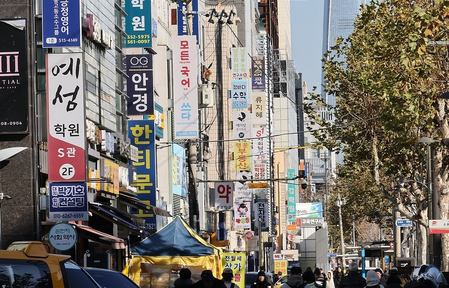
South Korean families have significantly increased their expenditure on private education for their children, with a surge of more than 60% over the past ten years. Data from the Korean Statistical Information Service (KOSIS) revealed that households in South Korea spent nearly 29.2 trillion won (US$20.2 billion) on private education in 2024, marking a 60.1% rise from 2014. This increase in spending on private education has been consistent for the fourth consecutive year.
While the costs of sending students to hagwons, private academic institutions, have been on the rise, families now have more financial resources to invest in additional lessons for their children outside of regular school hours. This trend has contributed to the continuous growth in private education spending, as stated by the Ministry of Data and Statistics. The rise in dual-income households has also played a significant role in driving up expenditures on private education, with parents opting to enroll their children in after-school hagwons while they are at work.
According to KOSIS data, the most substantial increase in education spending was observed for elementary school students, which surged from about 7.6 trillion won in 2014 to 13.2 trillion won in 2024, a remarkable 74.1% rise. Over the same period, spending on middle school students increased by 40.7% to 7.8 trillion won, while high school student education expenses rose by 60.5% to reach 8.1 trillion won.
Families with at least two unmarried children spent an average of 611,000 won per month on private education during the third quarter of 2025, accounting for 12.6% of their total monthly expenditures, second only to food expenses. The proportion of monthly household spending on private education has been steadily increasing, from 11.5% in 2019 to 12.8% in 2024, and reaching 13% in the first quarter of 2025, peaking at 13.5% in the second quarter.
Experts attribute the growing reliance on private education to frequent changes in college admission policies, leading to increased uncertainty among parents regarding their children’s educational prospects.
