


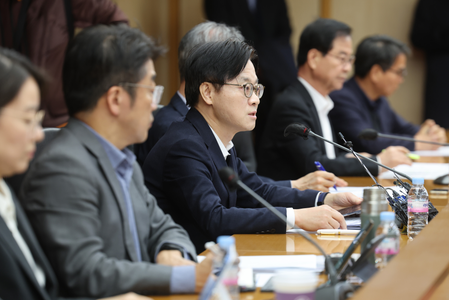
South Korea’s Industry Minister Kim Jung-kwan mentioned that the government’s fuel price cap system is already indicating stability in prices within a day of its implementation. The system, aimed at curbing soaring fuel prices and lessening the burden on consumers, sets maximum prices for products supplied by oil refineries to gas stations and distributors. The initial price limits were established at 1,724 won per litre for regular gasoline, 1,713 won per litre for diesel, and 1,320 won per litre for lamp oil.
Kim, along with officials from oil refineries, gas stations, and the Korea National Oil Corporation, reviewed the energy markets on the first day of the system’s enforcement. The price thresholds will be adjusted every two weeks based on international oil price fluctuations until stability is achieved. Kim noted a reduction in prices on the system’s first day, attributing it to the active cooperation of gas stations and oil refineries.
During a meeting, Kim emphasized that the fuel price cap system is a protective measure for the national economy during crises, not a market control tool. He warned against unfair practices like hoarding and price gouging, stressing the importance of cooperation from gas stations. The government has initiated inspections to prevent illegal oil product distribution and has identified cases of illicit activities.
Kim also addressed challenges in the petrochemical industry due to disruptions in naphtha supplies amid the Middle Eastern crisis. South Korea plans to limit exports of domestically produced products and consider releasing naphtha reserves from its strategic oil reserve. The government is exploring tax measures for energy price stabilization and preparing to offer energy vouchers to vulnerable households.
