


Union Minister of State for Science & Technology, Earth Sciences, Dr. Jitendra Singh highlighted the significance of Andaman & Nicobar Islands as a ‘living laboratory of biodiversity’ crucial for India’s environmental and economic security. During his visit to the islands, he stressed the need for advanced science to align with conservation and sustainable livelihoods. Singh underlined the importance of integrating scientific research with public policy and community awareness for environmental goals and the Blue Economy’s sustainable growth.
The Minister praised institutions like the Regional Centre of the Zoological Survey of India (ZSI) in Andaman & Nicobar for their role in providing scientific data guiding national policies on biodiversity conservation, climate resilience, and ocean-based economic development. Established in 1977, the ZSI Regional Centre has been a key player in tropical island biodiversity research, conducting numerous research programs and publishing a significant number of books and research papers to enhance India’s biodiversity knowledge base.
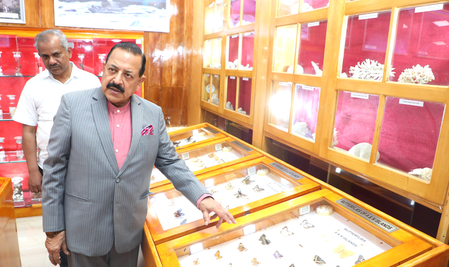
Singh also visited the ZSI Museum, a popular tourist and educational spot in the islands, showcasing around 3,500 specimens across 22 faunal groups. The museum serves as a platform for public outreach, education, and awareness, attracting a substantial number of visitors annually, including students, researchers, and tourists. The Minister took a keen interest in the museum’s collections, focusing on endemic, endangered, and threatened fauna of the archipelago.
The Minister was briefed on the pivotal role of ZSI, Port Blair, as India’s first National Coral Reef Research Institute (NCRRI), dedicated to enhancing coral reef research and monitoring in Indian waters. He acknowledged the critical importance of specialized institutions like NCRRI in protecting marine ecosystems and promoting evidence-based marine governance.
