


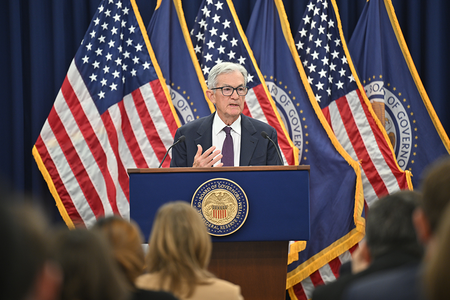
US Federal Reserve Chair Jerome Powell highlighted that job growth has been hampered by a significant drop in labor supply, primarily driven by reduced immigration. Powell mentioned that the labor market conditions seem to be stabilizing following a period of gradual softening. Despite the unemployment rate holding steady at 4.4% in December, job creation has been lackluster.
Powell pointed out that total nonfarm payrolls have been decreasing at an average rate of 22,000 per month over the past three months, with private payrolls showing a modest increase of 29,000 per month. He attributed this slowdown to changes in both labor supply and demand, emphasizing the impact of decreased immigration and labor force participation on job growth.
The Federal Reserve Chair also noted that various indicators, such as job openings, layoffs, hiring, and wage growth, have shown little recent change, indicating a potential stabilization in conditions. Powell cautioned against overinterpreting the data, mentioning signs of ongoing cooling in the economy. He highlighted that the outlook for economic growth has improved since the last Fed meeting, which could positively influence labor demand in the future.
Powell described the current situation as unusual, with both labor supply and demand experiencing significant slowdowns. He mentioned the challenges in interpreting the job market dynamics when supply and demand are in equilibrium, raising questions about defining maximum employment. The recent decline in immigration flows due to policy changes has impacted labor supply, affecting job growth, wage trends, and inflation, crucial factors in Federal Reserve policy considerations.
