


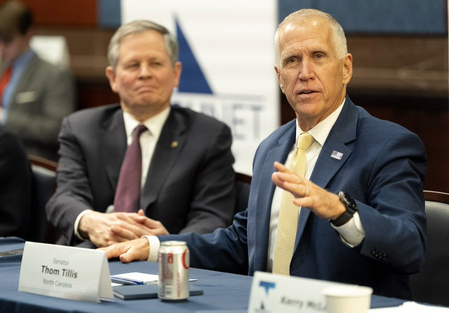
US lawmakers, from both parties, expressed concerns about China’s extensive theft of American intellectual property, emphasizing its risks to national security, economic competitiveness, and technological leadership. Senator Thom Tillis highlighted that China’s IP theft results in an estimated annual economic loss of $400 to $600 billion, aiming to challenge US innovation leadership. Senator Richard Durbin echoed worries, citing China’s practices of economic espionage and IP theft costing between $225 and $600 billion yearly, which discourages US companies from investing in research.
Former CIA officer Tom Lyons emphasized the unconventional competition American firms face against China’s vast intelligence apparatus, warning of potential industry transfer to China if current trends persist. He cited instances of theft, including Linwei Ding stealing Google’s TPU designs, stressing that the consequences will only manifest in the coming years. Helen Toner of Georgetown University raised concerns about vulnerabilities in artificial intelligence, particularly highlighting the threat posed by Chinese firms distilling from American AI models at a large scale.
Mark Cohen, an IP expert, cautioned that US responses have overly focused on criminal enforcement rather than systemic issues, pointing out China’s state-driven IP system used as an industrial policy tool. Cohen noted China’s shift from copying to innovating, potentially becoming a global norm setter in intellectual property. Lawmakers discussed various concerns from semiconductor exports to AI competition and biotech espionage, warning of China gaining an advantage due to weakened US institutions and inconsistent policies.
The hearing underscored bipartisan agreement on the broader implications of China’s IP theft beyond economic losses, with a consensus that it poses a national security threat.
