


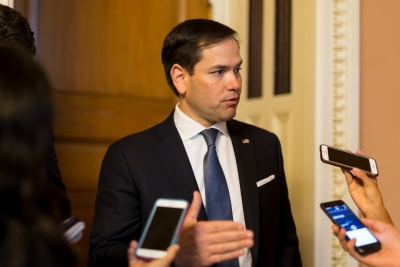
US Secretary of State Marco Rubio stressed the importance of maintaining communication with China, highlighting the necessity of dialogue between the two largest economies despite underlying tensions. Rubio, speaking at the Munich Security Conference, described it as a strategic obligation to engage in conversations with China, considering the significant global influence both countries hold. He emphasized the critical nature of sustained dialogue even amidst deep structural differences between the US and China.
Rubio’s comments were made in response to inquiries about a potential summit between President Donald Trump and Chinese President Xi Jinping expected to take place in approximately two months. Recognizing the persistent rivalry between the two nations, Rubio acknowledged that due to their vast global interests, their national priorities may not always align. He underscored the importance of managing these differences effectively to prevent conflicts, particularly in economic aspects.
While addressing the trade and technology tensions between the US and China, Rubio highlighted the worldwide implications of any developments in this relationship. He emphasized that any agreements reached with China must not compromise US national interests, reiterating the expectation for China to act in its own national interest as well. Rubio also expressed the need for cooperation in areas where mutual interests converge, aiming to create a positive impact globally through collaboration.
Despite acknowledging enduring challenges and differences between the US and China, Rubio emphasized the potential for cooperation in certain areas. He recognized that while fundamental challenges exist in the relationship, opportunities for collaboration should be pursued where possible. Rubio also urged Western nations to focus on rebuilding industrial capacity, securing critical minerals, and investing in emerging technologies like artificial intelligence to stay competitive in the global landscape.
The Munich Security Conference, established in 1963, has historically been a platform for strategic discussions on a global scale. Recent dialogues at the conference have increasingly centered around managing strategic competition with China, particularly concerning trade, technology, supply chains, and influence in the Indo-Pacific region. Despite ongoing trade disputes and geopolitical tensions, both the US and China have maintained diplomatic channels at high levels to mitigate risks and prevent potential escalations.
