


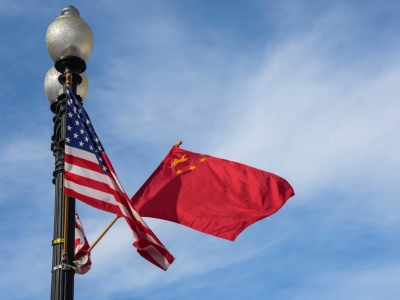
A resolution introduced by a bipartisan group of US senators characterizes China as the primary rival and strategic competitor of the United States. The resolution emphasizes the need for closer engagement with India and stronger alliances in the Indo-Pacific region to counter Beijing’s influence. It highlights China’s ambitions to undermine US security, economic prosperity, and strategic interests through various means.
The resolution points out China’s rapid expansion of military capabilities across nuclear, cyber, maritime, and space domains. It condemns Beijing’s use of coercive and aggressive tactics in the Indo-Pacific, particularly in the Taiwan Strait, where China seeks to alter the status quo through coercion or force. Additionally, the resolution accuses China of supporting US adversaries like Iran, North Korea, and Russia by sharing military technology and resources.
Lawmakers criticize China for employing state-backed economic and industrial policies to diminish American competitiveness and dominate key sectors. The resolution specifically mentions practices such as intellectual property theft, forced technology transfers, export controls, and market access barriers. It warns that China is striving to surpass the US in critical technologies like artificial intelligence and quantum computing, which are pivotal for economic and military power in the 21st century.
Furthermore, the resolution links China to the supply of precursor chemicals used in the production of illicit drugs like fentanyl and nitazenes that enter the United States. It also advocates for expanded US engagement with India, including through initiatives like the Quadrilateral Security Dialogue involving India, the US, Japan, and Australia. This collaboration has gained significance amid escalating tensions with China in the Indo-Pacific region.
The resolution reaffirms US commitments to key allies in the region, such as Japan, South Korea, Australia, and the Philippines. It calls for enhanced trilateral cooperation among Indo-Pacific partners and emphasizes the importance of maintaining peace and stability in the Taiwan Strait. The Senate measure proposes stronger deterrence measures against China, including tighter export controls, restrictions on investments in critical US industries, and safeguarding freedom of navigation in the South China Sea and Taiwan Strait.
Moreover, the resolution urges the US to maintain a competitive edge over China and other rivals in sectors like artificial intelligence and foundational technologies. While non-binding, the resolution underscores the mounting bipartisan apprehension in Washington regarding China’s military expansion, economic policies, and global influence.
