


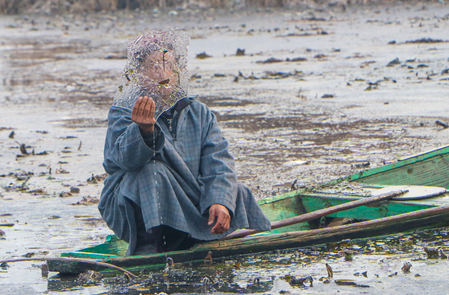
The Valley experienced freezing temperatures as Srinagar city saw a minimum of minus 5.7 degrees Celsius, slightly higher than the previous day’s minus 6 degrees Celsius. The famous Dal Lake in Srinagar partially froze, causing challenges for boatmen navigating the icy waters. Water taps, road puddles, and shallow water bodies also froze due to the extremely low night temperatures.
The gap between maximum and minimum temperatures in Srinagar has decreased, with a maximum temperature of 10.8 degrees Celsius recorded on Friday. The Meteorological Department predicts cold and dry weather until January 20, with minimal chances of rain or snow, except for isolated precipitation in higher areas. The ongoing dry spell has raised concerns in Jammu and Kashmir, as essential water sources crucial for agriculture and drinking water rely on heavy snowfall during the 40-day-long ‘Chillai Kalan’ period.
Chillai Kalan, which ends on January 30, is halfway through, yet the plains of the Valley have not seen the season’s first snowfall. Snowfall in February and March is less impactful as it quickly melts and fails to replenish the vital water reservoirs in the mountains. In other areas, Gulmarg ski resort recorded minus 6.8 degrees Celsius, while Pahalgam saw minus 7.8 degrees Celsius as the minimum temperature. Jammu city, Katra town, Batote, Banihal, and Bhaderwah also experienced low temperatures overnight.
The cold and dry weather has led to an increase in patients seeking medical attention for chest and heart-related issues, resulting in crowded hospitals and clinics. Individuals with a history of such ailments are advised to take extra precautions to safeguard their health.
