


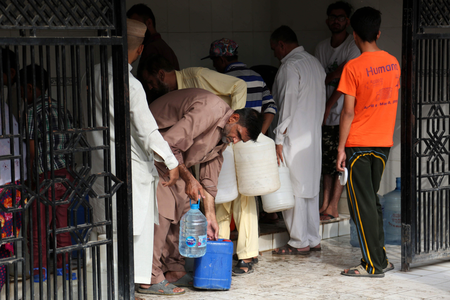
Amid an ongoing water crisis in Karachi, Pakistan, several parts of the city faced water supply disruptions due to an emergency power shutdown at the Dhabeji Pumping Station. This crisis, now in its second month, has left residents reliant on water tankers and private suppliers. The Karachi Water and Sewerage Corporation (KWSC) reported that a fault in a transformer at the Dhabeji Grid Station led to the shutdown, impacting the city’s water transmission system.
As a result of the power outage, 10 out of 21 pumping units at the Dhabeji Pumping Station were forced to shut down, causing significant disruptions to the water supply in Karachi. While K-Electric initially estimated a one-hour shutdown, no definite timeline for complete restoration has been provided yet. Residents, even during Eid festivities, had to purchase water tankers for essential needs like ritual washings, animal care, and sanitation.
Residents in Karachi have been grappling with water scarcity since March, attributed to line bursts, underground leaks, power breakdowns at pumping stations, and damage in key mains. Despite efforts to ensure normal supply during Eid, KWSC’s CEO blamed K-Electric and frequent power failures for the water supply disruptions. The prolonged water shortage has compelled residents to rely on water tankers, with some facing delays of up to 10 days due to limited supply and increased prices.
Lawmakers from the Muttahida Qaumi Movement-Pakistan (MQM-P) staged a protest in the Sindh Assembly over the water shortage in Karachi, demanding an immediate restoration of water supply before Eidul Azha. Opposition Leader Ali Khurshidi criticized the authorities for their inaction, highlighting the dire water situation in Karachi. In response, Sindh’s Law and Parliamentary Affairs Minister mentioned the ongoing K-IV project in Karachi and urged the federal government to expedite its completion.
