


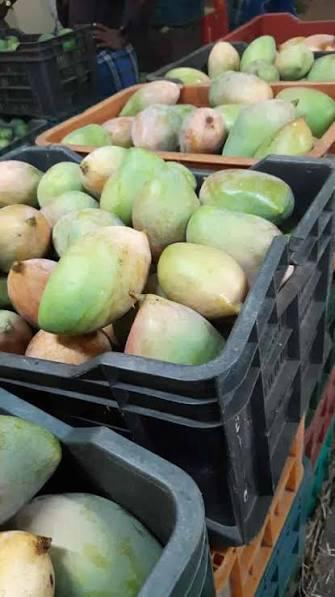
The ongoing tensions in West Asia have severely impacted mango exports from Coimbatore, leading to significant losses for traders during the peak export season. At the Ukkadam mango market, a primary trading hub in the region, export volumes have sharply declined due to disruptions in international air connectivity. Exporters, who typically ship over 60 tonnes of mangoes daily to Gulf countries at the beginning of the season, are now struggling with volumes below five tonnes per day.
The disruptions in cargo flights to key destinations like Dubai, Abu Dhabi, and Sharjah have caused a slowdown in exports, affecting the movement of perishable goods. Consequently, mango prices have plummeted across various varieties. Alphonso mangoes, previously priced at around Rs 300 per kg, are now selling for nearly Rs 150. Banganapalli varieties have seen prices drop from Rs 120-Rs 150 per kg to Rs 50–Rs 70, while Senthuram (Sindhura) mangoes have declined from Rs 150–Rs 170 to Rs 60–Rs 80.
Imam Pasand mangoes have also experienced a significant price decrease, from Rs 200–Rs 240 per kg to Rs 100–Rs 130. Additionally, Totapuri mangoes, commonly used in processing industries, have witnessed a drastic fall in prices to Rs 15–Rs 25 per kg. The disruption in export channels has flooded the domestic market with unsold mangoes, causing a supply glut and further reducing prices.
The perishable nature of mangoes has exacerbated the situation, as transportation delays often result in spoilage and financial losses. This year, the delayed start to the mango season has shortened the profitable sales window, which traditionally spans from March to July. Despite some relief from festive domestic demand during Chithirai Kani, Tamil New Year, and Vishu, with approximately 150 tonnes sold recently, traders are still grappling with mounting losses as local sales fail to compensate for the sharp decline in export revenue.
