


There’s a particular kind of calm that comes with cooking lauki on a Navratri morning. No onions sizzling, no garlic releasing its sharp perfume—just the gentle crackle of cumin in ghee, the soft green of bottle gourd turning translucent in the pan, and that light, clean steam rising as it simmers.
If you’ve ever felt heavy or sluggish halfway through Navratri, lauki ki sabji is the answer you didn’t know you needed. It’s not flashy. It won’t win awards for drama or spice. But it’s one of those dishes that your body quietly thanks you for—especially when you’re eating less, moving more, and trying to stay centered through nine days of ritual, prayer, and celebration.
Table of Contents
What Exactly Is Lauki Ki Sabji?
Lauki ki sabji is a simple, stewed bottle gourd curry made without onion, garlic, or any of the usual aromatics that don’t fit into Navratri fasting rules. It’s sattvic food in its purest form—cooked with ghee, cumin, a bit of ginger, green chilies, and sendha namak (rock salt). No grains. No heavy spices. Just clean, light ingredients that align with the spiritual focus of the festival.
The vegetable itself, scientifically known as Lagenaria siceraria, goes by many names across India—lauki in Hindi, ghiya in some regions, dudhi in Gujarat. But whatever you call it, the story is the same: it’s about 95 to 96 percent water, which makes it one of the most hydrating vegetables you can eat. And during Navratri, when you’re fasting for hours at a stretch, often in warm weather, that hydration matters more than you might think.
In Ayurvedic terms, bottle gourd is considered cooling. It doesn’t heat up your system the way heavier vegetables might. It’s gentle on digestion, easy on the stomach, and perfect for days when you’re eating less but still need to feel nourished.
Recipe Overview
| Detail | Information |
|---|---|
| Prep Time | 5 minutes |
| Cook Time | 15 minutes |
| Total Time | 20 minutes |
| Servings | 4 people |
| Cuisine | Indian (Vrat/Fasting) |
| Course | Main Course/Side Dish |
| Diet | Vegetarian, Gluten-Free, Vrat-Friendly, Sattvic |
| Difficulty Level | Easy |
| Calories per Serving | ~50 kcal |
Ingredients List
| Ingredient | Quantity | Notes |
|---|---|---|
| Lauki (Bottle gourd) | 500g | Peeled and chopped into cubes |
| Ghee | 2 tablespoons | Pure ghee preferred |
| Cumin seeds | 1 teaspoon | For tempering |
| Grated ginger | 1 teaspoon | Fresh is best |
| Green chilies | 1-2 | Adjust to taste; slit lengthwise |
| Coriander powder | 1 teaspoon | Ground coriander |
| Red chili powder | ½ teaspoon | Mild heat |
| Sendha namak (Rock salt) | 1 teaspoon | Regular salt not allowed during fasting |
| Amchur or lemon juice | ½ teaspoon | For tanginess |
| Water | ½ cup | Adjust as needed |
| Fresh coriander leaves | For garnish | Chopped |
Why Lauki Ki Sabji Is Perfect for Navratri Fasting
Chaitra Navratri 2026 is expected to run from March 19 to 27, and Sharad Navratri from October 11 to 20, though exact dates depend on the lunar calendar and can vary slightly by region. During these nine-day periods, the usual rules of eating are suspended
1. It keeps you hydrated. With a water content of roughly 95 to 96 percent, lauki is basically a vegetable you can drink. When you’re spacing meals further apart and not snacking the way you normally would, that built-in hydration helps maintain fluid balance and keeps you from feeling drained.
2. It’s light yet filling. At around 20 calories per 100 grams of raw vegetable, lauki is one of the lowest-calorie options you can cook. But it’s also fibrous—about 2 grams of fiber per 100 grams—which means it fills you up without weighing you down. You can eat a full bowl and still feel light enough to stand through puja or dance through garba.
3. It’s easy to digest. The soft texture of cooked bottle gourd is gentle on your stomach, especially when you’re eating differently than usual. It doesn’t sit heavy. It doesn’t cause bloating. It just quietly does its job and moves through your system without drama.
CHECK MORE ON: Singhare Ka Halwa Recipe
The Key to Getting It Right: Simplicity and Timing
Here’s the thing about lauki: it doesn’t need much. In fact, the more you try to complicate it, the worse it gets. The vegetable itself is mild and slightly sweet when cooked, so your job isn’t to drown it in spices. Your job is to coax out its natural flavor with just enough tempering and seasoning to make it interesting.
The two most important steps are blooming your spices properly in ghee and not overcooking the lauki. Get those two things right, and the rest takes care of itself.
Step-by-Step Instructions: Making Perfect Lauki Ki Sabji
Step 1: Prep the Lauki
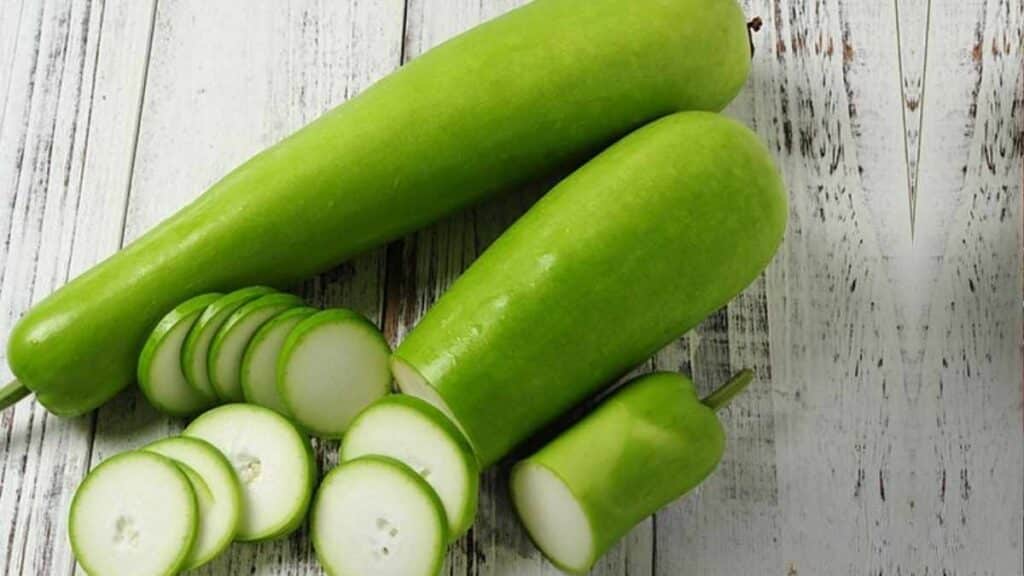
Peel 500 grams of bottle gourd and chop it into medium-sized cubes—about 1 to 1.5 inches each. Don’t make them too small or they’ll turn mushy. Don’t make them too large or they’ll take forever to cook. Somewhere in the middle is perfect.
Time: 5 minutes
Step 2: Temper the Spices
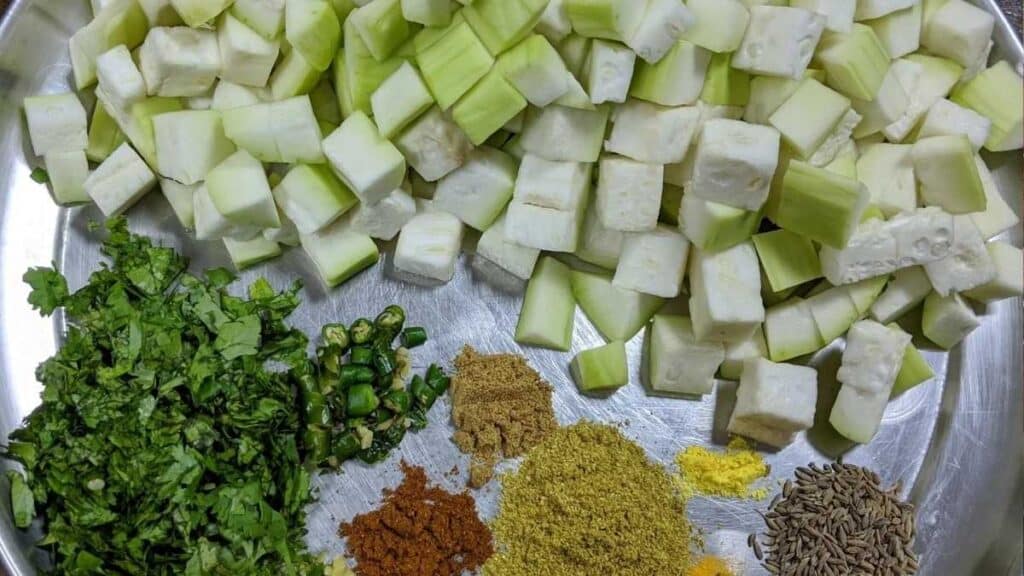
Heat 2 tablespoons of ghee in a heavy-bottomed pan or kadhai over medium heat. Once the ghee is hot—you’ll see it shimmer slightly—add 1 teaspoon of cumin seeds. Let them crackle and bloom for a few seconds. You’ll smell that warm, earthy aroma that tells you the spices are waking up.
Time: 1 minute
Step 3: Add the Dry Spices and Lauki

Sprinkle in 1 teaspoon of coriander powder and ½ teaspoon of red chili powder. Stir them into the ghee for just a few seconds—this blooms the spices and removes any raw taste they might have.
Pour in about ½ cup of water. The amount of water depends on how dry or gravy-like you want your sabji. For a semi-dry version that pairs well with kuttu puri, use less water. For a slightly saucier version, use a bit more.
Time: 2 minutes
Step 4: Simmer

Cover the pan and reduce the heat to low. Let the lauki simmer for 10 to 12 minutes, stirring occasionally. The vegetable will soften and release its own moisture, which combines with the water and ghee to create a light, glossy coating.
You’ll know it’s done when the lauki cubes are tender but not falling apart. If you can pierce them easily with a fork but they still hold their shape, you’re there.
Time: 10-12 minutes
Step 5: Finish and Garnish
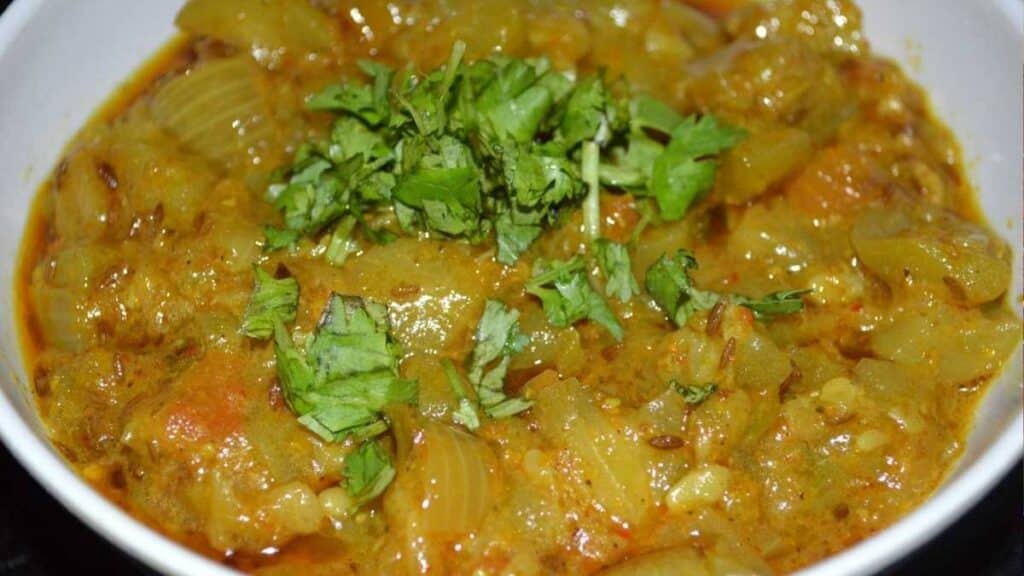
Uncover the pan. If there’s too much liquid, let it cook uncovered for 2 to 3 minutes to reduce. You want a semi-dry consistency—not soupy, not bone-dry, just somewhere in the middle where the sabji clings to the vegetable without pooling at the bottom of the bowl.
Garnish with fresh chopped coriander leaves.
Time: 2-3 minutes
Total Time: About 20 Minutes
From the moment you start chopping to the moment you serve, you’re looking at roughly 20 minutes. Quick, simple, and perfectly suited to the rhythm of Navratri mornings.
Serving Suggestions
| Serve With | Why It Works |
|---|---|
| Kuttu ki puri | Classic vrat thali pairing; the mild sabji balances the rich puri |
| Sabudana khichdi | Light, balanced meal with good texture contrast |
| Singhare ka halwa | Complete thali with savory and sweet elements |
| Vrat paratha | Another fasting bread option |
| Plain curd | Adds cooling protein and probiotics |
Lauki ki sabji shows up consistently across Navratri thalis in North India. You’ll see it on Day 1 after Ghatasthapana, served alongside kuttu puri and curd. It’s common throughout the nine days as a reliable, light vegetable option. And it’s especially popular during Sharad Navratri in October, when the weather is still warm in many parts of the country and the cooling properties of bottle gourd feel particularly welcome.
A typical Navratri thali structure looks like this:
- Lauki ki sabji (main vegetable)
- Kuttu ki puri or other fasting bread
- Curd or raita
- Singhare ka halwa or another sweet dish
Simple, balanced, and complete.
Why This Dish Matters: Nutrition and Function
Let’s talk about what lauki ki sabji actually does for your body during fasting, because it’s worth understanding.
Hydration support: With a water content of 95 to 96 percent, bottle gourd is one of the most hydrating vegetables you can eat. When you’re fasting and not drinking as much water as you might on a normal day, that built-in hydration helps maintain fluid balance and keeps you from feeling weak or dizzy.
Low calorie density: At around 20 calories per 100 grams of raw lauki, this is one of the lightest vegetables you can cook. For comparison, potatoes—which are also vrat-approved—come in at around 75 to 80 calories per 100 grams. That’s nearly four times as much. If you’re eating multiple meals with potatoes and sabudana, adding lauki gives your system a break from the starch and helps prevent that heavy, bloated feeling.
Low glycemic load: Unlike starchy vegetables that can spike your blood sugar, lauki has a low glycemic impact. This means it provides steady energy without the crash, which is exactly what you need when you’re spacing meals further apart.
Fiber for digestion: The roughly 2 grams of fiber per 100 grams of lauki helps support digestion during a time when your eating patterns are disrupted. It keeps things moving gently without causing any digestive drama.
Storage and Make-Ahead Tips
| Storage Method | Duration | Notes |
|---|---|---|
| Refrigerated (airtight container) | Up to 2 days | Reheat with a small splash of ghee to refresh |
| Raw chopped lauki (frozen) | Up to 1 week | Texture may soften slightly after thawing |
| Room temperature | Not recommended | High water content makes it spoil quickly |
Lauki ki sabji is best eaten fresh, but if you need to make it ahead, it stores reasonably well in the refrigerator for up to two days. When you reheat it, add a tiny bit of ghee and warm it gently on low heat. The texture won’t be quite as good as fresh, but it’s still perfectly edible.
If you want to prep ahead, you can peel and chop the lauki and freeze it for up to a week. Just be aware that the texture might be a bit softer after thawing. For best results, cook it straight from frozen without thawing first.
Why This Recipe Still Matters
In a world where fasting food increasingly feels like deprivation or compromise, lauki ki sabji is a quiet reminder that simplicity has its own power. It’s not trying to be something it’s not. It’s not pretending to be rich or complex or indulgent. It’s just bottle gourd, ghee, cumin, and salt, doing exactly what they’re meant to do.
And that’s enough.
When you eat lauki during Navratri, you’re not just following a recipe. You’re participating in a tradition that understands something important: fasting isn’t about suffering. It’s about recalibration. It’s about giving your system a break from the heavy, the rich, the overstimulating. It’s about finding nourishment in lightness.
Lauki ki sabji embodies that philosophy perfectly. It’s hydrating when you need hydration. It’s light when you need lightness. It’s easy to digest when your body is working differently. And it’s fast enough to make that you don’t have to sacrifice your entire morning to cook it.
Why does my lauki ki sabji turn out watery?
Bottle gourd releases a lot of moisture as it cooks because it’s 95 to 96 percent water. If your sabji is too watery, you likely added too much water at the beginning or didn’t cook it uncovered long enough at the end.
Can I make lauki ki sabji without ghee?
You can, but ghee is what gives the sabji its rich flavor and helps bloom the spices properly. If you want to reduce fat, you can use 1 tablespoon instead of 2, but I wouldn’t recommend skipping it entirely during fasting.
How do I know if the lauki is cooked enough?
Pierce a piece with a fork. If it goes through easily but the lauki still holds its shape, it’s done.
