


Cheti Chand falls on April 1, 2026, celebrating the birth of Jhulelal and marking the Sindhi New Year. Aloo Tuk is the street-style snack that appears at evening gatherings, tea time, and community celebrations. The research emphasizes its role: “Aloo Tuk adds crunch contrast to Cheti Chand feasts.”
If you’re making Aloo Tuk for the first time, what matters most is understanding the hot-smashing principle. The research states it emphatically: “Smash the potato while it’s hot—cold potatoes crack instead of flattening.” You must smash immediately after the first fry while the potato is still hot and pliable. Wait until it cools, and it will shatter into pieces instead of flattening into the characteristic disc shape.
Table of Contents
What Exactly Is Aloo Tuk?
Aloo Tuk is a classic Sindhi street-style potato snack defined entirely by its double-fry technique. The name is descriptive: “Aloo” means potato, “Tuk” refers to a piece or chunk—together describing exactly what it is: potato pieces prepared through a specific method.
What makes Aloo Tuk distinctive isn’t the ingredients (just potatoes, oil, and spices) but the preparation technique. The research describes it: “Made by parboiling potatoes, frying them once, smashing them flat, and frying again until crisp and golden-red.”
The texture is the defining characteristic: shatter-crisp exterior with a soft, fluffy center. The research describes the texture goal: “Crisp exterior, soft center.” This dual texture comes specifically from the double-fry method—the first fry creates structure, the smashing increases surface area, the second fry at higher heat creates intense crispness.
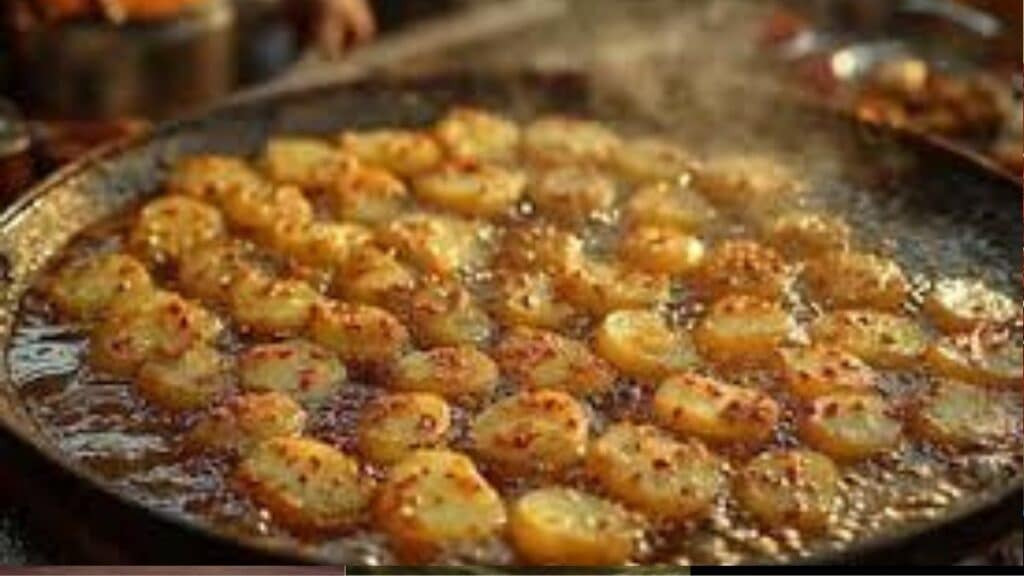
The color is distinctive: golden-red rather than just golden, achieved through the combination of high-heat second frying and the red chili seasoning applied while hot. Street vendors achieve this characteristic appearance through precise technique.
CHECK MORE ON:Sakhar Bhat Recipe: Maharashtra’s Golden Sweet Rice
Recipe Overview
| Detail | Information |
|---|---|
| Prep Time | 10 minutes |
| Parboiling Time | 12-15 minutes |
| First Frying Time | 5-6 minutes |
| Second Frying Time | 2-3 minutes |
| Total Time | ~30 minutes |
| Yield | ~20 pieces |
| Servings | 4-6 people |
| Cuisine | Sindhi |
| Course | Snack, Street Food |
| Diet | Vegetarian |
| Difficulty Level | Medium |
| Calories per 3 Pieces | ~180 kcal |
| Festival | Cheti Chand (April 1, 2026) |
Ingredients List
Main Ingredients
| Ingredient | Quantity | Notes |
|---|---|---|
| Potatoes (waxy variety) | 500 g (about 4-5 medium) | Waxy varieties retain structure better |
| Oil for frying | 3-4 cups | For deep frying |
| Salt | 1 teaspoon | Or to taste |
Why Aloo Tuk Is Essential for Cheti Chand
Cheti Chand falls on April 1, 2026, celebrating the birth of Jhulelal and marking the Sindhi New Year. Aloo Tuk plays a specific role in the day’s food traditions.
Evening snack for community gatherings. The research states: “Served as an evening tea-time snack on Cheti Chand” and notes it’s “Prepared for evening gatherings on April 1, 2026.” After a day of puja, festive meals, and celebration, Aloo Tuk provides the crispy, spicy snack for evening tea and socializing.
Texture contrast to dal-heavy meals. The research emphasizes: “Aloo Tuk adds crunch contrast to Cheti Chand feasts.” After Dal Pakwan (breakfast), Sai Bhaji (lunch), and other traditional dishes, Aloo Tuk’s crispy texture provides welcome contrast to softer, dal-based foods.
Street food tradition elevated for festival. Aloo Tuk is available from street vendors year-round, but the research notes its specific role: “Commonly paired with Dal Pakwan and Sai Bhaji” for Cheti Chand—meaning what’s everyday street food becomes part of the festival menu through context and presentation.
Represents Sindhi street-food culture. The research notes Aloo Tuk “Represents Sindhi street-food tradition”—making it for Cheti Chand is a way of honoring and celebrating the broader Sindhi culinary identity that includes both home cooking and street food culture.
Practical and shareable. Unlike elaborate sweets or complex dishes, Aloo Tuk is quick (30 minutes), yields many pieces (approximately 20 from 500g potatoes), and is easily shareable at community gatherings—making it ideal for festive hospitality.
The Critical Technique: Hot-Smashing and Double-Frying
The Double-Fry Principle:
The research states: “The double-fry method defines authentic Aloo Tuk texture.”
Here’s what’s happening at each stage:
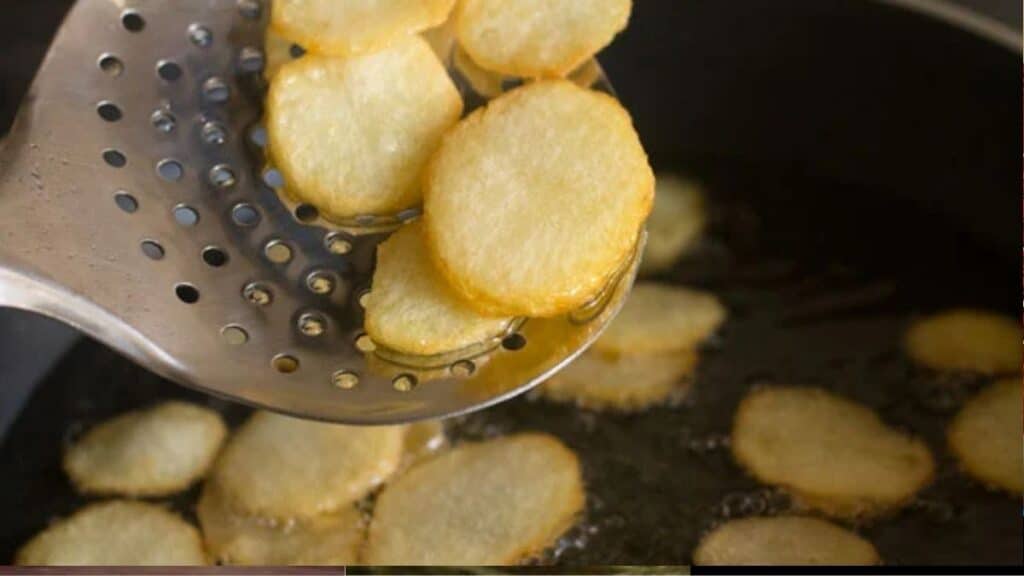
First fry (medium heat ~170°C): Builds outer structure and begins crisping. The research notes: “First fry at medium heat (~170°C) for structure.” This moderate temperature allows the potato to cook through without burning the exterior, creating a firm shell.
Hot-smashing (immediately after first fry): Increases surface area dramatically, creating more crispy edges when re-fried. The research emphasizes the critical timing: “Smash the potato while it’s hot—cold potatoes crack instead of flattening.” The residual heat keeps the potato pliable enough to flatten without shattering.
Second fry (higher heat ~190°C): Creates intense crispness on the now-expanded surface. The research specifies: “Second fry at higher heat (~190°C) for crisp finish.” The higher temperature and increased surface area from smashing create the characteristic shatter-crisp texture.
Step-by-Step Instructions: Making Perfect Aloo Tuk
Step 1: Parboil Potatoes
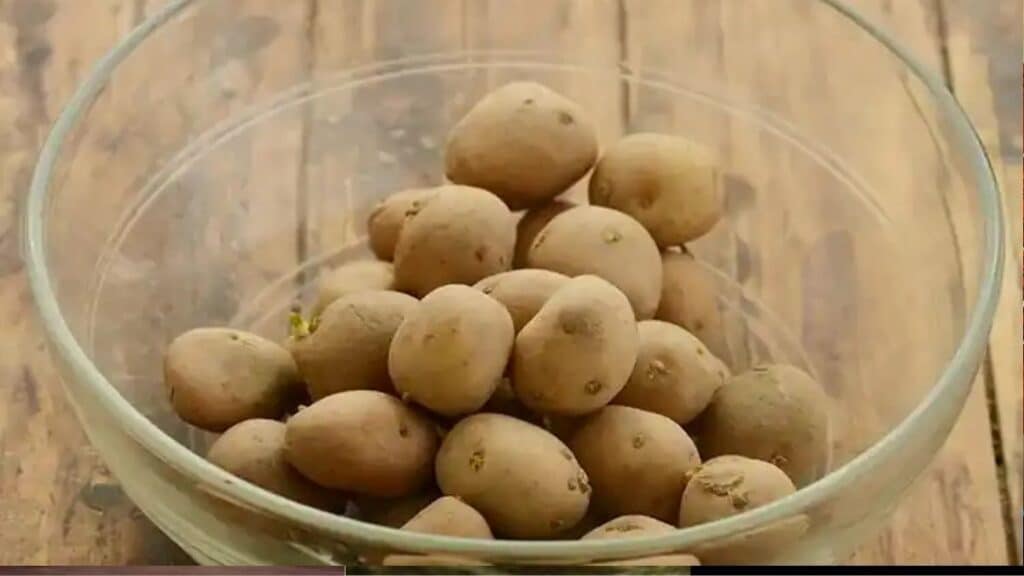
Wash 500g of waxy potatoes (about 4-5 medium potatoes) thoroughly. You can peel them or leave the skin on—both approaches work.
Time: 15 minutes
Step 2: Dry Potatoes Completely
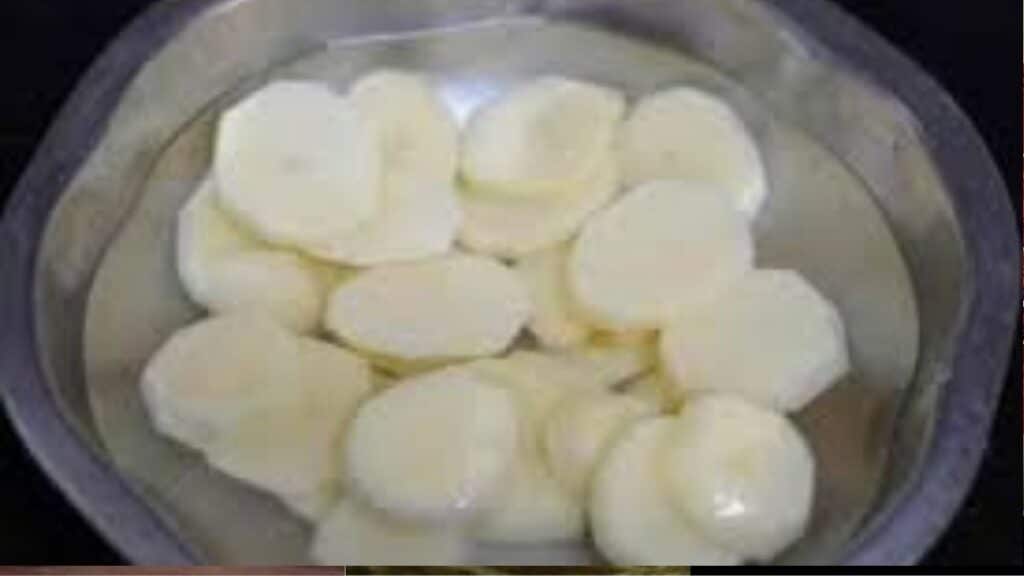
The research warns: “Dry completely before frying to prevent splatter.” Any surface moisture will cause dangerous oil splatter when the potatoes hit hot oil.
Time: 2 minutes
Step 3: First Fry at Medium Heat
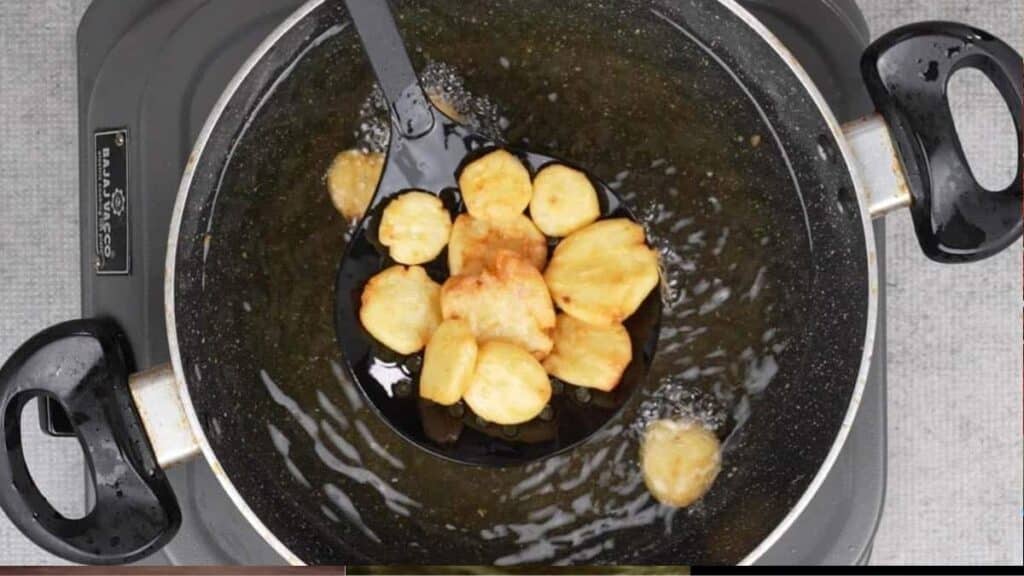
Heat 3-4 cups of oil in a wide, deep pan or kadhai to medium temperature (approximately 170°C). The research specifies: “First fry at medium heat (~170°C) for structure.”
Test temperature by dropping a small potato piece—it should sizzle steadily but not violently.
Time: 8 minutes
Step 4: Smash While Hot (Critical Step)
This is where technique determines success. While the potatoes are still hot from the first fry, place each one on a clean, flat surface.
Time: 5 minutes
Step 5: Second Fry at Higher Heat
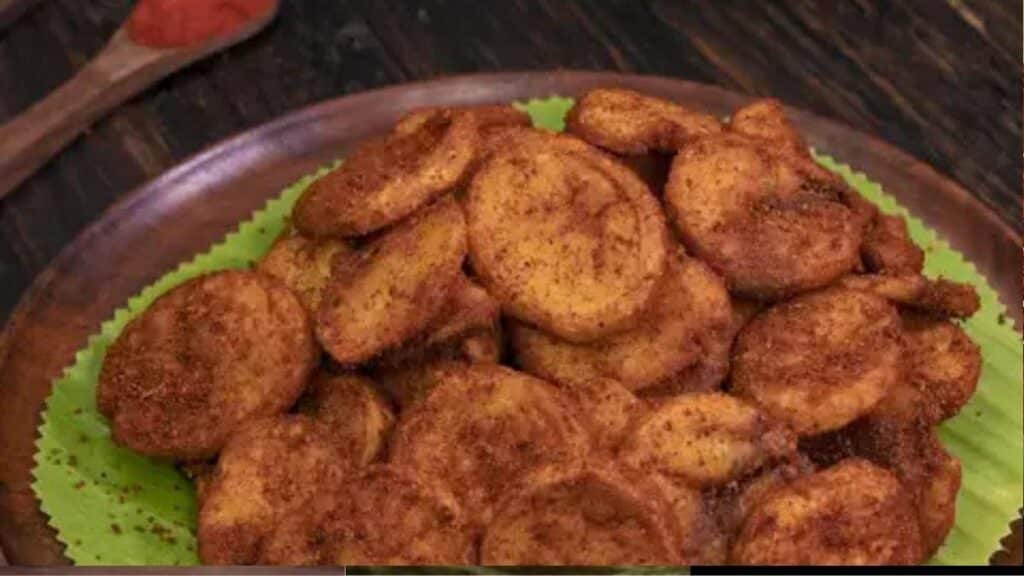
Fry for 2 to 3 minutes, turning once, until they achieve a deep golden-red color and crisp texture. You should hear intense sizzling—this is the surface crisping.
Time: 5 minutes
Step 6: Season Immediately While Hot
This timing is critical for flavor. While the Aloo Tuk are still hot from the second fry, immediately sprinkle with:
½ teaspoon chaat masala (optional)
1 teaspoon red chili powder
1 teaspoon red chili flakes
1 teaspoon amchur (dry mango powder)
Time: 2 minutes
Step 7: Serve Hot
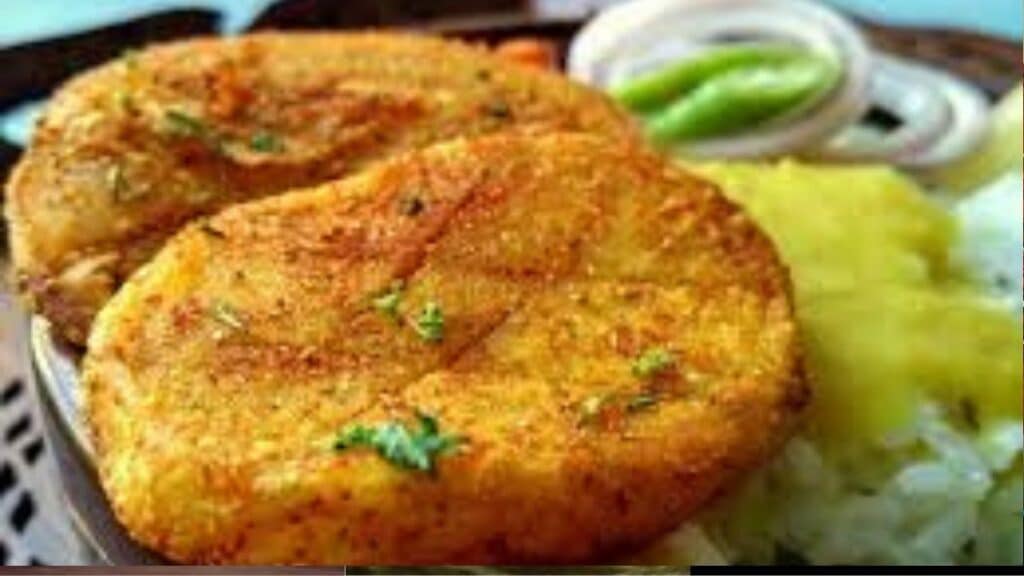
Arrange Aloo Tuk on a serving plate. Garnish with:
Sev (for chaat-style presentation)
Onion rings
Fresh coriander
Lemon wedges
Total Active Time: Approximately 30 Minutes
Why This Dish Still Matters
In the landscape of Indian street food, Aloo Tuk occupies distinctive Sindhi territory. The research states: “Aloo Tuk remains one of the most beloved Sindhi snacks for Cheti Chand 2026.”
What makes Aloo Tuk culturally significant is how it represents Sindhi street food culture—casual, technique-driven, focused on texture and bold seasoning. The research notes: “Represents Sindhi street-food tradition”—making it for Cheti Chand elevates everyday street food to festival status through context and care.
The double-fry technique is what separates Aloo Tuk from regular fried potatoes. The research emphasizes: “The double-fry method defines authentic Aloo Tuk texture.” This isn’t just potato slices thrown in oil—it’s a precise sequence that creates specific texture through understanding how starch, heat, and surface area interact.
For Cheti Chand specifically, Aloo Tuk provides functional value: the research states “Aloo Tuk adds crunch contrast to Cheti Chand feasts.” After dal-heavy, soft-textured traditional meals, the shatter-crisp potato provides satisfying textural variety.
Cheti Chand Jhulelal Jain!
Aloo Tuk is the Sindhi double-fried crispy potato that defines street food tradition—parboil 12-15 mins, first fry at 170°C for structure, smash while hot (cold cracks!), second fry at 190°C for shatter-crisp finish. Season immediately for adhesion. Ready in 30 minutes, yields 20 pieces, 180 calories per 3 pieces. Serve hot with dual chutneys for Cheti Chand evening tea. The crunch contrast that completes the festive menu.
Why must I smash the potatoes while they’re still hot?
The research states emphatically: “Smash the potato while it’s hot—cold potatoes crack instead of flattening.”
What’s the purpose of frying twice instead of just once?
The research explains: “The double-fry method defines authentic Aloo Tuk texture.” The first fry at moderate temperature cooks the potato through and builds initial structure.
