


There are moments in festival preparation when you need something sweet that doesn’t demand the hours that puran poli requires. Something elegant and celebratory but achievable in 25 minutes of active work. Something that looks golden and prosperous on a Gudi Padwa thali but doesn’t involve complex stuffing, rolling, or elaborate technique.
Made with aged basmati rice cooked to exactly 90 percent doneness, then simmered with sugar syrup, saffron-soaked milk, ghee-fried cashews and raisins, and aromatic cloves and cardamom, sakhar bhat is the sweet rice that symbolizes golden prosperity for the Marathi New Year.
Table of Contents
What Exactly Is Sakhar Bhat?
Sakhar bhat is a saffron-infused Maharashtrian sweet rice prepared for Gudi Padwa (March 29, 2026)—the Marathi New Year. It transforms simple basmati rice into glossy, aromatic, golden-hued sweet rice using sugar syrup absorption, saffron, ghee, and warm spices like cloves and cardamom, finished with ghee-fried cashews and raisins.
The name is straightforward: “sakhar” means sugar, “bhat” means rice. Together they describe exactly what it is—sweet rice. But that simplicity is deceptive. Sakhar bhat is sweet rice elevated to ceremonial status through technique, aromatics, and symbolic golden color.
The texture when done right is remarkable. Each grain of rice should remain separate and distinct, not clumped or mushy. The grains should have a glossy sheen from the sugar syrup and ghee. The overall consistency should be moist but not wet, sweet but not cloying, aromatic from saffron and spices without being perfumed.
This difference in technique creates a different result—lighter, less rich, faster to prepare, and with that characteristic glossy appearance that’s specific to sugar-syrup-based sweet rice.
CHECK MORE ON:Rajgira Puri Recipe: The Protein-Packed Bread That Actually Puffs
Recipe Overview
| Detail | Information |
|---|---|
| Prep Time | 10 minutes (plus 20 min rice soaking) |
| Cook Time | 15 minutes |
| Total Active Time | 25 minutes |
| Yield | 6 servings |
| Servings | 6 people |
| Cuisine | Maharashtrian |
| Course | Dessert, Prasad, Sweet Rice |
| Diet | Vegetarian |
| Difficulty Level | Easy-Medium |
| Calories per Serving | ~200 kcal |
Ingredients List
For the Sweet Rice
| Ingredient | Quantity | Notes |
|---|---|---|
| Aged basmati rice | 1 cup | Aged maintains grain separation |
| Sugar | ¾ cup | For sugar syrup |
| Ghee | 3 tablespoons | For richness and shine |
| Water | 2 cups | For cooking rice |
| Saffron strands | 10-12 strands | Soaked in warm milk |
| Warm milk | 2 tablespoons | For soaking saffron |
| Green cardamom pods | 4-5 pods | Lightly crushed |
| Cloves | 4-5 whole | For aromatic depth |
| Cashews | 2 tablespoons | Halved or whole |
| Raisins | 2 tablespoons | Golden or black |
Why Sakhar Bhat Is Perfect for Gudi Padwa
Gudi Padwa falls on March 29, 2026—the first day of Chaitra month, the Marathi New Year, the day the gudi ceremonial flag goes up around 11 AM during the auspicious muhurat. Sakhar bhat is typically part of the morning prasad offering and then served as part of the festive thali alongside puran poli and katachi amti.
Quick elegance after Navratri. The research notes: “It provides a quick, elegant dessert option when elaborate sweets feel overwhelming after Navratri fasting.” You’ve just completed nine days of restricted eating. Gudi Padwa is two days after Navratri ends. The idea of making another labor-intensive sweet might feel daunting. Sakhar bhat offers celebration without exhaustion—25 minutes of active work produces a dessert worthy of the festival.
Symbolic golden prosperity. The golden color from saffron isn’t decorative—it’s meaningful. The research explains: “Its golden color and sweetness represent prosperity and auspicious beginnings for the New Year.” Serving golden rice on the new year is a form of aspirational cooking—invoking through color and ingredient the prosperity you hope for.
Complementary to puran poli. Where puran poli is rich, slightly heavy, and requires eating utensils, sakhar bhat is lighter, can be eaten with a spoon, and provides textural variety on the thali. The research notes it’s “served alongside puran poli and katachi amti” as part of a complete festive meal.
Rice as harvest symbol. The research provides cultural context: “Rice abundance signified harvest prosperity in agrarian Marathi culture.” Including rice in the Gudi Padwa thali honors agricultural roots and the spring harvest season that Gudi Padwa celebrates.
Practical for morning puja. The research notes sakhar bhat is “Festival: Gudi Padwa morning prasad (~11 AM muhurat)”—meaning it’s specifically timed for the late-morning puja offering. Its quick preparation makes it realistic to cook fresh for the prasad rather than preparing the day before.
The Three Technical Keys to Perfect Sakhar Bhat
Before we get into the step-by-step, let’s establish the three non-negotiable technical foundations that separate glossy, separate-grained sakhar bhat from mushy disappointment:
1. Cook rice to exactly 90% doneness before adding sugar syrup
The research is emphatic: “Rice must be cooked only 90% before sugar syrup is added—this ensures proper absorption without mushiness.”
Here’s what’s happening: If you cook rice to 100% doneness (fully soft all the way through) and then add sugar syrup and continue cooking, the rice overcooks. The grains break down, release excess starch, and turn mushy and clumped.
By cooking rice to approximately 90 percent—tender but with just the slightest firmness at the very center of each grain—you leave room for the final 10 percent of cooking to happen during the sugar syrup absorption phase. This produces perfectly cooked rice that’s tender all the way through but maintains grain integrity.
2. Use aged basmati for grain separation
The research states: “Aged basmati maintains grain separation; new rice risks clumping.”
Aged basmati (rice that’s been stored for at least a year after harvest) has lower moisture content and firmer structure than new rice. When cooked, aged basmati grains stay separate and distinct. New rice, with its higher moisture content, tends to stick together and form clumps—the opposite of what you want for sakhar bhat.
3. Minimal stirring after sugar syrup addition
The research warns: “Excess stirring breaks grains and causes clumping.”
Once you add sugar syrup to the rice, you need to let it simmer gently with minimal interference. Stir once to distribute the syrup, then leave it mostly alone. Excessive stirring breaks the delicate cooked rice grains and releases starch that makes everything sticky and clumped.
The research specifies: “Simmer 5–7 minutes on lowest flame” and “Do not stir excessively”—meaning you simmer gently, covered, with perhaps one or two very gentle stirs maximum during the entire simmering period.
Step-by-Step Instructions: Making Perfect Sakhar Bhat
Step 1: Soak and Prepare Rice
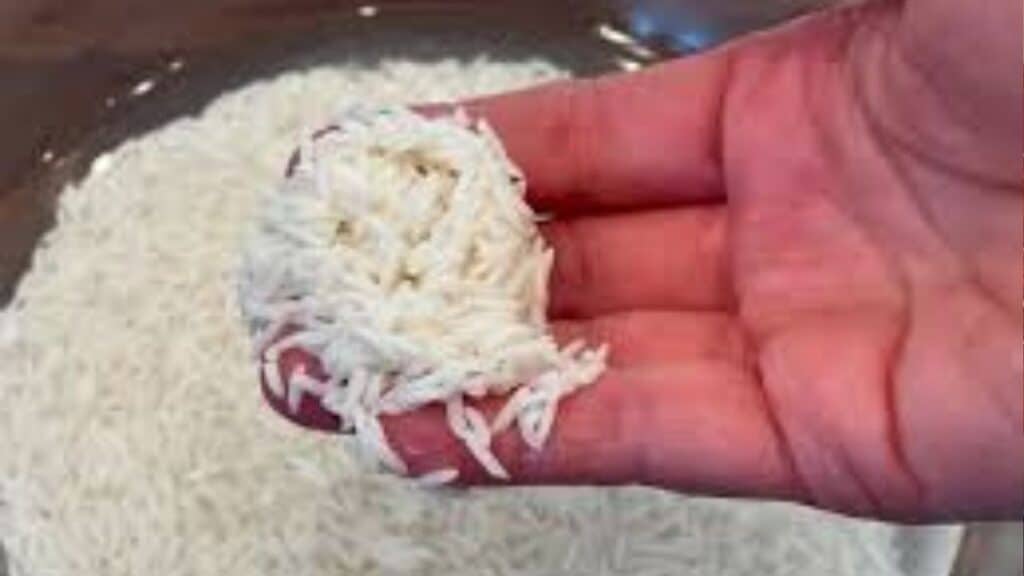
Rinse 1 cup of aged basmati rice under cold running water until the water runs clear. This removes surface starch.
Transfer to a bowl, cover with fresh water, and soak for 20 minutes. Soaking reduces cooking time and helps grains cook evenly.
Time: 20 minutes soaking
Step 2: Soak Saffron
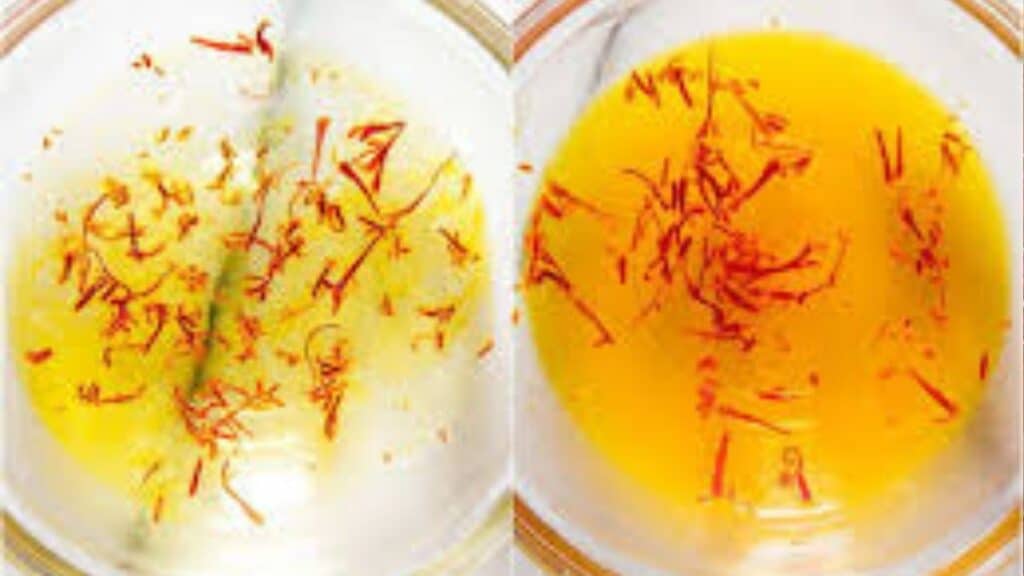
While rice is soaking, prepare the saffron. Take 10-12 saffron strands and soak them in 2 tablespoons of warm milk. The research notes: “Saffron soaked for 10–15 minutes intensifies aroma and color release.”
The milk will gradually turn golden as the saffron releases its color and aroma. Set aside.
Time: 10-15 minutes soaking
Step 3: Fry Nuts in Ghee
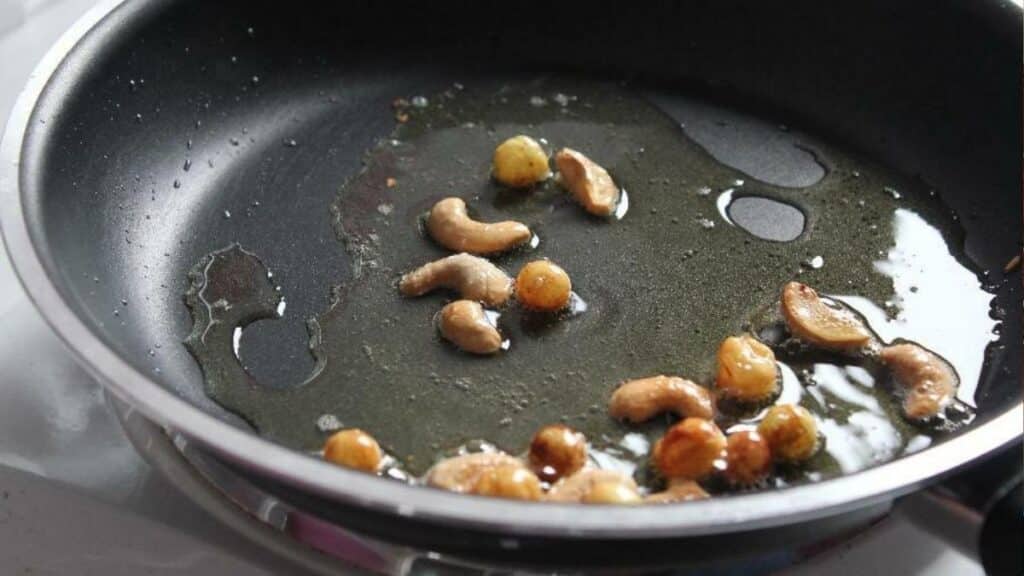
Heat 1 tablespoon of ghee in a small pan. Add 2 tablespoons of cashews (halved or whole) and 2 tablespoons of raisins.
Remove and set aside. The research emphasizes: “Fry nuts in ghee separately”—this develops their flavor and texture before they’re added to the final dish.
Time: 3 minutes
Step 4: Cook Rice to 90% Doneness
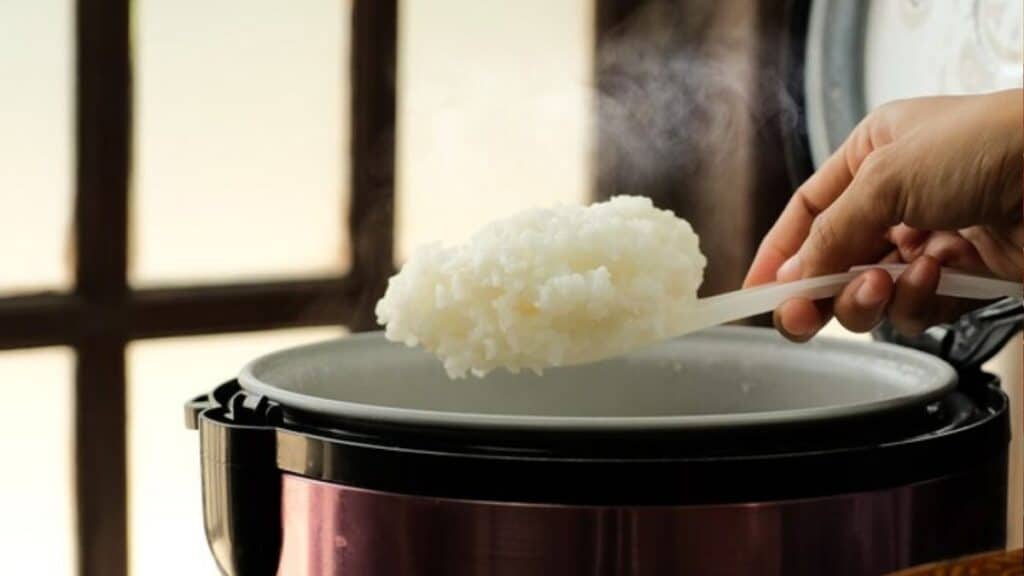
In a heavy-bottomed pan or pot, bring 2 cups of water to a boil. Add the drained rice, 4-5 lightly crushed cardamom pods, and 4-5 whole cloves.
Reduce heat to low, cover, and cook for approximately 8-10 minutes until rice is about 90 percent cooked. Test by pressing a grain between your fingers—it should be tender but with just the slightest firmness at the very center.
Time: 8-10 minutes cooking + 5 minutes resting
Step 5: Prepare Sugar Syrup
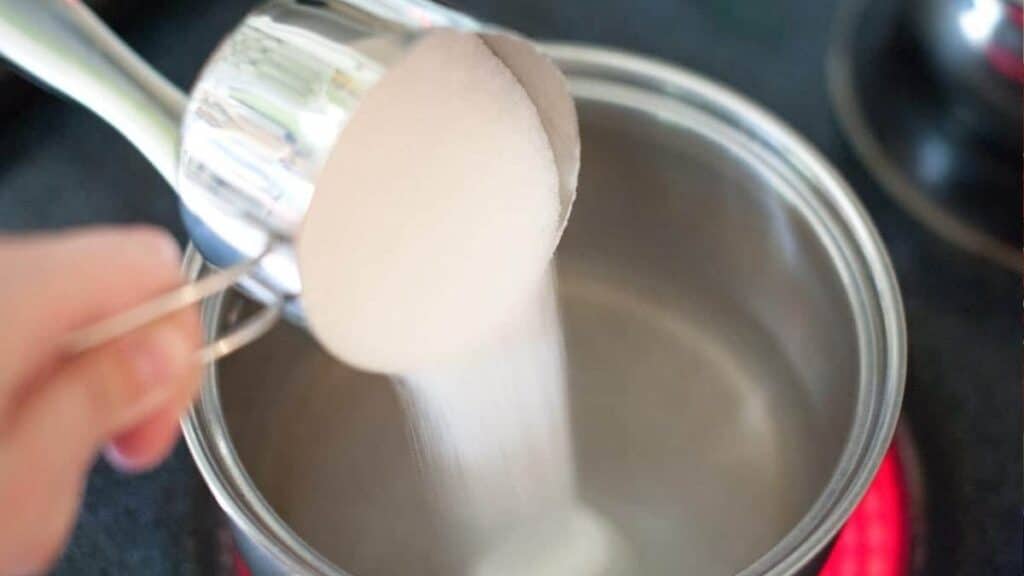
While rice is resting, prepare the sugar syrup. In a separate pan, combine ¾ cup sugar with approximately ½ cup water.
Heat on medium flame, stirring until sugar dissolves completely. Let it come to a boil and cook for approximately 3 minutes until it reaches 2-string consistency.
Time: 5 minutes
Step 6: Combine Rice and Syrup
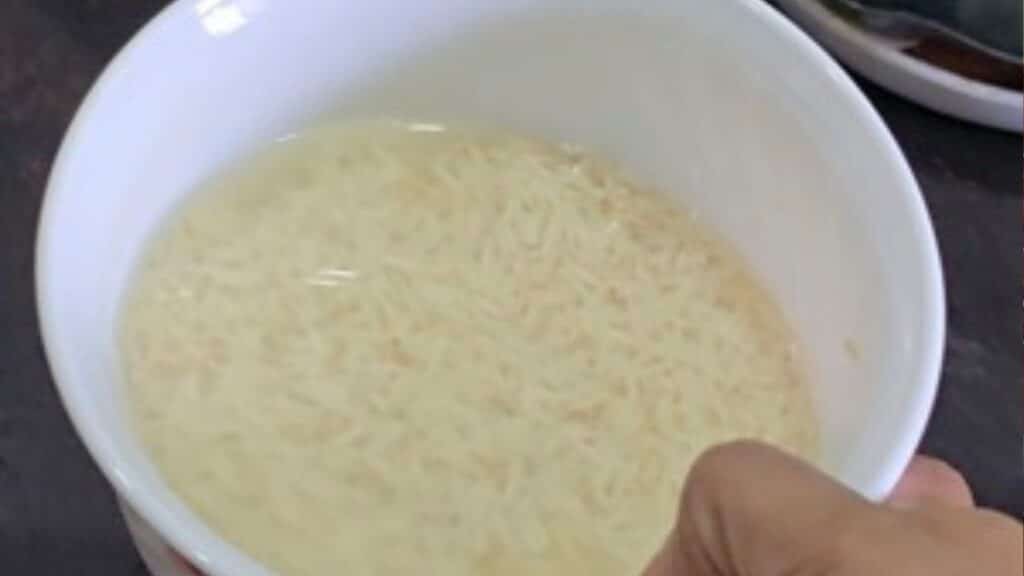
Drizzle the saffron-soaked milk evenly over the rice. The research describes the visual effect: “Saffron milk drizzle creates natural golden marbling.”
Pour the hot sugar syrup over the 90-percent-cooked rice. Add the remaining 2 tablespoons of ghee.
Time: 2 minutes
Step 7: Final Simmer
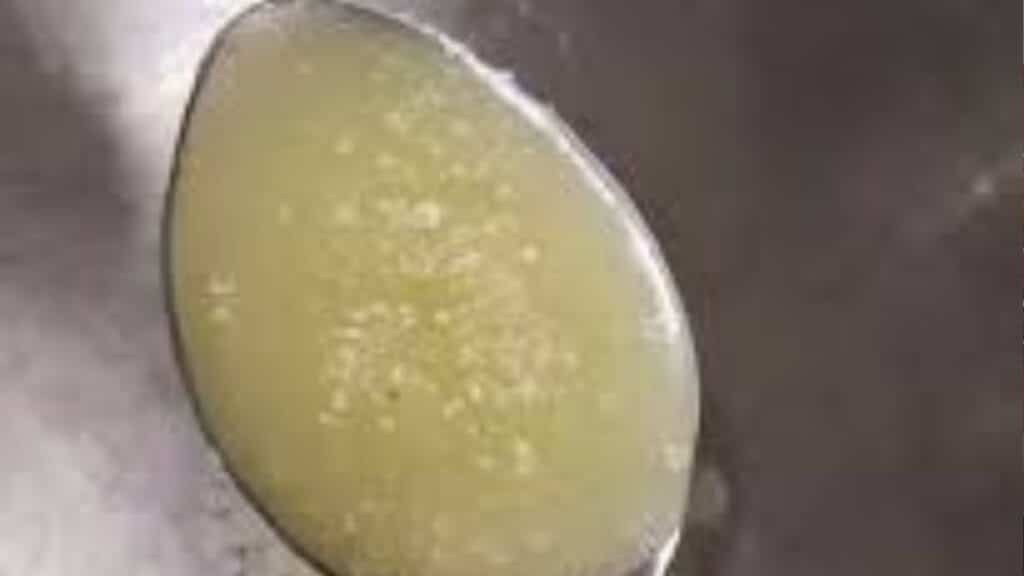
Cover the pan and simmer on the lowest possible flame for 5 to 7 minutes. The research specifies: “Simmer 5–7 minutes on lowest flame.”
After 5-7 minutes, turn off heat. Let stand covered for another 5 minutes.
Time: 5-7 minutes simmering + 5 minutes standing
Step 8: Fluff and Serve
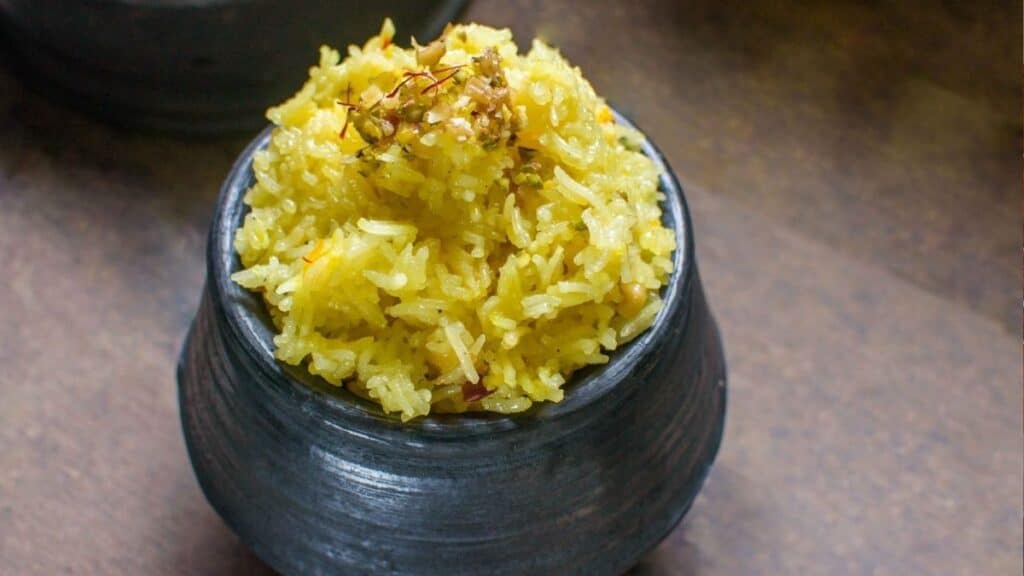
Gently fluff the sakhar bhat with a fork—very gently, just to separate grains slightly. Garnish with reserved nuts.
Serve warm as prasad or as part of the Gudi Padwa festive thali.
Total Active Time: 25 Minutes (plus soaking and resting time)
Make-Ahead Strategy for Gudi Padwa Morning
Evening Before (March 28):
- Soak and cook rice to 90% doneness
- Fry nuts in ghee
- Soak saffron in milk
- Refrigerate all components separately
Festival Morning (March 29):
- Make fresh sugar syrup
- Combine rice, syrup, saffron, nuts
- Simmer gently
- Serve for 11 AM prasad
The research notes: “Ghee coating helps preserve moisture and prevents dryness”—meaning the ghee you add during final cooking acts as a preservative that keeps the rice from drying out if it needs to sit for a few hours.
Why This Recipe Still Matters
In the landscape of Gudi Padwa celebrations, sakhar bhat occupies a unique position—elegant enough to honor the festival, simple enough to be practical. The research documents that approximately 70 percent of Marathi households include sweet rice in festive thalis, making it second only to puran poli in popularity.
But these statistics don’t capture what sakhar bhat actually provides: the option to celebrate abundantly without exhausting yourself. Coming just two days after Navratri ends, Gudi Padwa asks families to shift from fasting restraint to festive abundance. Sakhar bhat makes that transition manageable—it delivers golden, aromatic, celebratory sweet rice in 25 minutes of active work.
What makes sakhar bhat culturally meaningful is its symbolism. The research states: “Its golden color and sweetness represent prosperity and auspicious beginnings for the New Year.” Serving golden rice on Gudi Padwa morning is aspirational cooking—invoking through color and ingredient the prosperity you hope the new year will bring.
Why is my sakhar bhat mushy and clumped instead of having separate grains?
The rice was overcooked before the sugar syrup was added. The research is clear: “Rice must be cooked only 90% before sugar syrup is added—this ensures proper absorption without mushiness
What does “2-string consistency” mean for the sugar syrup?
This is a traditional Indian sweet-making test. After boiling sugar and water for about 3 minutes, take a small drop of syrup between your thumb and forefinger.
Can I use regular basmati rice instead of aged basmati?
You can, but the texture won’t be quite as good. The research states: “Aged basmati maintains grain separation; new rice risks clumping.
