


Made by dry-roasting besan until it achieves a coffee-like aroma (this step is non-negotiable), whisking it into a smooth slurry, building a glossy golden gravy with curd, tamarind, and jaggery, simmering slowly with seven types of vegetables layered by density, then floating freshly fried onion pakoras on the surface in the final minutes
Cheti Chand falls on April 1, 2026, celebrating the birth of Jhulelal and marking the Sindhi New Year. Sindhi Kadhi is the central dish—served at large mandal gatherings, paired classically with steamed rice and koki, and representing what the research describes as the “Cheti Chand ritual centerpiece symbolizing balance, nourishment, and tradition.”
Table of Contents
What Makes Sindhi Kadhi Different?
Sindhi Kadhi is distinct from other Indian kadhis—particularly Punjabi kadhi—through several defining characteristics:
Tomato-free base: Unlike many North Indian curries, Sindhi Kadhi doesn’t use tomatoes. The tang comes entirely from curd and tamarind, creating a different acidity profile—brighter, more complex.
Vegetable abundance: The research emphasizes “7 vegetables traditionally included” as standard. This isn’t a simple pakora-in-gravy dish but a vegetable-forward curry where baby potatoes, okra, cauliflower, carrots, drumsticks, green beans, and brinjal each contribute texture and flavor.
Sweet-tang balance: The combination of tamarind (sour), jaggery (sweet), and curd (tangy) creates what the research describes as the “defining” characteristic—a balanced profile that’s simultaneously sour, sweet, and mildly spicy.
Onion pakoras added at the end: Unlike some kadhis where pakoras are the main feature, here they’re added in the final 5-8 minutes, floating on the surface. The research quotes the traditional wisdom: “Pakoras dancing on the surface welcome guests joyfully.”
Glossy golden consistency: The research describes the ideal texture as “Glossy golden consistency” achieved through “slow simmering for natural thickening”—not thick and heavy but flowing and lustrous.
The research directly contrasts: “Unlike Punjabi kadhi, Sindhi Kadhi is vegetable-forward and lighter in texture but deeper in tang complexity.”
CHECK MORE ON:Amrakhand Recipe: No-Cook Mango Dessert
Recipe Overview
| Detail | Information |
|---|---|
| Prep Time | 20 minutes |
| Roasting Time | 10 minutes |
| Cooking Time | 25 minutes |
| Resting Time | 20 minutes |
| Total Time | ~65 minutes (45 active) |
| Yield | 12 servings |
| Servings | 12 people |
| Cuisine | Sindhi |
| Course | Main Course, Festival Centerpiece |
| Diet | Vegetarian, Naturally Gluten-Free |
| Difficulty Level | Medium |
| Calories per Serving | ~200 kcal |
| Festival | Cheti Chand (April 1, 2026) |
Why Sindhi Kadhi Is Essential for Cheti Chand
Cheti Chand falls on April 1, 2026, celebrating Jhulelal’s birth and the Sindhi New Year. Sindhi Kadhi plays a central, symbolic role:
Represents balance and hospitality. The research states: “Kadhi symbolizes balance—tangy, sweet, spicy—mirroring Sindhi hospitality and resilience.” The three-way flavor balance represents the complexity of life and the welcoming nature of Sindhi culture.
Central dish at community gatherings. The research notes it’s the “Central dish during Cheti Chand community lunches” and “Served at large mandal gatherings and home feasts”—meaning kadhi is what everyone expects and what defines the festive meal.
Weekly staple elevated for festival. The research documents: “90% of Sindhi households reportedly serve kadhi weekly”—this isn’t exotic festival food but beloved everyday dish given special status on Cheti Chand through extra care in preparation and presentation.
Make-ahead convenience. The research notes practical advantages: “Easily reheats and tastes better the next day” and “Festival preparation often begins the evening before for smoother puja-day cooking.” Making kadhi the night before allows flavors to deepen and reduces morning stress.
Serves many efficiently. At 12 servings from one batch, kadhi feeds extended family and guests easily—critical for festival hospitality.
The research emphasizes: “The Cheti Chand thali is incomplete without kadhi served alongside koki and aloo tuk.”
The Critical Technique: Besan Roasting Determines Everything
Before we get into the step-by-step, let’s establish the single most important factor that determines whether your kadhi succeeds or fails: properly roasting besan until it achieves a coffee-like aroma.
The research states the fundamental principle as “Most Important Insight”: “The defining technique of Sindhi Kadhi is properly roasting besan until aromatic before adding liquids—this determines flavor, texture, and shelf life.”
Here’s what’s happening: Raw besan (gram flour) has a slightly bitter, chalky taste. When dry-roasted over medium heat for approximately 10 minutes, stirring constantly, it transforms—the starches toast, proteins denature, and aromatic compounds develop. The research provides the specific cue: “coffee-like aroma appears.”
The research quotes the traditional warning: “Besan must achieve coffee aroma before liquid—raw ruins kadhi forever.”
If you add liquid to under-roasted besan, that raw taste persists no matter how long you simmer. The kadhi will taste chalky and unpleasant rather than nutty and aromatic. There’s no fixing it after the fact.
The second critical element is adding liquids gradually while whisking. The research emphasizes: “Add liquids gradually while whisking to avoid lumps.” If you dump all the water at once into roasted besan, you’ll get lumps that won’t break down smoothly.
Ingredients List
Core Gravy Base
| Ingredient | Quantity | Notes |
|---|---|---|
| Besan (gram flour) | ¾ cup | Dry roast until coffee aroma |
| Sour curd (yogurt) | 1½ cups | Whisked smooth |
| Tamarind pulp | 3 tablespoons | Extracted from tamarind |
| Jaggery (grated) | ¼ cup | Provides sweetness |
| Water | 10 cups | Added gradually |
Seven Traditional Vegetables
| Vegetable | Quantity/Preparation | Notes |
|---|---|---|
| Baby potatoes | 10-12 small, halved | Add first (longest cooking) |
| Okra (bhindi) | 10-12 pieces, cut | Add mid-cooking |
| Cauliflower florets | 1 cup | Medium density |
| Carrots | 2 medium, sliced | Medium density |
| Drumsticks | 2-3, cut into 3-inch pieces | Traditional addition |
| Green beans | 15-20, cut | Add mid-cooking |
| Brinjal (eggplant) | 1 medium, cubed | Add later (cooks quickly) |
Step-by-Step Instructions: Making Perfect Sindhi Kadhi
Step 1: Roast the Besan (10 Minutes – Critical Step)
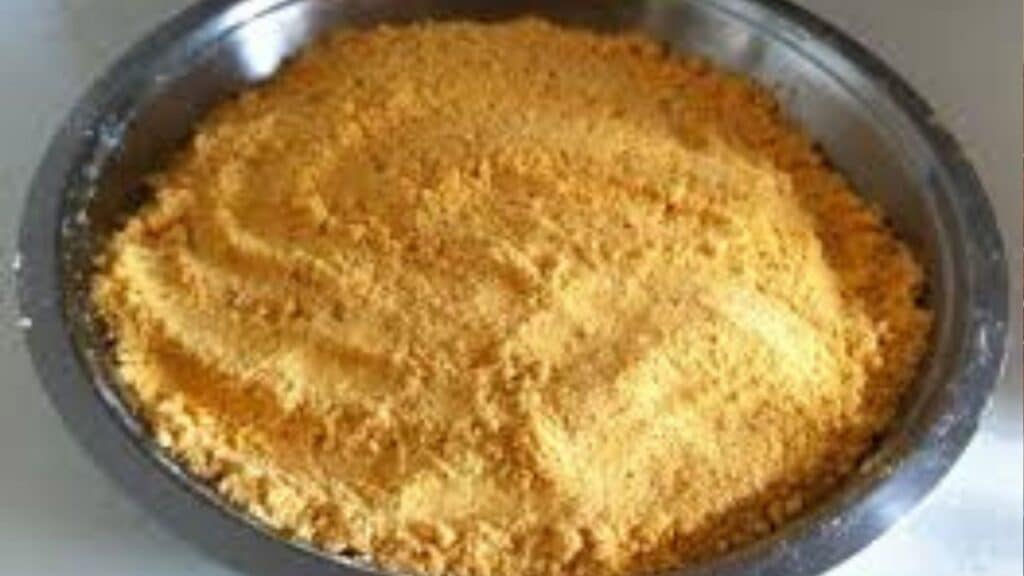
In a heavy-bottomed pan, add ¾ cup of besan (gram flour). Do NOT add oil or ghee—this is dry roasting.
Place over medium heat and stir constantly with a wooden spoon or spatula. The besan will gradually change color from pale yellow to golden beige.
Time: 15 minutes (10 roasting + 5 cooling/whisking)
Step 2: Prepare Tempering and Sauté Vegetables (15 Minutes)
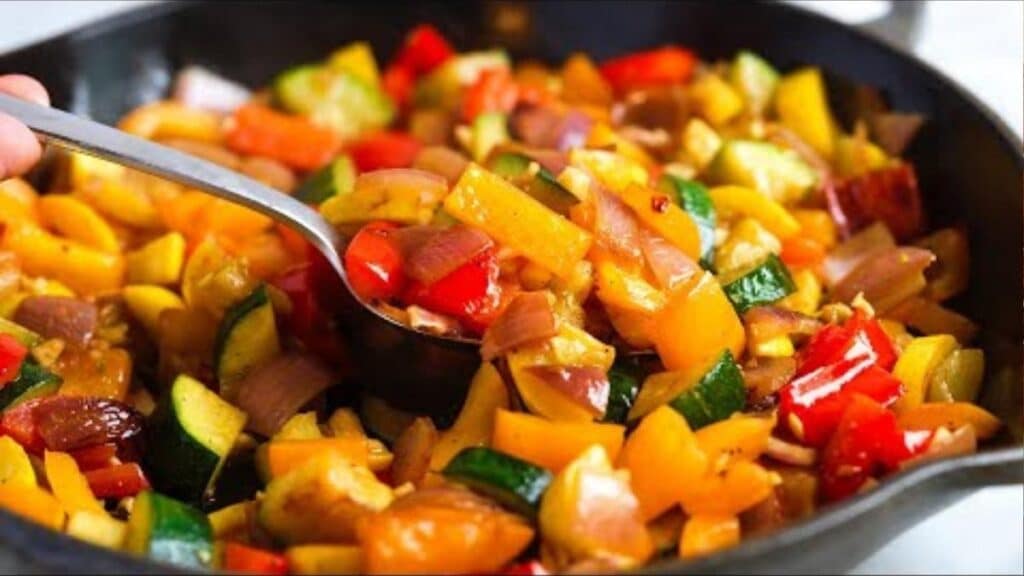
Now add vegetables in order of density (longest-cooking first):
Brinjal (cubed): add last
Baby potatoes (halved): sauté for 3 minutes
Carrots (sliced): add and sauté for 2 minutes
Cauliflower florets: add and sauté for 2 minutes
Drumsticks (cut): add and mix
Green beans (cut): add and mix
Okra (cut): add and mix gently
Time: 15 minutes
Step 3: Build the Gravy and Simmer (25 Minutes)
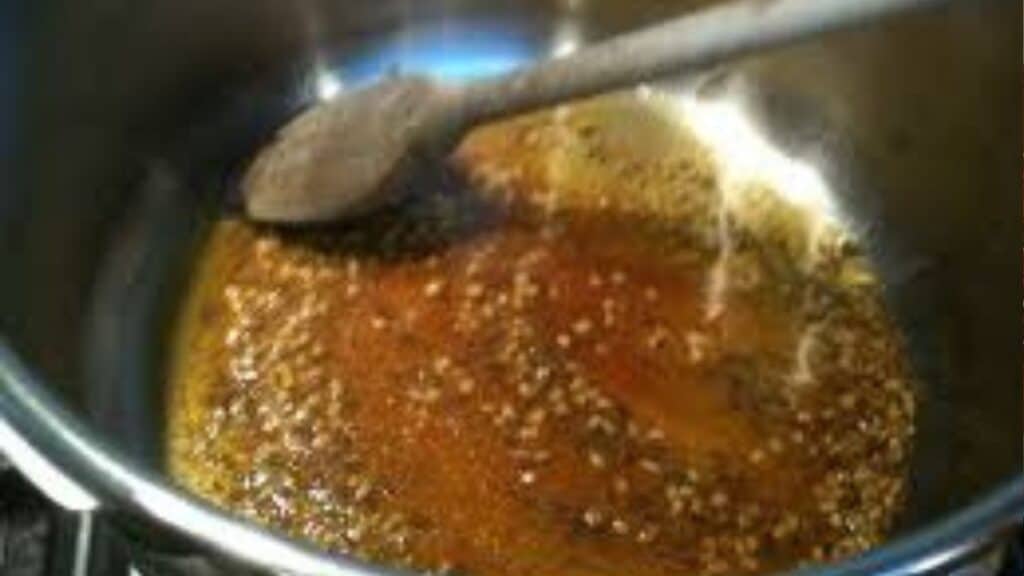
In a separate bowl, whisk 1½ cups of sour curd until smooth. Add this to the kadhi while stirring continuously. The research notes this prevents curdling.
Time: 25 minutes
Step 4: Prepare and Add Pakoras (Final 8 Minutes)

In a bowl, mix 1 cup besan with 2 large thinly sliced onions, 2-3 chopped green chilies, 2 tablespoons chopped coriander, ½ teaspoon red chili powder, and ½ teaspoon salt.
Time: 8 minutes
Step 5: Rest Before Serving (20 Minutes)

This resting period allows all the flavors—tangy, sweet, spicy—to meld completely. The vegetables fully absorb the gravy, and the overall consistency reaches its ideal glossy, flowing state.
Garnish with fresh coriander if desired.
Serve hot with steamed rice and koki.
Total Active Time: Approximately 45 Minutes (plus 20 minutes resting)
Expert Tips for Authentic Sindhi Kadhi
The research provides several critical insights:
Roast besan until coffee aroma—non-negotiable. The repeated emphasis: “Besan must achieve coffee aroma before liquid—raw ruins kadhi forever.” This is the single most important step.
Add liquids gradually while whisking. Prevents lumps that won’t break down.
Simmer on low flame for full 25 minutes. Rushing the simmer prevents proper thickening and flavor development.
Add pakoras only in final 5-8 minutes. Adding them too early makes them soggy; too late and they don’t absorb gravy essence.
Layer vegetables by density. Potatoes first (longest cooking), tender vegetables like brinjal and okra later.
Rest before serving. The 20-minute rest after cooking is when flavors truly integrate.
Tastes better the next day. The research notes kadhi “improves in flavor by Day 2–3″—make it ahead for even better results.
Variations and Adaptations
The research notes: “Diaspora adaptations adding cluster beans or bottle gourd”—showing how Sindhi families abroad adapt based on vegetable availability while maintaining core technique and flavor.
Other traditional variations might include:
- Adjusting jaggery-tamarind ratio for more sweet or more sour
- Adding seasonal vegetables while maintaining the 7-vegetable principle
- Making mini pakoras for easier eating
- Doubling the recipe for very large gatherings (the technique scales well)
Why This Recipe Still Matters
In the landscape of Sindhi festival foods, kadhi occupies the central position—not as flashy as aloo tuk’s crunch or koki’s spice, but as the gravitational force that holds the thali together. The research describes it as “the soul of the Sindhi thali” and “Cheti Chand ritual centerpiece.”
What makes Sindhi Kadhi culturally significant is how it embodies core values: the research states it “symbolizes balance—tangy, sweet, spicy—mirroring Sindhi hospitality and resilience.” The three-way flavor balance represents life’s complexity, and the vegetable abundance represents generosity.
The research documents near-universal adoption: “90% of Sindhi households reportedly serve kadhi weekly.” This isn’t just festival food consumed once yearly—it’s beloved weekly comfort that gets elevated for Cheti Chand through extra care and ceremonial service.
Because some curries aren’t just food. They’re ritual, identity, and celebration expressed through the most fundamental principle: balance. And Sindhi Kadhi, with its seven vegetables and three-way flavor harmony, delivers exactly that.
Cheti Chand Jhulelal Jain! (Victory to Jhulelal!)
Sindhi Kadhi is the Cheti Chand centerpiece (April 1, 2026)—tangy-sweet besan curry with 7 vegetables and floating onion pakoras. Critical technique: dry-roast besan 10 mins until coffee aroma (raw ruins it forever!), whisk liquids gradually, simmer slowly 25 mins for glossy thickening, add pakoras final 5-8 mins, rest 20 mins before serving
Why is roasting besan until coffee aroma so critical?
The research states emphatically: “Besan must achieve coffee aroma before liquid—raw ruins kadhi forever.”
How do I prevent lumps when adding liquid to roasted besan?
The research provides the solution: “Add liquids gradually while whisking to avoid lumps.” After roasting and cooling the besan slightly, add water in small amounts (½ cup at a time) while whisking vigorously.
