


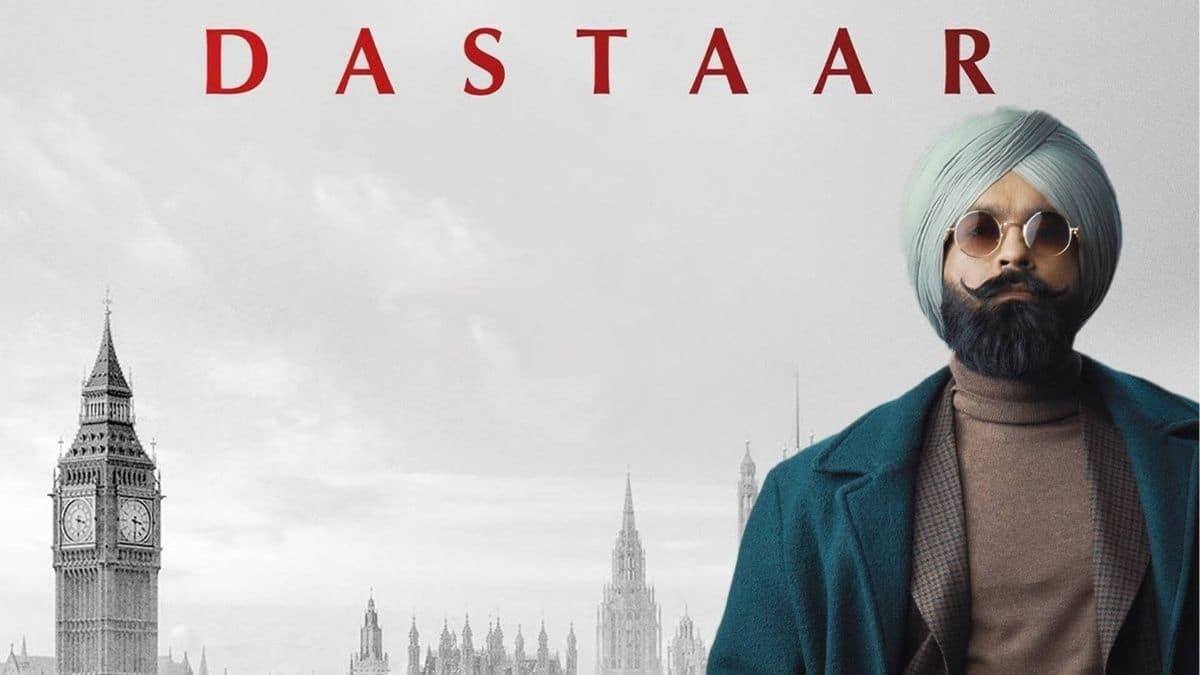
Dastaar arrives in theatres as one of the most powerful and emotionally resonant films Punjabi cinema has produced in recent memory. Directed by Amar Hundal and led by a phenomenal Tarsem Jassar, the film transports audiences to the racially charged streets of 1980s Britain, where a Sikh immigrant’s quiet life is shattered by hate — and reborn as a symbol of courage. Backed by White Hill Studios, Dastaar isn’t just a period drama; it’s a moving tribute to identity, resilience, and the unbreakable spirit of the Sikh diaspora.
Dastaar tells the gripping story of Harnek, a peace-loving Sikh immigrant in 1980s Britain, whose world is torn apart by a brutal racially motivated attack that claims his loved ones. Rather than succumbing to grief or vengeance, Harnek channels his pain into purpose, rising as a unifying voice for his community against systemic hate. Anchored by a towering performance from Tarsem Jassar and supported brilliantly by Geet Goraya, Yograj Singh, and Sarbjit Cheema, the film blends raw emotion with historical gravity under Amar Hundal’s confident direction. With haunting cinematography, a soul-stirring soundtrack, and a message that heritage is a crown and not a burden, Dastaar earns a well-deserved 5-star rating as a landmark film in regional cinema.
Cast & Crew
| Role | Name |
|---|---|
| Director | Amar Hundal |
| Producers | Gunbir Singh Sidhu, Manmord Singh Sidhu (White Hill Studios) |
| Writers | Dheeraj Rattan, Manila Rattan |
| Dialogues | Jatinder Lall |
| Cinematography | C. Ram Prasad, Muhammed Demirel |
| Music | White Hill Music |
| Lead Cast | Tarsem Jassar, Geet Goraya |
| Supporting Cast | Yograj Singh, Sarbjit Cheema, Aman Dhaliwal, Ashish Duggal, Neeta Mohindra |
| Certification | A (Adults Only) |
| Runtime | 150 minutes |
| Release Date | July 17, 2026 |
Plot Summary
Set in the socially fractured United Kingdom of the 1980s, Dastaar follows Harnek (Tarsem Jassar), a gentle and hardworking Sikh immigrant who sees his turban not merely as a religious symbol but as a proud lineage of honour and selflessness. His peaceful world collapses when a brutal, racially motivated attack takes the lives of those closest to him. Instead of retreating into fear or seeking violent revenge, Harnek transforms his grief into a mission — rising from an isolated labourer into a powerful community leader who unites the Sikh diaspora against systemic oppression and hate.
Also Read: ‘Oka Court Case’ 2026 Movie Review: A Fresh Legal Love Drama That Wins Hearts
Star Performances That Elevate the Film
Tarsem Jassar delivers what can only be called a career-defining performance, masterfully balancing the raw vulnerability of a grieving father with the commanding presence of a community icon. It’s a role he inhabits with tremendous depth and control.
Geet Goraya is outstanding as the female lead, bringing quiet dignity and emotional richness to the story, serving as an emotional anchor through the film’s darkest moments.
Yograj Singh commands the screen with fierce, veteran authority, lending the film a weathered gravity that beautifully honours the sacrifices of the Sikh community.
Sarbjit Cheema complements him perfectly, adding rich, textured support that strengthens every scene he’s part of.
Aman Dhaliwal, Ashish Duggal, and Neeta Mohindra round out a stellar ensemble, along with a strong supporting cast of international actors, together building a wonderfully authentic world around the central story.
Also Read: Diamond Made Man Part 2 Review: A Cosmic Sci-Fi Spectacle That Soars
Technical Craft
Direction
Amar Hundal steps confidently away from his usual high-octane action genre to helm a film of immense emotional and historical weight, handling sensitive subject matter with sharp honesty and control.
Cinematography
C. Ram Prasad and Muhammed Demirel craft a stunning visual language, using a cold, bleak, overcast palette that beautifully mirrors the isolation felt by the characters.
Music & Background Score
The soundtrack, helmed by White Hill Music, adds tremendous emotional resonance, with tracks like “Khande Di Dhaar” by Himmat Sandhu organically amplifying the film’s themes of courage and heritage.
Editing & Writing
Dheeraj Rattan and Manila Rattan’s screenplay, along with Jatinder Lall’s sharp dialogues, keeps the narrative gripping and emotionally charged throughout.
Also Read: Rahun Main Tere Rubaru Review: A Gripping Tale of Love, Danger & Deception
Strengths & Weaknesses
Strengths:
- A career-best, powerhouse performance from Tarsem Jassar
- Emotionally rich supporting performances across the board
- Bold, unflinching direction by Amar Hundal
- Evocative cinematography that captures the era’s isolation
- A stirring, purposeful soundtrack
- A powerful, timely message on identity and resilience
Weaknesses:
- A few segments in the second half slow down slightly during the community-organizing portions, though the emotional momentum never truly falters
Final Verdict: ⭐⭐⭐⭐⭐ 5/5 Stars
Dastaar is a monumental triumph — a deeply moving, beautifully crafted tribute to the resilience of the Sikh community. With a towering performance from Tarsem Jassar and masterful direction from Amar Hundal, this is a film that proves heritage isn’t something to hide, but a crown to wear with pride. An unmissable, five-star cinematic experience.
What is the certification of Dastaar?
Dastaar has been certified “A” (Adults Only) due to its intense and visceral depiction of racial violence and conflict.
Is Dastaar suitable for children or family viewing?
No, due to its “A” certification and graphic themes of racial violence, Dastaar is not recommended for children or family viewing.
Is Dastaar based on a true story?
Dastaar is not based on one specific true story, but it is inspired by the real historical experiences of racial violence and systemic alienation faced by the Sikh diaspora in 1980s Britain.
