


In this Azad Bharath movie review, we explore a film that arrives as a breath of fresh air in an era where patriotic dramas often feel formulaic and heavy-handed. When was the last time you watched a historical film that honored freedom fighters without reducing them to marble statues? Roopa Iyer’s directorial vision doesn’t just recreate history; it brings the Rani of Jhansi Regiment’s women warriors to vivid, emotionally resonant life while reminding us that India’s independence was won by countless brave souls whose names rarely make it to textbooks.
Shreyas Talpade delivers arguably his most nuanced performance to date as Netaji Subhas Chandra Bose, stripping away mythological reverence to reveal the human being carrying the weight of a nation’s dreams. This is historical cinema done right—grounded in authentic emotion, elevated by stellar performances, and crafted with the kind of care that transforms education into inspiration.
Quick Takeaway:
Azad Bharath is a profoundly moving tribute to the unsung women warriors of the Indian National Army, anchored by Shreyas Talpade’s career-defining performance and Roopa Iyer’s sensitive direction. While certain middle portions could benefit from tighter pacing, the film’s emotional authenticity, powerful ensemble work, and commitment to illuminating forgotten history make it essential viewing for anyone seeking patriotic cinema with genuine heart.
Language: Hindi
Age Rating: U/A
Genre: Historical Drama, Patriotic, War
Director: Roopa Iyer
The Plot: When Women Took Up Arms for Freedom
At its heart, Azad Bharath tells the story we should have learned in history class but didn’t—the tale of the Rani of Jhansi Regiment and the extraordinary women who fought alongside Netaji Subhas Chandra Bose’s Indian National Army. The film centers on Neera Arya, a fearless fighter whose personal battles mirror the larger struggle for independence.
What makes this narrative approach brilliant is how Roopa Iyer refuses to sanitize history. The film explores the painful tension between personal relationships and political commitment, particularly through Neera’s conflict with her husband Shrikant. These aren’t cardboard cutout heroes delivering patriotic speeches—they’re flesh-and-blood people making impossible choices, sacrificing personal happiness for collective freedom.
The screenplay balances military strategy with intimate character moments, showing how revolution demands everything from those who dare to fight. We see the formation of the INA, the strategic brilliance behind Netaji’s vision, and most importantly, the women who defied every social convention to pick up weapons and march toward uncertain futures. This is history presented not as dusty facts but as living, breathing human drama.
Performances: When Every Actor Understands the Assignment
Shreyas Talpade: Redefining How We See Netaji
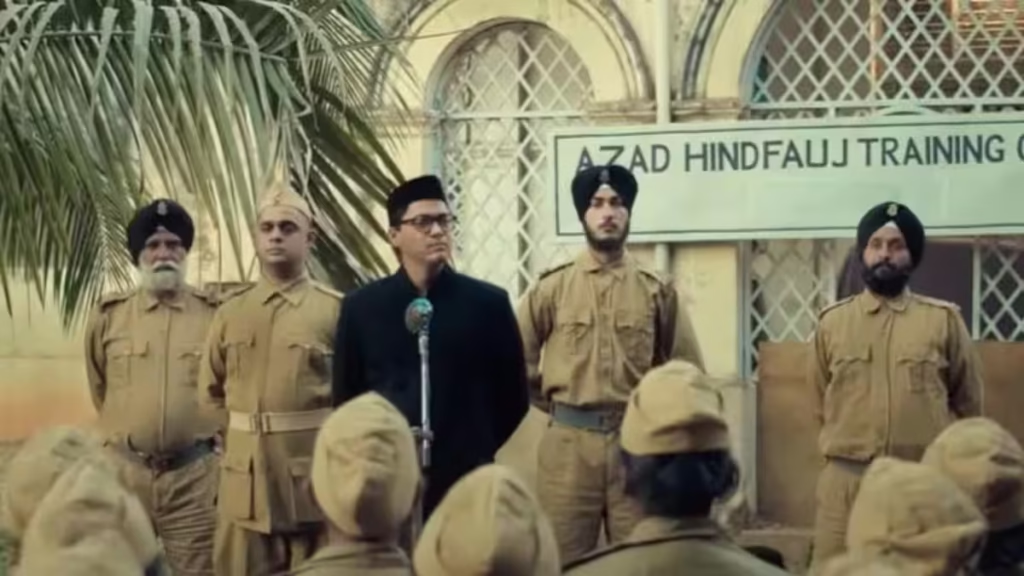
This Azad Bharath movie review must begin with Shreyas Talpade’s extraordinary transformation. For years, we’ve seen Netaji portrayed as a distant icon, all grand gestures and thundering speeches. Shreyas does something far more difficult—he makes Netaji human without diminishing his greatness.
The brilliance of Shreyas’s performance lies in how he makes ideology feel personal. When Netaji speaks of freedom, you believe this is a man who has sacrificed everything for that dream. It’s a career-defining turn that will undoubtedly be remembered as one of his finest.
Priyanshu Chatterjee: The Conscience That Complicates
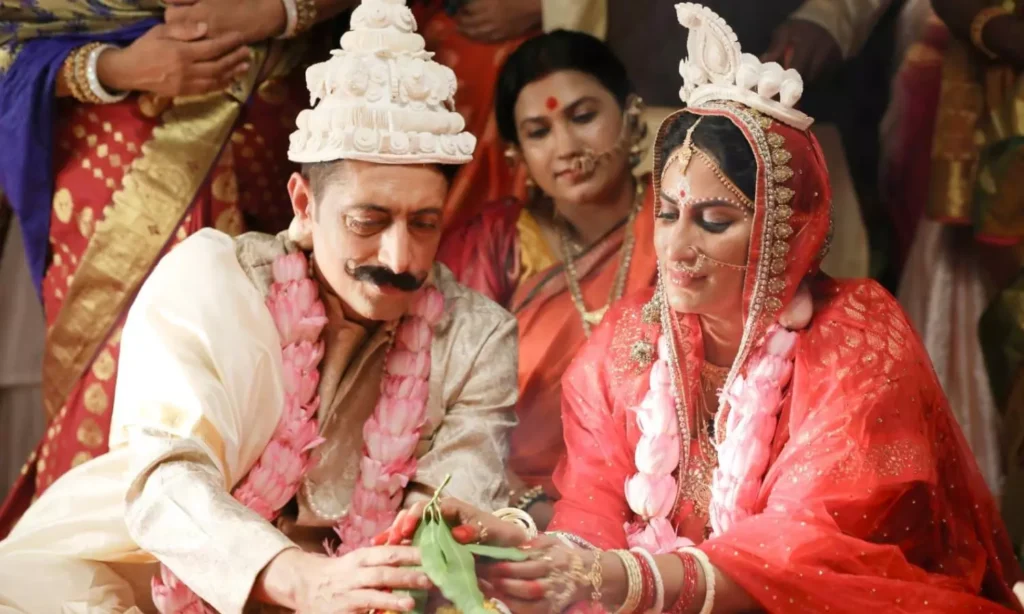
Every epic needs characters who embody ideological conflict, and Priyanshu Chatterjee’s Shrikant provides exactly that dimension. His portrayal of a man torn between personal love and political disagreement adds layers of complexity to the narrative. This isn’t a simple villain or obstacle—Shrikant represents the legitimate questions and doubts that existed within the independence movement itself.
Priyanshu brings nuance to what could have been a one-note character. You understand his perspective even when you disagree with him, and that’s the mark of sophisticated character work. His scenes with Neera crackle with the tension of two people who love each other but cannot reconcile their fundamental beliefs about how to fight for freedom.
The Ensemble: Strength in Every Frame
Roopa Iyer (as Neera Arya) delivers a fierce, uncompromising performance that makes Neera the film’s emotional core. She’s sharp, flawed, and utterly relatable—a woman who refuses to be constrained by society’s expectations. There’s fire in her eyes during combat sequences, vulnerability in moments of doubt, and unwavering conviction when she makes her choice to join the regiment.
Suresh Oberoi brings veteran gravitas that grounds the film’s more dramatic moments. His presence connects the narrative to deeper currents of Indian cinema history while adding weight to pivotal strategic discussions.
Indira Tiwari shines in supporting scenes, her performance grounded and emotionally honest. She represents the countless women whose contributions to the freedom struggle remain largely unacknowledged, and she honors that legacy with every moment on screen.
What makes this ensemble special is how everyone elevates each other. There are no weak links, no performances that feel phoned in. Every actor understands they’re part of something larger than individual glory—they’re telling a story that desperately needs to be told.
Direction and Vision: Roopa Iyer’s Triumph
Roopa Iyer makes a bold statement with her directorial approach: patriotic films don’t need to be bombastic to be powerful. Her camera finds intimacy within epic scope, focusing on human faces during crucial moments rather than getting lost in spectacle for spectacle’s sake.
The film’s pacing keeps momentum flowing through what could have been exposition-heavy material. Iyer understands when to let scenes breathe and when to propel the narrative forward. The battle sequences are staged with clarity and purpose—you always understand the stakes, the geography, the strategic objectives. But she’s equally comfortable with quiet conversations where characters reveal their inner conflicts.
What’s particularly impressive is how Iyer handles the balance between Netaji’s larger vision and Neera’s personal journey. Lesser directors might have let one overshadow the other; Roopa weaves them together so naturally that they become inseparable threads of the same story. The direction never feels heavy-handed or preachy—instead, it trusts the inherent drama of real events to carry emotional weight.
Technical Brilliance: Craftsmanship That Serves the Story
Cinematography: Painting History with Light
The visual language of Azad Bharath strikes the perfect balance between period authenticity and cinematic beauty. The cinematography captures the 1940s era with meticulous attention to detail—from the textures of military uniforms to the play of light in war room meetings. Colors are rich but never oversaturated, maintaining historical believability while giving the film visual appeal.
Combat sequences are shot with visceral immediacy that puts you in the middle of the action without descending into chaos. The camera work during the regiment’s training montages shows progression and discipline, mirroring the transformation of ordinary women into formidable soldiers.
Music: Anthems That Inspire Without Overwhelming
The musical score deserves special praise for enhancing rather than overpowering the narrative. “Jai Ho” and other anthem-style tracks arrive at precisely the right moments, swelling with emotion when the story demands it but never feeling manipulative. The background score knows when to pull back, allowing powerful scenes to speak for themselves.
There’s a deliberate choice to avoid constant background music—silence becomes as powerful as sound, particularly during intimate character moments or strategic discussions. When the music does arrive, it carries genuine emotional impact rather than feeling like manufactured sentiment.
Sound Design and Editing: The Invisible Excellence
The sound design creates immersive authenticity, from the crack of rifles to the rustle of period costumes to the ambient sounds of 1940s India. Battle sequences have appropriate weight and chaos without becoming aurally exhausting.
Editing maintains narrative clarity across multiple storylines and timelines. The film never feels choppy despite covering considerable historical ground. Transitions between personal drama and military action flow naturally, maintaining emotional throughlines even as settings and contexts shift.
Cultural Context: A Story India Needs to Hear
This Azad Bharath movie review must acknowledge how crucial this film is for contemporary India. The Rani of Jhansi Regiment remains largely unknown in popular consciousness—most Indians can name male freedom fighters but struggle to recall the women who fought with equal courage and sacrifice.
Roopa Iyer’s film corrects this historical amnesia with grace and power. By centering women’s experiences without diminishing Netaji’s vision, the film expands our understanding of the independence struggle. These weren’t women supporting men’s fight—they were warriors in their own right, facing additional burdens of societal disapproval and gender discrimination while battling colonial forces.
The film also speaks to contemporary conversations about women’s roles in public life, about courage that doesn’t conform to traditional expectations, about patriotism that transcends gender. Without ever feeling didactic, Azad Bharath reminds us that our freedom was won by people of all genders fighting together toward a common dream.
Strengths and Minor Weaknesses
What Works Magnificently
- Shreyas Talpade’s transformative performance – Nuanced, restrained, deeply human portrayal of Netaji
- Centering women’s untold stories – Long-overdue recognition of forgotten heroes
- Emotional authenticity throughout – Never feels manipulative or preachy
- Stellar ensemble performances – Every actor brings complete commitment
- Technical excellence across departments – Cinematography, sound, music all superb
- Balanced storytelling – Personal drama and political struggle perfectly woven together
- Inspiring without being jingoistic – Patriotic without propaganda
Where It Could Improve
- Middle portion pacing – Some political discussions could be tightened
- Limited historical context – Audiences unfamiliar with INA history might need more background
- Certain secondary characters underdeveloped – A few regiment members deserve more screen time
- Battle sequences – Budget constraints occasionally visible, though emotional impact remains strong
Final Verdict: 4.5/5 Stars ⭐⭐⭐⭐
Azad Bharath is more than just a well-made historical drama—it’s a necessary corrective to incomplete narratives about India’s independence struggle. This film proves that patriotic cinema can be intellectually rigorous, emotionally honest, and profoundly moving without resorting to jingoism or manufactured sentiment.
For those seeking cinema that educates while entertaining, that inspires without preaching, that celebrates unsung heroes with the dignity they deserve, Azad Bharath delivers magnificently. The minor pacing issues and occasional budget limitations pale against the film’s considerable achievements in storytelling, performance, and cultural significance.
A Film That Honors Forgotten Footsteps
There’s profound satisfaction in watching a film that trusts its audience’s intelligence and emotional depth. Azad Bharath doesn’t pander, doesn’t simplify complex historical realities, doesn’t reduce remarkable people to convenient symbols. Instead, it offers honest, deeply felt exploration of what it meant to fight for freedom when the odds were impossible and the costs were everything.
The women of the Rani of Jhansi Regiment risked their lives so future generations could live free. Roopa Iyer has given them the cinematic tribute they’ve always deserved—powerful, moving, and absolutely unforgettable. Their fearless footsteps echo across history, and Azad Bharath ensures those echoes will be heard for generations to come.
