


There’s something about winter evenings that brings gajar ka halwa to mind—the way grated carrots turn glossy in bubbling milk, how the kitchen fills with that unmistakable cardamom sweetness, the patient stirring that feels almost meditative. If you grew up in a North Indian household, you know this isn’t just dessert. It’s the smell of your mother’s patience, the taste of celebration, the warmth you crave when the temperature drops.
I still remember watching my mom stand by the stove, wooden spatula in hand, never rushing the simmer. That slow magic—where bright orange carrots transform into something soft, aromatic, and almost fudgy—is what makes gajar halwa special. It’s not complicated, but it does ask for your time and attention. Though these days, if time is what you don’t have, there are clever shortcuts that get you almost the same result in half the time.
This isn’t one of those recipes where you get a single method and figure out the rest on your own. Whether you’re the type who believes in doing things the old-fashioned way, or you need something festival-ready in 15 minutes flat, I’ve got you covered. Four different approaches, all tested, all delicious, all leading to that same soul-satisfying bowl of halwa.
Quick Summary:
Gajar Ka Halwa (Carrot Halwa) is a beloved North Indian dessert made by simmering grated carrots in milk with sugar, ghee, and cardamom. This comprehensive guide covers 4 methods: traditional stovetop (70-90 minutes), quick milkmaid version (45 minutes), rich khoya variation (40 minutes), and Instant Pot method (15 minutes). Best made with tender, juicy red Delhi carrots. Stays fresh in the fridge for 10-12 days. Perfect for winter evenings and festive celebrations.
In this Article
What Makes Gajar Ka Halwa So Special?
The word “halwa” comes from Arabic, meaning “sweet.” But in Indian cooking, it refers to a whole family of desserts cooked slowly with ghee and sugar—whether it’s made from vermicelli, lentils, semolina, or in this case, carrots.
People sometimes confuse Indian halwa with Middle Eastern halva, but they’re entirely different. Halva is typically a sesame-based candy, while our halwa is a warm, pudding-like dessert that’s stirred, simmered, and served with love (and usually a generous handful of nuts).
Gajar ka halwa peaks during winter months in North India, when fat, juicy red Delhi carrots flood the markets. These carrots are tender, naturally sweet, and perfect for grating. The traditional recipe is beautifully simple: carrots, whole milk, ghee, sugar, and cardamom. No khoya, no condensed milk—just time and patience.
That said, life isn’t always traditional, and sometimes you need results faster. That’s why this guide includes the classic method plus three variations: one with sweetened condensed milk (milkmaid), one with khoya (evaporated milk solids), and one made entirely in an Instant Pot. Same heart, different timelines.
One reason I love making gajar halwa in big batches is its staying power. Stored properly in the fridge, it lasts 10-12 days, which means you always have something sweet and comforting after dinner. Though honestly, in our house, it rarely survives past day five.
Choosing the Right Carrots
This might sound obvious, but the carrots you use make or break your halwa. You want carrots that are tender, juicy, and easy to grate. Rock-hard, fibrous carrots will give you a stringy, unpleasant texture no matter how long you cook them.
Small to medium carrots are your best bet. The giant ones tend to develop tough cores and lose their sweetness. If you press your thumbnail into the carrot and it gives a little, that’s a good sign.
When it comes to grating, a food processor is your best friend. Sure, you can use a box grater, but let’s be real—grating 650 grams of carrots by hand is an arm workout you didn’t sign up for. Save your energy for the stirring that comes later.
Traditional Gajar Ka Halwa Recipe (Stovetop Method)
This is the version your grandmother would recognize—the one that takes time but rewards you with deep, caramelized sweetness and a texture that’s almost fudgy. It’s a labor of love, but it’s worth every minute.
Ingredients
For the Halwa:
- 650g carrots (8-9 medium tender carrots or 6-7 long ones)
- 4 cups full-fat milk (whole milk)
- 4 tablespoons ghee (clarified butter)
- 10-12 tablespoons sugar (adjust to taste)
- ½-1 teaspoon cardamom powder (or 5-6 green cardamom pods, freshly ground)
For Garnish:
- 12 cashews, chopped
- 12 almonds, chopped
- 2 tablespoons golden raisins
- Optional: a pinch of saffron strands
Step-by-Step Instructions
Prep the Carrots
- Rinse the carrots thoroughly under running water. Peel them using a vegetable peeler—no shortcuts here, the peel can add bitterness.
- Grate the carrots using a food processor or box grater. You should have about 4 to 4.5 cups of grated carrots. Set them aside.
Cook the Carrots in Milk
- Take a heavy-bottomed kadai (wok) or a thick pan. Add all the grated carrots.
- Pour in 4 cups of full-fat milk. Turn the heat to low-medium and mix everything together.
- After a few minutes, the milk will begin to froth and bubble. This is where the patience part begins. Keep stirring often, scraping the sides where milk solids tend to stick. Fold those solids back into the mixture—they add richness.
- Let the milk reduce by about 75%. This will take anywhere from 40 to 60 minutes, depending on your stove and the size of your pan. Don’t rush it. The slow evaporation is what concentrates the flavors.
Add Ghee and Sugar
- Once the milk has reduced significantly (but some liquid still remains), add 4 tablespoons of ghee. Mix thoroughly. The ghee helps the halwa develop that glossy, rich texture.
- Now add 10-12 tablespoons of sugar. Start with less if you prefer it mildly sweet—you can always add more. The sugar will cause the mixture to loosen up a bit as it dissolves.
- Add the freshly ground cardamom powder. This is what makes the kitchen smell like celebration.
Finish and Garnish
- Continue simmering on low heat, stirring regularly. The mixture will thicken gradually, pulling away slightly from the sides of the pan.
- When it reaches a pudding-like consistency, add your chopped nuts and raisins. If you’re using saffron, this is the time to add it too.
- Keep cooking until the halwa becomes almost dry, with fine milk solids visible and a little ghee glistening at the edges. You’ll know it’s done when it holds its shape but still looks moist.
- Serve warm, straight from the pan. Or refrigerate and reheat gently before serving. Garnish with extra nuts if you’re feeling fancy.
Quick Gajar Ka Halwa with Milkmaid (Condensed Milk)
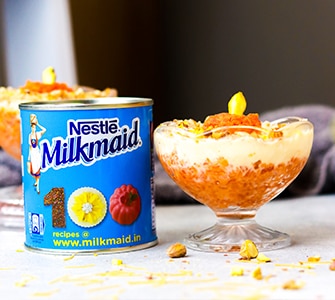
Some days, you don’t have 90 minutes to stand by the stove. Maybe guests are coming, maybe you just want dessert without the marathon. This version uses sweetened condensed milk (commonly sold as Nestlé Milkmaid in India), which cuts your cooking time nearly in half.
The trade-off? You lose a bit of that slow-cooked caramelization, but you still get a delicious, crowd-pleasing halwa that tastes festive and feels indulgent.
Ingredients
- 1.5 kg carrots (about 9 cups tightly packed grated carrots)
- 6 tablespoons ghee
- 1 can (400g) sweetened condensed milk (milkmaid)
- 1.5-2 teaspoons cardamom powder
- ⅓ cup cashews
- ⅓ cup golden raisins
- Sugar (optional, only if you want it sweeter)
Method
- Melt 6 tablespoons of ghee in a heavy kadai. Add the grated carrots.
- Sauté on low heat for 15-20 minutes, stirring often, until the carrots turn soft and tender. They’ll shrink and darken slightly.
- Pour in the entire can of condensed milk. Mix well—everything should be evenly coated.
- Add cardamom powder, cashews, and raisins. Stir to combine.
- Continue simmering on low heat, stirring at regular intervals. The mixture will thicken and reduce as the moisture evaporates.
- Once it reaches a thick, glossy consistency and starts pulling away from the sides, it’s done. This should take about 20-25 minutes after adding the condensed milk.
- Serve hot, warm, or even chilled—this version holds up well at any temperature.
Note: Since condensed milk is already sweetened, you likely won’t need additional sugar. Taste before adding any.
Rich Gajar Ka Halwa with Khoya (Mawa)
Khoya—also called mawa—is milk that’s been simmered down until all the water evaporates, leaving behind dense, creamy milk solids. It’s a staple in Indian sweets, and when you add it to gajar halwa, you get an incredibly rich, almost fudge-like texture.
This version is a bit more decadent than the traditional one, and it comes together faster because the khoya brings both sweetness and body to the dish.
Ingredients
- 1.5 kg carrots (about 9 cups tightly packed grated carrots)
- 6 tablespoons ghee
- 2 cups khoya (grated or crumbled, about 400-410g)
- 1 to 1.25 cups sugar (adjust based on khoya sweetness)
- 1.5-2 teaspoons cardamom powder
- ⅓ cup cashews
- ⅓ cup golden raisins
- 1 tablespoon pistachios, chopped (optional)
Method
- Heat ghee in a heavy-bottomed pan or kadai. Add the grated carrots.
- Sauté on low heat for 15-20 minutes, stirring often, until the carrots are tender and cooked through.
- Add the crumbled or grated khoya. Mix thoroughly so the khoya is evenly distributed.
- Add sugar. Start with 1 cup and taste—if your khoya is already sweet, you may not need the full amount.
- The sugar and khoya will melt together, making the mixture look loose and liquidy. Don’t worry, it’ll thicken up.
- Add cashews, raisins, pistachios, and cardamom powder. Mix well.
- Keep simmering on low heat, stirring often. The halwa will start to thicken and pull away from the edges of the pan.
- Once it reaches a thick, almost fudgy consistency, turn off the heat.
- Serve warm or chilled. This version is especially good cold, almost like a carrot-flavored fudge.
Instant Pot Gajar Ka Halwa (15-Minute Method)
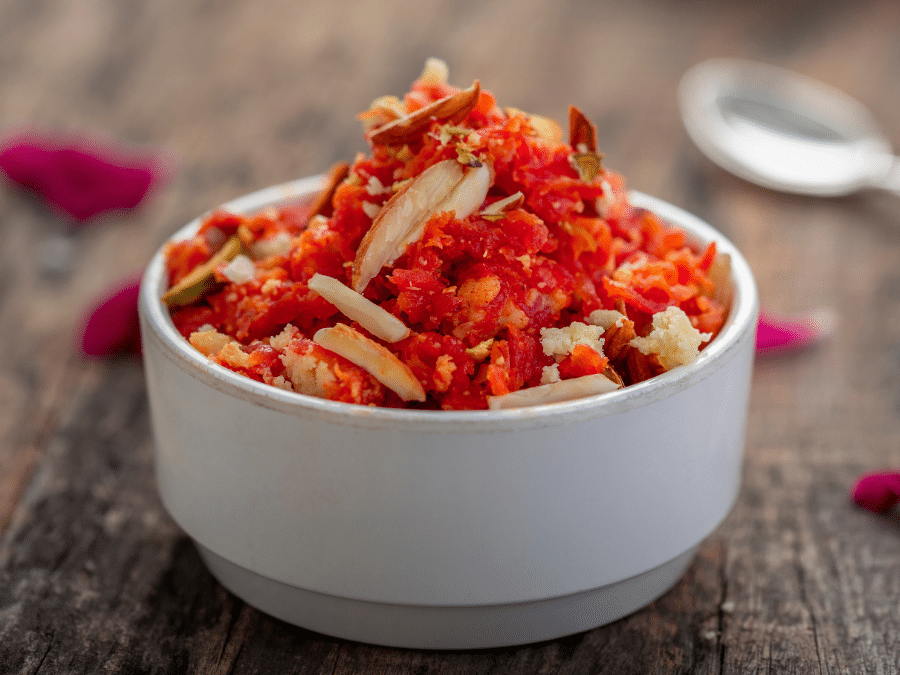
If you own an Instant Pot and haven’t tried making gajar halwa in it yet, you’re missing out. This is the fastest method by far—just 15 minutes from start to finish, with minimal stirring and almost no babysitting.
The texture and flavor are remarkably close to the traditional version, which makes this a game-changer for busy weeknights or last-minute festival prep.
Ingredients
- 500g carrots (about 4-4.5 cups grated carrots)
- 1.5 cups full-fat milk
- ½ cup sugar (adjust to taste)
- 4 tablespoons ghee
- 1 tablespoon raisins
- 1 tablespoon cashews, chopped
- 1 tablespoon almonds, sliced
- 1 tablespoon pistachios, sliced
- ½ teaspoon cardamom powder
Instructions
- Add the grated carrots, milk, sugar, and ghee to the steel insert of a 6-quart Instant Pot. Mix everything together with a spoon.
- Seal the lid and set the valve to “sealing.” Pressure cook on high for 3 minutes.
- Once the timer beeps, carefully do a quick pressure release (QPR) by lifting the valve. When the pressure is fully released, open the lid and stir well.
- Press “cancel,” then press “sauté” and set the timer for 5-10 minutes on normal mode.
- The mixture will start bubbling and simmering. Stir often as it thickens.
- When the halwa is almost thick, add the nuts, raisins, and cardamom powder. Keep stirring until the liquids have evaporated and the consistency is glossy and thick. You’ll see a little ghee releasing from the sides.
- Press “cancel” and serve hot or warm.
Pro tip: This method scales beautifully. If you’re making it for a crowd, double the recipe and increase the pressure cooking time by 1 minute.
How to Serve Gajar Ka Halwa
In North India, gajar halwa is almost always served hot during winter. There’s something about a steaming bowl of halwa on a cold evening that just feels right—comforting, grounding, almost medicinal in its warmth.
That said, plenty of people (myself included) enjoy it chilled straight from the fridge. It’s a personal preference, like choosing between hot and cold pudding.
Some restaurants serve gajar halwa with a scoop of vanilla ice cream on top, and honestly? It’s genius. The contrast between the warm, spiced halwa and the cold, creamy ice cream is like carrot cake à la mode, but better.
For festivals and special occasions, garnish generously with slivered almonds, pistachios, and a few strands of saffron. It makes the presentation feel festive and shows your guests you put in the effort.
Storage Tips
Refrigerator: Gajar halwa keeps beautifully in the fridge for 10-12 days. Store it in an airtight container. When you’re ready to serve, just warm it up gently on the stovetop or in the microwave.
Freezer: If you’re making a big batch—say, for Diwali or a wedding—you can freeze gajar halwa for up to a month. Portion it into smaller containers so you can thaw just what you need. Let it come to room temperature or warm it gently before serving.
Expert Tips for Perfect Gajar Ka Halwa
Choose tender, juicy carrots. This is non-negotiable. Woody, fibrous carrots will ruin the texture no matter how long you cook them. Press your thumbnail into the carrot—if it gives a little, you’re good.
Stir regularly. Whether you’re using the stovetop or Instant Pot, don’t walk away for long stretches. Milk burns easily, and once it burns, there’s no saving the halwa.
Adjust sweetness to your taste. Indian desserts tend to be very sweet, but you’re in control here. Start with less sugar and add more if needed. Remember, you can always sweeten it later, but you can’t unsweeten it.
Experiment with sweeteners. If you want to avoid refined sugar, try jaggery, coconut sugar, or raw organic sugar. Just add them after the halwa has cooled slightly to prevent curdling.
Use a heavy-bottomed pan. A thin pan will cause uneven heating and scorching. A cast-iron kadai or heavy-bottomed skillet is ideal.
Scale the recipe as needed. All four methods can be easily halved, doubled, or tripled depending on how many people you’re feeding.
Can I use orange carrots instead of red Delhi carrots?
Absolutely. Red Delhi carrots are traditional and give the halwa a deeper color, but orange carrots work just as well as long as they’re tender and juicy.
Can I make gajar halwa without ghee?
Technically yes, but ghee is what gives the halwa its rich, glossy texture and authentic flavor. You could substitute with butter in a pinch, but the taste will be different.
Can I make this vegan?
You can try substituting coconut milk for dairy milk and coconut oil for ghee, but the flavor and texture will be quite different. Gajar halwa is fundamentally a dairy-based dessert, so adaptations will change its character.
Why is my halwa too watery?
You either didn’t cook it long enough or used too much milk. Keep simmering on low heat, stirring often, until the liquid evaporates and the mixture thickens.
Can I use a pressure cooker instead of an Instant Pot?
Yes, but you’ll need to adjust the timing. Pressure cook for 2 whistles on medium heat, then release the pressure naturally. Finish the halwa on the stovetop as you would with the Instant Pot method.
Gajar ka halwa isn’t just a recipe—it’s a ritual, a memory, a way of marking time. It’s the dessert that shows up when the weather turns cold, when festivals arrive, when you want to make someone feel cared for. It asks for your patience, rewards your attention, and fills your kitchen with a smell that feels like home.
Whether you spend 90 minutes stirring by the stovetop or take the 15-minute Instant Pot shortcut, what matters is the intention behind it. Good halwa, like most good things, is about showing up, paying attention, and not rushing the process. Even when you do rush it—because life happens—it still turns out pretty wonderful.
So grab those tender carrots, put on some music, and let the stirring become a kind of meditation. Your kitchen will smell like cardamom and patience, and when you take that first warm spoonful, you’ll remember why this simple dessert has been passed down through generations. Some things are worth the wait.
