


In this Gandhi Talks movie review, we celebrate a film that arrives like a quiet revolution in Indian cinema’s increasingly noisy landscape. When was the last time you walked into a theater and experienced complete silence that spoke louder than a thousand dialogues? Kishore Pandurang Belekar’s Gandhi Talks doesn’t just entertain; it transforms the very experience of watching cinema, proving that when performances are sincere and vision is clear, words become beautifully irrelevant.
This dialogue-free masterpiece taps into cinema’s purest origins—from Satyajit Ray’s visual poetry to Charlie Chaplin’s expressive genius, from Buster Keaton’s physical brilliance to Kamal Haasan’s Pushpaka Vimana. Starring Vijay Sethupathi, Aditi Rao Hydari, and Arvind Swami, Gandhi Talks is a two-hour meditation on money, morality, and survival that never feels empty or indulgent. Instead, it’s immersive, therapeutic, and genuinely gripping.
Quick Takeaway:
Gandhi Talks is a technically brilliant, emotionally resonant silent film that succeeds magnificently as both artistic experiment and engaging entertainment. With career-defining performances from Vijay Sethupathi and Arvind Swami, exceptional background score, and the courage to trust its audience completely, this film proves that silence can be cinema’s most powerful language. A transformative viewing experience that restores faith in original, boundary-pushing Indian cinema.
Language: Hindi (Silent Film)
Genre: Silent Drama, Social Commentary
Director: Kishore Pandurang Belekar
Release Date: January 30, 2026
The Story: Money Talks, Gandhi Listens
At its heart, Gandhi Talks explores how money shapes human lives in starkly different ways. The title itself is layered with brilliant irony—in a culture where “paisa bolta hai” (money talks), Gandhi quite literally talks through currency. The Mahatma’s face on rupee notes becomes both symbol of values lost and reminder of principles worth preserving.

Arvind Swami’s Boseman represents excess and privilege. He has everything—wealth, loving family, grand house, flourishing career. Then tragedy strikes repeatedly: he loses his wife and daughter in an accident, followed by his mother. Legal cases pile up, his career collapses, wealth disappears overnight. Watching a man who had it all crumble into devastating vulnerability is profoundly moving.
On the opposite end exists Vijay Sethupathi’s Mahadev—a man who has nothing. He cannot feed his ailing mother, steals electricity to survive, cannot afford tea for the woman (Aditi Rao Hydari) he loves. As he hunts desperately for work, he encounters corruption everywhere. Money talks everywhere, and morality gets drowned in desperation.
When these contrasting lives intersect, the film beautifully explores how different worlds operate under the same currency’s cruel rules. Even the best intentions buckle under desperation’s weight. As Gandhian philosophy quietly emerges, we understand: if society needs change, it must begin from within.
Performances: Every Actor Speaks Volumes Without Words
Vijay Sethupathi: The Soul of Silent Cinema
This Gandhi Talks movie review must celebrate what might be Vijay Sethupathi’s finest performance—and that’s saying everything for an actor of his caliber. Playing Mahadev without a single word of dialogue, he emotes every emotion with breathtaking honesty. Every flicker of pain, every moment of hope, every surge of desperation registers authentically.
Watch him navigate poverty’s humiliations with dignity intact, romance with tender creativity, and moral dilemmas with visible internal struggle. His surprise dance sequence brings unexpected joy while maintaining character integrity. This is acting in its purest form—face, body, and soul doing all the talking. Sethupathi proves once again why he’s among Indian cinema’s finest, delivering a masterclass that will be studied for years.
Arvind Swami: Heartbreak Personified
Arvind Swami is absolutely brilliant as Boseman, making your heart ache with every frame. His portrayal of a privileged man’s descent into loss and vulnerability is devastating. The pain behind his eyes, the gradual breakdown of composure, the desperate attempts to maintain dignity—everything feels heartbreakingly real.
Swami’s natural gravitas serves the character perfectly. Without dialogue, he conveys the specific anguish of someone who’s lost everything material and emotional. It’s criminal how little we see this exceptional actor on screen, and Gandhi Talks reminds us what a treasure he is.

Aditi Rao Hydari: Luminous and Expressive
Aditi Rao Hydari is absolutely luminous, her eyes and expressions communicating everything her character feels. Her chemistry with Sethupathi creates genuinely romantic moments—the balcony courtship culminating in that imaginative distance forehead kiss is tender and heart-melting. She embodies hope, love, and patience beautifully, standing in gentle contrast to Mahadev’s desperation. Her performance reminds us how powerful restraint and subtlety can be.
The Supporting Excellence
Mahesh Manjrekar brings his considerable experience and presence, adding layers to every scene. Usha Nadkarni provides emotional depth and maternal warmth that grounds the story. Siddharth Jadhav delivers perfect comic timing without breaking the film’s silent format, making you giggle through pure physical expression.
Every member of the ensemble understands the unique demands of silent storytelling and rises magnificently to the challenge.
Direction and Vision: Trusting Cinema’s Purest Form
Kishore Pandurang Belekar makes a remarkably confident directorial statement with Gandhi Talks. Setting a silent film in Mumbai—arguably the world’s loudest city—feels almost rebellious. The honking, crowds, constant chaos of ambition and movement become backdrop for quiet observation. It’s this contrast that makes the silence feel therapeutic rather than gimmicky.
Belekar trusts his audience completely—a rare quality in contemporary cinema. He believes viewers can follow complex narratives, understand emotional nuances, and engage deeply without dialogue handholding them through every moment. That trust pays off magnificently.
The pacing across two hours never feels indulgent. The director knows when to let scenes breathe and when to maintain momentum. He choreographs memorable sequences—the balcony romance, the robbery scene where novice Mahadev stumbles through while a professional effortlessly claims luxury—with both visual poetry and sharp social commentary.
Technical Brilliance: When Craft Becomes Art
Cinematography: Mumbai as Silent Canvas
The visual storytelling transforms Mumbai into something unexpected—a canvas for meditation. The cinematography captures chaos while creating frames that demand attention to detail. Colors, compositions, and camera movements do the narrative heavy lifting beautifully. Every frame communicates mood, class differences, emotional states without needing verbal explanation.
Background Score: The Film’s Voice
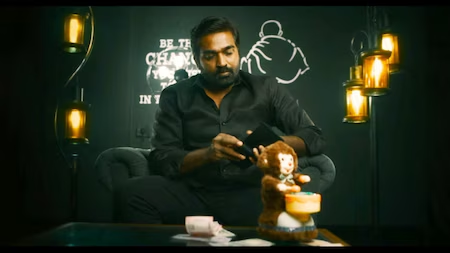
The background score is genuinely exceptional, knowing precisely when to rise and when to retreat. This is crucial for silent cinema—music becomes the emotional voice. The intelligent blend of vintage songs with original compositions adds texture without overwhelming. The score swells at perfect moments, creating emotional peaks, then strips away for scenes needing quiet contemplation.
Sound Design: Strategic Ambient Brilliance
While technically a silent film regarding dialogue, the sound design strategically uses Mumbai’s ambient sounds—traffic, crowds, everyday life—to enhance realism and immersion. It’s masterfully balanced, never distracting from the visual storytelling while adding authentic environmental texture.
Editing: Maintaining Engagement
Keeping a dialogue-free film engaging for two hours requires exceptional editing. Gandhi Talks succeeds brilliantly. Scenes transition smoothly, pacing maintains interest, and the narrative complexity never confuses. The editing rhythms mirror emotional beats perfectly, creating a viewing experience that feels complete and satisfying.
Cultural Resonance: Speaking Universal Truths
What makes Gandhi Talks particularly powerful is how it addresses universal struggles through specifically Indian context. The film’s exploration of money’s corrupting influence, class divides, moral compromises under poverty, and survival’s desperate choices resonates across cultures while remaining authentically rooted.
The clever use of Gandhi’s image on currency as both ironic commentary and philosophical anchor works brilliantly. We’ve commodified our values, literally putting them on money while often ignoring the principles they represent. Yet the film suggests hope—change beginning from within, integrity still mattering, beliefs worth protecting.
Memorable Moments That Define Excellence
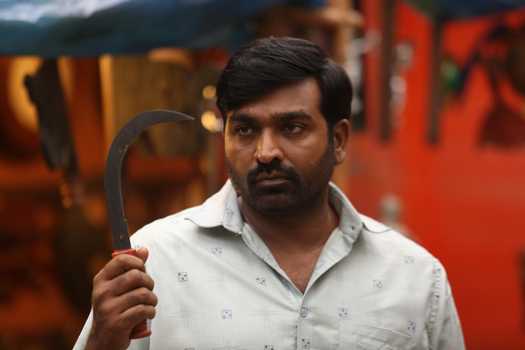
The balcony romance sequence is pure cinematic poetry—tender, imaginative, absolutely heart-melting. Watching two people connect across physical distance through pure expression and creativity reminds us what romance truly means.
The robbery sequence offers subtle brilliance—contrasting inexperience with professional skill, showing how desperation clouds judgment while greed operates with cold efficiency. It’s simultaneously tense, darkly humorous, and socially observant.
The dance sequence featuring Vijay Sethupathi brings unexpected joy, proving silent cinema can deliver every emotion including pure entertainment.
Strengths That Make It Unmissable
- Exceptional Performances Across the Board – Sethupathi, Swami, and Hydari deliver career-defining work
- Courageous Artistic Vision – Belekar trusts the audience and silent cinema’s power completely
- Technical Excellence – Cinematography, score, editing all working in perfect harmony
- Emotional Depth Without Words – Proves dialogue isn’t necessary for profound storytelling
- Social Commentary With Subtlety – Explores class, corruption, morality without preaching
- Memorable Visual Storytelling – Sequences that will stay with you long after credits roll
- Therapeutic Viewing Experience – Creates meditative space in our chaotic lives
- Universal Themes, Authentic Context – Speaks to everyone while remaining specifically Indian
Final Verdict: 5/5 Stars ⭐⭐⭐⭐⭐
Gandhi Talks is a magnificent cinematic achievement that restores faith in Indian cinema’s ability to innovate fearlessly. Kishore Pandurang Belekar has created something genuinely special—a film honoring silent cinema’s legacy while feeling urgently contemporary.
The performances are extraordinary. The technical craft is impeccable. The courage to attempt this in 2026 deserves celebration. Films like these prove that originality still has place, that audiences appreciate intelligence and artistry, that silence can speak louder than any dialogue.
Hats off to everyone involved for daring to imagine and execute this beautiful vision. Gandhi Talks isn’t just recommended viewing—it’s essential viewing for anyone who believes cinema is art, not just product.
Who Should Watch: Anyone who loves cinema as transformative art form, fans seeking original voices, viewers ready for meditative engagement, admirers of Vijay Sethupathi and Arvind Swami
