


In this Lockdown movie review, we explore a film that arrives with quiet courage in Tamil cinema’s crowded landscape. When was the last time you watched a mainstream film tackle genuinely difficult subject matter without sensationalizing it? AR Jeeva’s Lockdown doesn’t just tell a story; it creates an intimate, unflinching portrait of trauma and resilience that stays with you long after the credits roll.
Director AR Jeeva demonstrates remarkable maturity in his handling of sensitive material, crafting a film that treats its subject with the respect it deserves. This is Anupama Parameswaran’s most powerful, emotionally naked performance to date, supported by a breakthrough turn from Priya Venkat that announces her as a major talent. With cinematography that elevates difficult scenes into artful storytelling and a narrative structure that keeps you genuinely surprised, Lockdown is that rare film that balances commercial appeal with artistic integrity.
Quick Takeaway:
Lockdown is a technically accomplished, emotionally resonant drama that showcases the best of performance-driven Tamil cinema. While supporting characters could have been more fully developed, the film’s sensitive direction, extraordinary lead performances, and stunning visual storytelling make it essential viewing for anyone seeking meaningful, courageous cinema.
Language: Tamil
Age Rating: U/A
Genre: Drama, Psychological Thriller
Director: AR Jeeva
The Plot: Trauma and Resilience in Unprecedented Times
At its heart, Lockdown is a character study—but calling it just that misses the film’s true achievement. AR Jeeva’s genius lies in his structural choices: the traumatic incident that upends Anitha’s world is kept intentionally ambiguous in the early going, allowing the reveal to land with genuine emotional impact rather than exploitative shock.
Anitha (Anupama Parameswaran) is the obedient eldest daughter navigating family expectations when a life-altering incident occurs. As COVID lockdown traps her in impossible circumstances, what could have been a straightforward trauma narrative becomes something more nuanced—a meditation on silence, survival, and the unexpected sources of strength we discover in crisis.
The beauty of this approach is how it prioritizes character over spectacle. Jeeva trusts his actors and his audience enough to let difficult moments breathe, to allow pain and resilience to exist in the same frame without easy resolution. The decision to unfold during lockdown isn’t just backdrop—it’s essential to understanding how isolation can amplify trauma while also, paradoxically, create space for transformation.
Performances: Where Lockdown Truly Soars
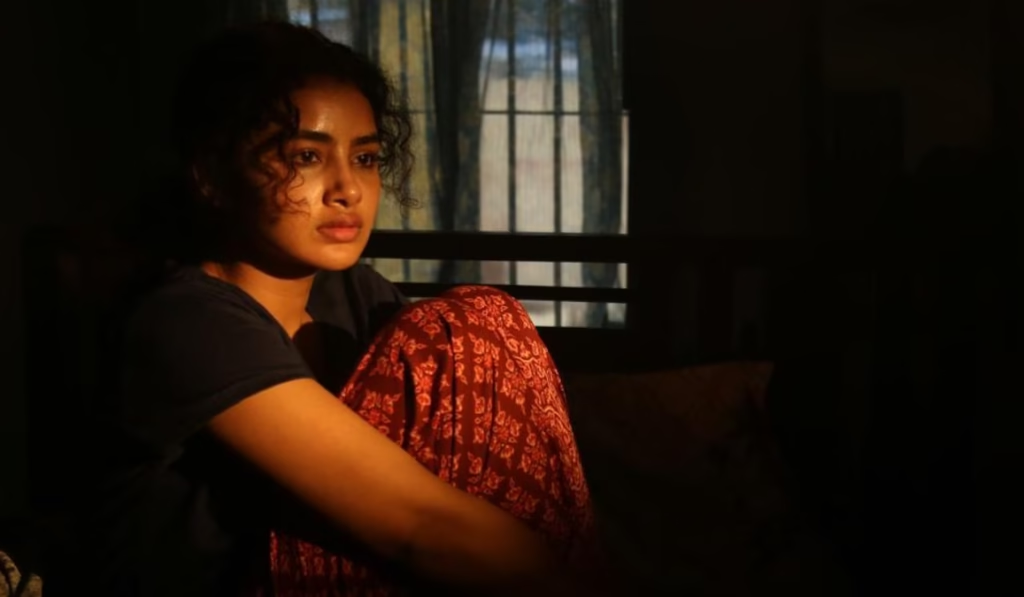
Anupama Parameswaran: A Revelation
This Lockdown movie review must begin with the obvious: Anupama Parameswaran delivers a career-defining performance. For an actor often cast in conventional romantic roles, this represents a quantum leap in ambition and execution. Her Anitha is a masterclass in contained emotion—watch how much she conveys through stillness, through the micro-expressions that betray the storm beneath her composed exterior.
The film’s most powerful moments come not from dialogue but from Anupama’s face processing impossible situations. There’s a scene midway through where she must maintain normalcy during a family interaction while internally unraveling—the layers she brings to this moment alone justify the film’s existence. This is an actor expanding her range dramatically, proving she’s ready for complex, author-backed roles that challenge both her and her audience.
Priya Venkat: The Film’s Secret Weapon
If Anupama is Lockdown’s heart, Priya Venkat is its soul. As Soumya, Anitha’s fiercely loyal best friend, Priya creates the film’s most consistently compelling presence. Her natural warmth provides essential contrast to the darker narrative elements, while her unwavering support for Anitha offers hope without diminishing the gravity of the situation.
What’s remarkable is how Priya makes Soumya feel lived-in and real. Every gesture, every moment of silent solidarity, every instance where she reads Anitha’s needs without words—it all feels earned. The chemistry between Anupama and Priya anchors the entire film, making their friendship the emotional true north that guides us through difficult terrain. This is a star-making performance that announces Priya as someone to watch closely.
The Supporting Cast: Solid Foundation
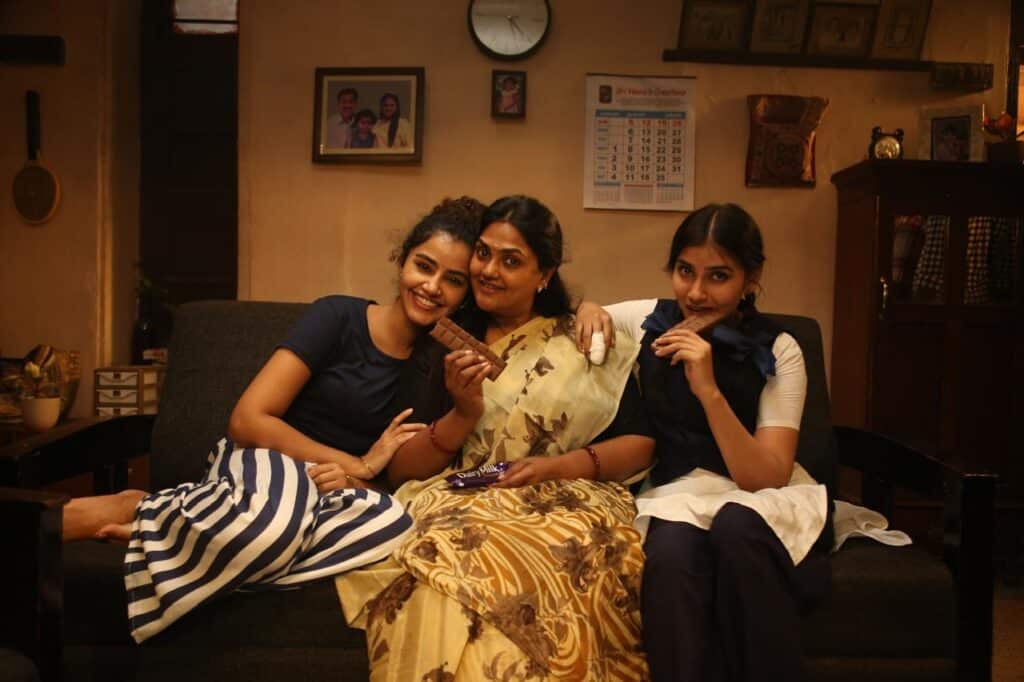
Charle and Nirosha as Anitha’s parents bring dignity to roles that could have been thankless. While the script doesn’t give them extensive backstory, both actors find moments of humanity that suggest whole lives lived beyond what we see on screen. Their ordinariness is the point—they’re simply parents, flawed and loving in equal measure.
Livingston’s subplot, while underdeveloped, is performed with such conviction that you wish the film had given him more room to explore his character’s pain. The entire ensemble understands they’re in service of a larger story, and that collective commitment elevates even underwritten roles.
Direction and Vision: Courage Meets Craft
AR Jeeva makes the kind of directorial choices that separate good films from important ones. His restraint in depicting trauma—choosing suggestion over exploitation, implication over graphic detail—demonstrates artistic maturity rare in commercial Tamil cinema. There’s a scene where the camera focuses on Anitha’s face while something disturbing occurs off-screen; it’s more powerful than any explicit depiction could be.
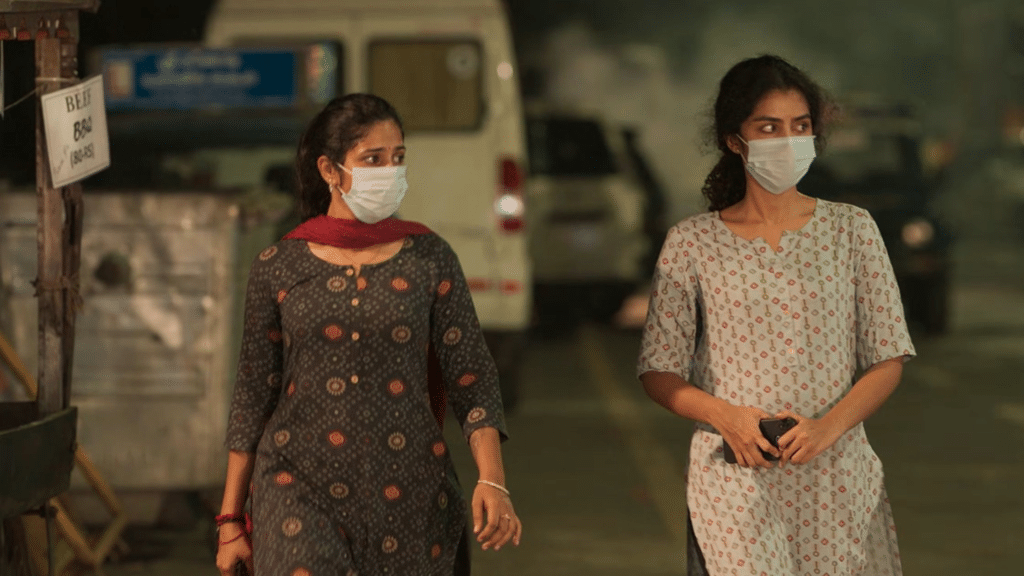
The way Jeeva uses the lockdown setting shows genuine thoughtfulness. Empty streets become metaphors for emotional isolation. Confined spaces that should feel safe become prisons. Video calls that were meant to connect instead highlight distance. These aren’t just atmospheric choices—they’re thematic ones that deepen our understanding of Anitha’s psychological state.
The pacing occasionally slows, particularly in the middle section where character introspection threatens to stall momentum. But Jeeva always finds his way back to the emotional through-line that makes Lockdown resonate. His willingness to sit with difficult moments, to not rush past pain in favor of plot, marks him as a filmmaker interested in truth over mere entertainment.
Technical Brilliance: Artistry in Service of Story
Cinematography: Beauty Amid Darkness
The visual language of Lockdown is its greatest technical achievement. The cinematographer captures disturbing content with remarkable sensitivity—there’s never a moment that feels gratuitous or voyeuristic. Instead, we get compositions that acknowledge pain while finding unexpected grace in how light falls across a character’s face, how shadows can provide refuge, how even in trauma there exists a kind of terrible beauty.
What’s particularly impressive is how the camera becomes a character in its own right, sometimes maintaining respectful distance, other times moving in close to witness private anguish. The visual grammar shifts based on Anitha’s emotional state—confined, claustrophobic framing when she’s trapped, gradually opening up as she finds pathways toward agency. This is cinematography that understands how to make form reflect content.
Music and Sound Design: Emotional Resonance
While the songs may not be chartbusters, they serve the narrative with emotional honesty. The background score knows when to support a scene and when to let silence carry the weight. There are moments where the absence of music becomes the most powerful choice—where we hear only breath, footsteps, the ambient sounds of a world on pause.
The sound design during lockdown sequences captures that specific COVID-era atmosphere: the eerie quiet of empty streets, the constant drone of news broadcasts, the way every sound felt amplified in isolation. These sonic choices root Lockdown in a specific moment of collective trauma that Indian audiences will immediately recognize.
Editing: Finding the Right Rhythm
The editing maintains clarity even when jumping between timelines and perspectives. Scenes that could drag are cut at precisely the right moment. The interweaving of past and present maintains suspense without confusion. There are places—particularly in that contemplative second act—where tighter pacing would help, but these are minor considerations in an otherwise well-constructed film.
Cultural Context: A Story That Needed Telling
This Lockdown movie review must acknowledge that the film tackles subject matter still considered taboo in mainstream Indian cinema. By setting this story during COVID—a time when so many suffered in silence, when domestic situations intensified, when help felt impossibly distant—Jeeva connects personal trauma to collective experience in ways that give the narrative additional resonance.
The film doesn’t exploit the pandemic as mere backdrop. Instead, it asks important questions: What happens when crisis compounds crisis? When the systems meant to help are unavailable? When isolation becomes enforced rather than chosen? These aren’t just dramatic devices; they reflect lived reality for countless people during those dark months.
Tamil cinema has recently shown willingness to tackle difficult subjects with nuance—films like Maharaja and others have proven audiences respond to mature, challenging content. Lockdown continues this trend, trusting viewers to engage with material that doesn’t offer easy answers or comfortable resolution.
Strengths and Where It Could Improve
What Works Magnificently
- Anupama Parameswaran’s fearless, layered performance – A genuine career highlight that showcases new dimensions
- AR Jeeva’s sensitive directorial approach – Mature handling of difficult content
- Stunning cinematography – Artistic choices that elevate sensitive material
- Authentic COVID-era atmosphere – Captures the specific isolation and fear of that period
- The central friendship – Anupama and Priya’s chemistry anchors everything
- Narrative surprise – Keeping key revelations hidden creates genuine impact
- Emotional honesty – Never trivializes trauma or offers false comfort
Where It Could Strengthen
- Supporting character development – Parents and secondary figures need more dimensionality
- Livingston’s subplot – Deserves fuller exploration to achieve intended emotional payoff
- Outdoor scene credibility – Frequent trips during peak lockdown may strain belief for some
Final Verdict: 4/5 Stars ⭐⭐⭐⭐
Lockdown is exactly what Tamil cinema should be doing more of—taking creative risks on difficult subjects, trusting audiences with complex narratives, and showcasing performance-driven storytelling that prioritizes emotional truth over commercial formula.
This Lockdown movie review celebrates a film that succeeds brilliantly where it matters most. Yes, supporting characters could be richer. Yes, certain subplots feel incomplete. Yes, the pacing occasionally slows. But these are minor criticisms of a film that dares greatly, that asks its lead actors to go to uncomfortable places and rewards them with material worthy of their talent.
For audiences seeking cinema that engages both heart and mind, that doesn’t shy away from difficult truths while maintaining hope and humanity, Lockdown delivers powerfully. This is the kind of film that reminds us why we go to theaters—not just to be entertained, but to be moved, challenged, and ultimately, transformed by stories that matter.
The Importance of Films Like Lockdown
There’s specific value in watching films tackle subjects our society still struggles to discuss openly. In an industry sometimes criticized for escapism, Lockdown offers something different—not escape, but understanding. Not comfort, but recognition. For viewers who’ve experienced similar trauma, seeing their truth reflected on screen with dignity can be profoundly validating. For those who haven’t, it’s an opportunity for empathy and awareness.
AR Jeeva has crafted a film that honors its subject, its characters, and its audience. The sensitivity with which he approaches trauma, the space he gives performers to create fully realized human beings, the technical artistry that transforms difficult content into meaningful cinema—these mark him as a filmmaker with both conscience and craft.
Lockdown won’t be the loudest film in theaters or the flashiest on streaming platforms. But it will be the one that lingers, that makes you think differently about resilience, friendship, and the quiet heroism required to survive impossible situations. And sometimes, that matters more than any spectacle.
