


In this Mayasabha movie review, we explore a film that arrives as a breath of fresh air in Hindi cinema’s thriller landscape. When was the last time you experienced a psychological thriller that treated you like an intelligent viewer, demanding your complete attention and rewarding it generously? Mayasabha – The Hall of Illusion doesn’t just entertain; it invites you into a meticulously crafted world of deception, greed, and buried secrets that unfolds like a masterful chess game.
Director Rahi Anil Barve (of Tumbbad fame) returns with the confidence of a filmmaker who knows exactly how to trap audiences in atmospheric storytelling. This is Jaaved Jaaferi’s most transformative performance in years, supported by an ensemble cast that understands the delicate balance between theatrical intensity and psychological realism. With cinematography that turns decay into art and a narrative structure that rewards active viewing, Mayasabha is the cinematic equivalent of a perfectly executed magic trick—you know you’re being manipulated, but the craftsmanship is so exquisite you don’t care.
Quick Takeaway:
Mayasabha is a technically brilliant, tightly-paced psychological thriller that succeeds magnificently as both atmospheric horror and cerebral entertainment. While its experimental narrative demands patience and concentration, the film’s stunning visuals, career-defining performances, and that jaw-dropping final twist make it essential viewing for anyone craving intelligent, boundary-pushing Hindi cinema.
Language: Hindi
Runtime: 104 Minutes
Genre: Psychological Thriller, Mystery, Drama
Director: Rahi Anil Barve
The Plot: A Night of Greed, Deception, and Devastating Revelations
At its surface, Mayasabha is a treasure hunt thriller—but calling it just that would be like calling a symphony “some music.” The film’s genius lies in its claustrophobic setting: an entire night of psychological warfare contained within the crumbling ruins of a once-grand film studio called “Mayasabha.”
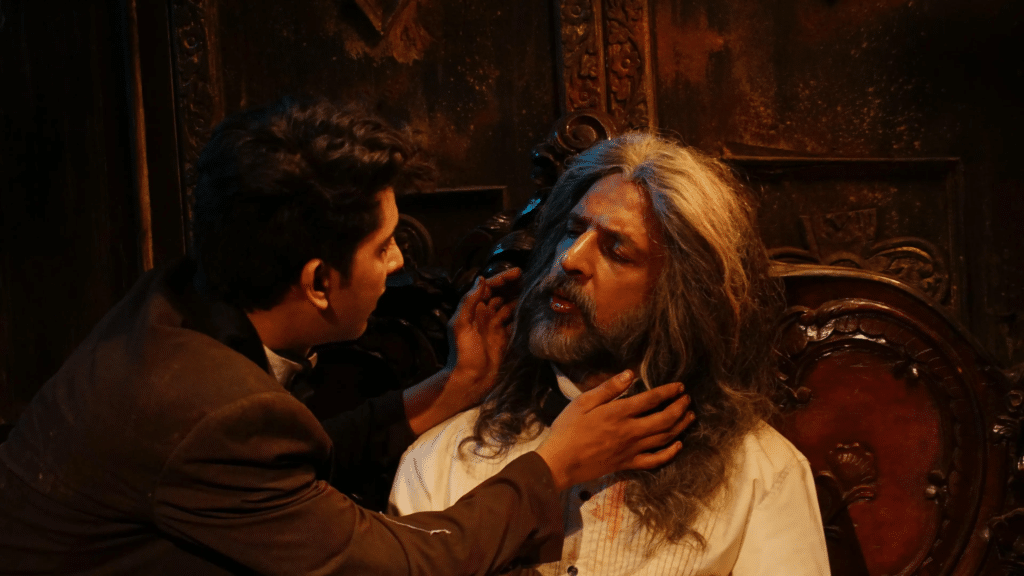
Parmeshwar Khanna (Jaaved Jaaferi) is a reclusive former filmmaker living in self-imposed exile within his dilapidated theater, endlessly watching films starring his runaway wife Jaymala. His son Vasu (Mohammed Samad) has grown up in this isolated world of shadows, cobwebs, and flickering projectors, knowing nothing beyond these decaying walls. When Vasu innocently mentions rumors of 40 kilos of gold hidden somewhere in the property, it sets in motion a deadly game.
Zeenat (Veena Jamkar) and her brother Ravrana (Deepak Damle) arrive under the pretense of friendship, but their true intentions are crystal clear—they want that gold, and they’ll manipulate anyone to get it. What follows is a tense, night-long battle of intellects where every conversation becomes a strategic move, every revelation a potential trap, and nothing is quite what it seems.
The beauty of Barve’s approach is how he transforms limitation into strength. With just four characters and one location, he creates a pressure-cooker atmosphere where psychological tension becomes almost unbearable. The film builds methodically, layering deception upon deception until the final revelation arrives like a thunderbolt that recontextualizes everything you’ve witnessed.
Performances: Every Actor Delivers Career-Defining Work
Jaaved Jaaferi: A Revelation in Darkness
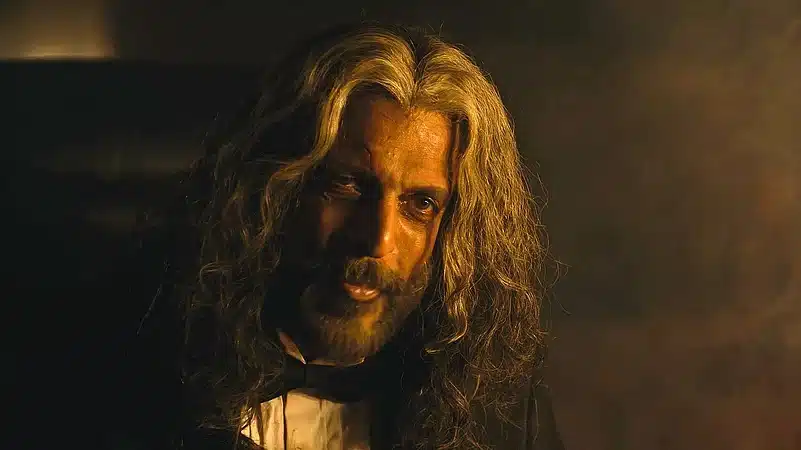
This Mayasabha movie review must begin with the extraordinary: Jaaved Jaaferi delivers the performance of his career. Known primarily for comedy and hosting, Jaaferi completely transforms into Parmeshwar Khanna—a man simultaneously broken and brilliant, pathetic and terrifying, sympathetic and manipulative.
Watch him navigate scenes with theatrical grandeur that never feels false. His Parmeshwar is a “ghost” haunting his own memories, a once-powerful producer now trapped in psychological distress. Jaaferi plays him with layers upon layers—the obsessive lover still mourning his wife’s betrayal, the protective father with a twisted relationship to his son, the cunning strategist always three moves ahead of his opponents.
The brilliance is in the restraint. Despite the character’s larger-than-life circumstances, Jaaferi finds the human core. A flicker of genuine pain beneath the theatrical madness. A moment of tender vulnerability with Vasu before the mask comes back on. This is transformative work that announces Jaaferi as a serious dramatic actor capable of anchoring complex psychological narratives.
Mohammed Samad: The Perfect Emotional Anchor
Returning to collaborate with Barve after Tumbbad, Mohammed Samad brings heartbreaking authenticity to Vasu. His character could easily become a plot device, but Samad invests him with such genuine emotion that he becomes the film’s moral center.
His portrayal of a sheltered young man desperate for his father’s love yet yearning for freedom is beautifully nuanced. The way he looks at Parmeshwar—with equal parts adoration, fear, and confusion—tells entire stories without dialogue. Samad’s chemistry with Jaaferi creates a father-son dynamic that’s simultaneously touching and deeply unsettling, grounding the film’s more surreal elements in recognizable human emotion.
Veena Jamkar: Strategic Brilliance
Veena Jamkar is absolutely superb as Zeenat, the shrewd manipulator who matches Parmeshwar move for move. She brings electric energy to every scene, playing her character’s intelligence and desperation with equal conviction. Jamkar understands that the best villains (or are they?) believe completely in their own justifications.
Her confrontation scenes with Jaaferi crackle with tension. These aren’t just two actors exchanging dialogue—it’s a genuine duel of wits where neither gives an inch. Jamkar’s physical presence in the climactic sequences shows real commitment, delivering both the cerebral intensity and physical demands the role requires.
Deepak Damle: Understated Excellence
Deepak Damle completes the quartet with a carefully calibrated performance as Ravrana. He could have simply been Zeenat’s sidekick, but Damle finds the character’s unique desperation and makes him memorable. His reactions and subtle choices add texture to ensemble sequences, proving once again that great films need every actor operating at peak level.

Direction and Vision: A Filmmaker Operating at Peak Confidence
Rahi Anil Barve demonstrates with Mayasabha that Tumbbad wasn’t a fluke—this is a director with a singular vision and the technical mastery to execute it flawlessly. Where Tumbbad sprawled across myth and generations, Mayasabha is contained, deliberate, and intensely focused.
Barve’s confidence shows in his willingness to experiment. The film uses the decaying studio not just as a setting but as a metaphor—for broken dreams, for the decay of memory, for the thin line between reality and performance. Every corner of this crumbling space tells a story, drips with history, carries the weight of forgotten narratives.
The pacing is deliberately methodical, building tension through dialogue and psychological maneuvering rather than action. This requires enormous trust in the material and the audience—trust that viewers will stay engaged through conversations, through long takes, through sequences that breathe rather than rush. That trust is rewarded with a film that feels genuinely suspenseful without relying on cheap tricks or jump scares.
Barve also shows remarkable control over tone. The film balances dark humor with genuine menace, theatrical grandeur with intimate character moments. It’s self-aware without being self-indulgent (mostly), acknowledging its own artifice while maintaining emotional authenticity.
Technical Brilliance: When Every Department Achieves Excellence
Cinematography: Painting with Shadows and Light
Kuldeep Mamania and Nuthan Nagaraj create visual magic in Mayasabha. Every frame is meticulously composed despite—or perhaps because of—the deliberately gloomy, claustrophobic setting. This is cinematography that understands atmosphere is character.
The dominant red hues suggest passion, danger, and blood. Smoke drifts through fractured corners, catching shards of pale light in ways that feel almost supernatural. The tight spaces and careful framing create genuine claustrophobia, trapping viewers inside this decaying world alongside the characters.
What’s remarkable is how the lighting shifts to reflect psychological states. Parmeshwar’s scenes often feature dramatic, theatrical lighting that reflects his cinematic worldview. More intimate moments between father and son soften slightly, though never completely. The visual language remains consistently unsettling while finding room for variation and beauty within that darkness.
Production Design: A Character Made of Decay
The crumbling film studio is the film’s fifth character, and the production design team deserves enormous credit. Dusty furniture, broken projectors, peeling posters, cobwebbed corners—every detail reinforces the themes of decay, forgotten glory, and the past’s grip on the present.
The space feels authentically lived-in (or perhaps more accurately, haunted-in). You can almost smell the must and rot. This isn’t a sanitized movie set pretending to be decrepit; it feels genuinely abandoned, genuinely dangerous, genuinely wrong in ways that keep viewers perpetually uneasy.
Sound Design and Music: The Unsung Heroes
The sound design amplifies every creak, every footstep, every breath in ways that build constant tension. The background score knows when to swell for dramatic moments and when silence serves better. Together, they create an aural landscape that’s as carefully constructed as the visual one.
Particular praise for how sound is used in the climactic sequences—the way noise builds to overwhelming levels before cutting to deafening silence, creating jolts of terror without relying on sudden scares. This is sophisticated sound work that understands horror lives as much in anticipation as in revelation.
Cultural Context: Cinema About Cinema
Mayasabha works on multiple levels, and one of its most fascinating is as commentary on filmmaking itself. Barve’s frustration with the industry seeps through—references to audiences, the act of creation, the ruins of a once-grand studio. For cinephiles, there’s a rich subtext about what happens when artistic vision clashes with commercial realities, when dreams decay, when the magic fades.
The film also engages with themes of performance and reality. Parmeshwar lives in a self-created cinema, watching his wife’s films endlessly, turning his own life into a movie. Where does the performance end and reality begin? In a film studio, in a film about a film studio, Barve plays deliciously with these boundaries.
Strengths: What Makes Mayasabha Exceptional
What Works Magnificently:
- Jaaved Jaaferi’s career-defining performance – Fearless, layered, absolutely mesmerizing
- Rahi Anil Barve’s visionary direction – A filmmaker operating at peak confidence
- Stunning cinematography and production design – Every frame is a dark painting
- Tightly-paced psychological warfare – Genuine suspense through dialogue and strategy
- Ensemble chemistry – Four actors locked in perfect tension
- Atmospheric world-building – The studio becomes hauntingly alive
- Technical excellence across all departments – Cinematography, sound, editing all superb
- Bold experimental choices that pay off – Risk-taking that mostly succeeds
Where It Could Improve:
- Demands significant patience – Slow-burn pacing won’t suit everyone
- Some logical gaps regarding survival logistics – Minor suspension of disbelief required
- Dense narrative may require repeat viewing – First watch can feel overwhelming
Final Verdict: 4.5/5 Stars ⭐⭐⭐⭐
Mayasabha – The Hall of Illusion is fearless, intelligent filmmaking that confirms Rahi Anil Barve as one of Indian cinema’s most distinctive visionaries. This isn’t passive entertainment—it’s cerebral, claustrophobic, deliberately challenging cinema that rewards viewers who engage fully with its layered narrative and atmospheric intensity.
Yes, the film demands patience and concentration. Yes, it won’t provide easy answers or conventional thrills. Yes, some viewers will find its experimental nature frustrating. But for audiences craving intelligent, atmospheric storytelling that trusts their intelligence, Mayasabha offers immense rewards.
This is cinema that announces Indian independent filmmaking can be both artistically ambitious and genuinely thrilling. It’s essential viewing for anyone who appreciates psychological depth, atmospheric mastery, and performances that burrow under your skin and stay there long after the credits roll.
Mayasabha proves that limitation breeds creativity—four characters, one location, and endless imagination create something far more memorable than most big-budget spectacles. This is what happens when a visionary director, committed actors, and exceptional technical crew decide that playing it safe is the riskiest choice of all.
