


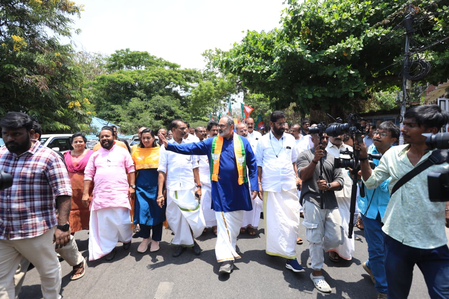
With Rajeev Chandrasekhar at the helm as the BJP’s Kerala unit president, the party is focusing on reshaping its strategy for the upcoming April 9 Assembly elections. Despite being seen as an outsider to Kerala’s political scene for a long time, Chandrasekhar’s visibility in the state rose in early 2024 when he contested against Shashi Tharoor in the Thiruvananthapuram Lok Sabha constituency.
Chandrasekhar’s energetic campaign during the election, though unsuccessful, narrowed the margin of defeat and altered perceptions about the BJP’s electoral potential in Kerala. This marked a significant shift, firmly establishing him in the state’s political discussions. Following this, he was entrusted with leading the BJP’s Kerala unit, a move that garnered attention within the party, especially considering his limited grassroots experience in the state.
Under Chandrasekhar’s leadership, the BJP in Kerala has been focusing on enhancing cohesion and direction within the party. Decision-making processes have become more centralized, emphasizing message discipline and improved coordination. The recent candidate selection process, which sidelined several senior leaders, further reinforced the perception of a leadership-driven approach, with Chandrasekhar playing a pivotal role.
The crucial question now is whether this strategy can translate into electoral gains in Kerala, a state where grassroots mobilization and cadre strength have historically been pivotal. As the BJP, led by Chandrasekhar, enters the electoral fray with the aim of reclaiming lost ground after losing the Nemom Assembly seat in 2021, the focus remains on how the party’s performance will unfold in the upcoming elections.
