


Accusations are escalating on both sides, threatening the stability of the ceasefire between Pakistan and Afghanistan. The region faces a risk of prolonged instability due to a lack of a credible mechanism to address incidents and militant activities across the Durand Line. Analysts warn that civilians are likely to bear the brunt of this instability.
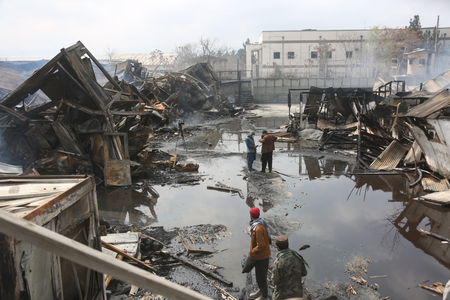
According to a report by S S Ahmad for the ‘Afghan Diaspora Network’, Pakistani forces conducted strikes in late April in Afghanistan, targeting homes, public facilities, and parts of Kunar University. These attacks resulted in the death of four civilians and left over 70 people injured, including women, children, and students. Afghan officials reported that the strikes hit residential areas, a fuel station, a drug rehabilitation center, and a student hostel on the university campus.
Tensions further escalated following a shooting near Spin Boldak, Kandahar province, which resulted in the death of a child. Both sides blamed each other for the incident, raising concerns about the sustainability of the March ceasefire mediated by China, Turkey, Qatar, the United Arab Emirates, and Saudi Arabia. The severity of Pakistan’s response has added strain to the ceasefire agreement.
The humanitarian impact in Afghanistan has been severe, with over 100,000 people displaced in eastern Afghanistan since February. Schools, clinics, and water systems have been damaged or closed, and 19 health facilities in Kunar and Nangarhar are now non-functional. More than 13,000 students are facing disruptions in their education due to the closure or damage of educational institutions.
Regional actors involved in brokering the March truce, especially China, are closely monitoring the situation. Continued hostilities could jeopardize regional connectivity projects and complicate counterterrorism efforts. Ahmad emphasized that the recent strikes are exacerbating Afghanistan’s isolation and subjecting civilians to another cycle of violence in a conflict that has endured through various governments and political eras.
