


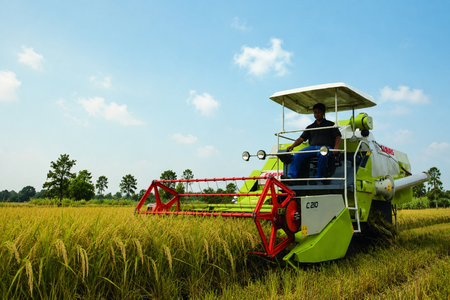
Central assistance totaling Rs 9,404.47 crore has facilitated the distribution of 21.61 lakh agricultural machines to individual farmers under the Sub-Mission on Agricultural Mechanization (SMAM). This support has also led to the establishment of 27,554 Custom Hiring Centers, 646 Hi-tech Hubs, and 25,608 Farm Machinery Banks. The number of beneficiaries owning individual farm machinery has increased from 2.07 lakh in 2020-21 to 2.32 lakh in 2024-25.
Custom Hiring Centers are units that offer a range of farm machinery, implements, and equipment for hire by farmers. The SMAM scheme not only aids in the development of hubs for hi-tech and high-value agricultural equipment but also facilitates the distribution of farm machinery. This initiative has expanded access to small farmers, women, and disadvantaged groups through targeted mechanization support nationwide.
The mission places special emphasis on underserved and North-Eastern States to tackle regional disparities in farm machinery and technology access. It also promotes the use of drones to enhance agricultural operations. With financial backing of Rs 52.50 crore under the scheme, the Indian Council of Agricultural Research (ICAR) has spearheaded drone adoption through extensive field demonstrations across the country.
More than 40,928 drone demonstrations covering 40,918 hectares have been conducted with Rs 52.5 crore financial support, promoting nationwide adoption of precision agriculture. These demonstrations have focused on the proper application of nutrients, fertilizers, and agro-chemicals following prescribed standard operating procedures. To encourage widespread adoption, SMAM offers financial aid for drone procurement and demonstrations.
Institutions eligible for support include ICAR institutes, KVKs, and State Agricultural Universities, which receive 100 percent financial assistance of up to Rs 10 lakh per drone for these activities. Farmer-Producer Organizations (FPOs) can avail grant support of up to 75 percent. Additionally, agencies utilizing drones through service models receive support with a contingency expenditure of Rs 6,000 per hectare.
